Susannah Perillat remembers Vaughn Davis Bornet

“I tried to do the best with what I had.” Favorite Words- Erudite. Anyway.

Dr. Vaughn Davis Bornet (VDB or Dr. B.) was born October 10th, 1917, and passed away peacefully, October 5th, 2020, five days before his 103rd birthday. This is a tribute to a man who gained creditability in his academic domain as a historian and a scholar. Bornet published many works in the field of presidents, social welfare and in health with the American Heart Association. Dr. Bornet continually pursued his passions outside academia, including music, photography, outdoor life, and volunteering, for the health of himself, his family, and his community large and small.

I was hired to assist him nearly five years ago, and the more I endeavor to share the bird’s-eye view I was privileged to have, the more a few highlights stand out. As we started working more closely together on his manuscripts, he would test me by asking me to argue my point. Gradually, I began to have more confidence. I started winning him over to my suggestions or objections, so much that he started saying, “You just go ahead and do it!”

He rarely complained about himself, he stuck to his rhythms, and he didn’t take himself too seriously, except when he did. I would often rub my arm against his and say, “Please rub off on me – just a little.” He harnessed a stick-to-it-iveness that was enviable. People were always asking him what the secret to his long life was.

Writing predominated his thoughts. Sometimes I’d arrive early in the morning, trying to get to editing work before he’d arise. I often told him one had to be an octopus to accomplish all that he had ready to work with at a moment’s notice. He had me constantly use his well-worn dictionary and make it a habit to look up information in his encyclopedias. Encyclopedia Britannica had hired him to write the section about American presidents. Dr. B., as he let me call him, immersed himself in his writing, research, reading new books on his subject and corresponding with those willing to accompany his present journey of writing.

He had grown up academically at Stanford University, working with think tanks and brilliant minds. He had a slew of professionals at his fingertips: secretaries, researchers—though he did most of his research himself—proof-readers, editors and very importantly—publishers. He found his stride teaching at Southern Oregon College, as it was called back in the sixties. Vacation time was a mix of play and work. Together with his wife, Beth, he would tool around the country in their RV, along the way writing, gathering information, and getting ever closer to their destinations, our presidential libraries. He had secured approval to study the contents for one of his books.

Being a child of the Great Depression, he welcomed an opportunity to save on finances and have a good time doing so. Vaughn would often reminisce how his wife provided one of the most important tools for his writing: reading those manuscripts out loud together. TV was non-existent those days in an RV. I would gladly step in to read for him and build upon a new tradition of editing and proof-reading. Still, nothing would interfere with his eight-decade long habit of listening to the opera on Saturday mornings. The outdoor life nourished his inner life and creativity. Along with listening to music, he also played the cornet since childhood and he could remember the words to almost any tune, especially spirituals. I used to call him a living juke box!

He spent hours writing every day. He didn’t put much thought into eating after Beth passed. Four eggs, half a grapefruit, which we ordered a box at a time online, and a cup of coffee with two packets of fake sugar for breakfast. He defended his no-sugar idea until the end, except for the dark chocolate Hersey bars we also ordered online. This morning routine would be followed by the exercise bike, which he insisted be placed on most difficult gauge and he wouldn’t stop until he completed one hundred and forty repetitions. He never smoked. He sang. A lot. And laughed.

Writing poetry was a lifelong passion and hobby; his reading preferences were non-fiction. He didn’t see the sense of fiction as life, for him, was so full of history and amazing stories filled with comedy and tragedy. He had his share of tragedy. He felt it kept him humble.

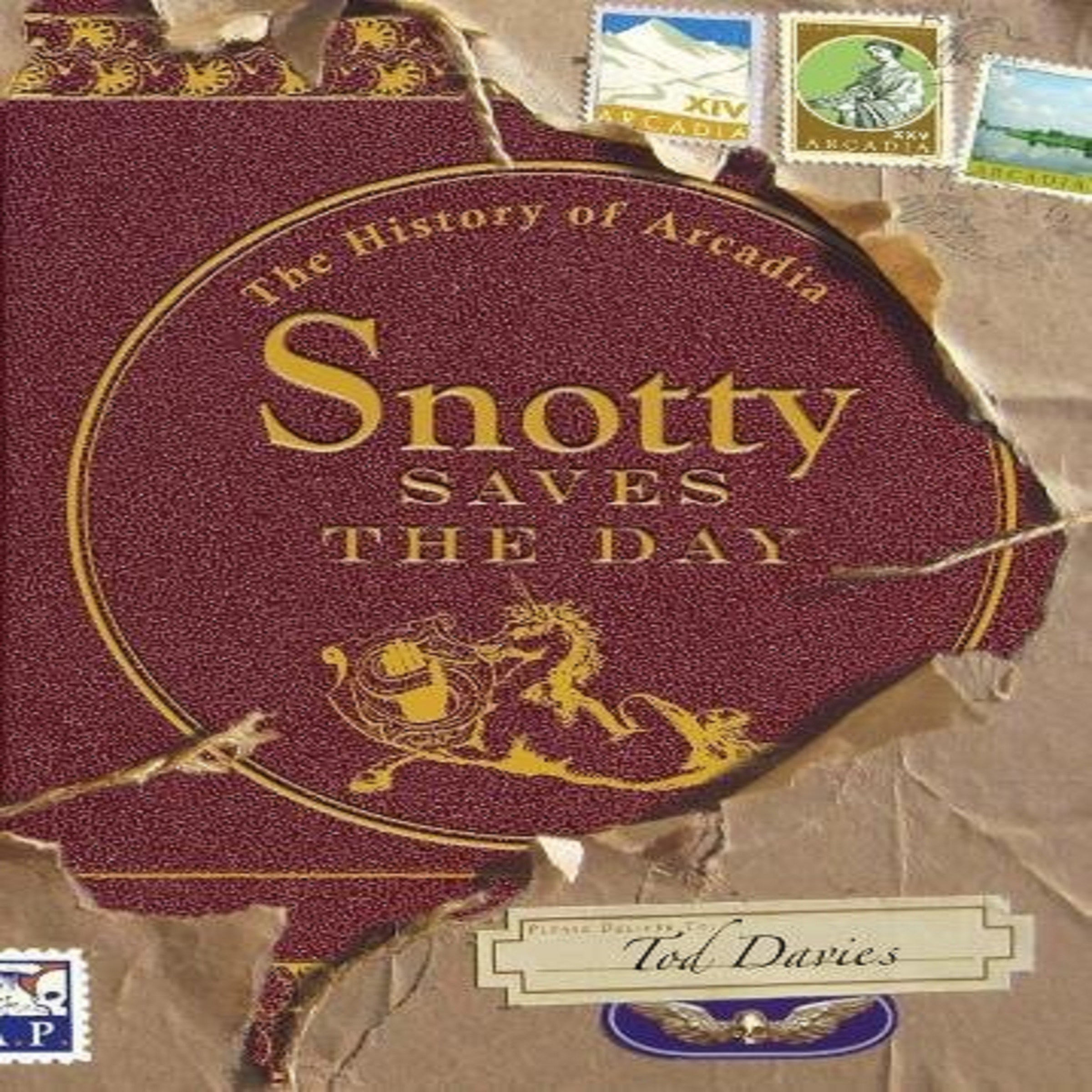
With that said, his favorite companions were dogs because of their unconditional love. He actually did write a children’s book loved by all who read it. It is about one of his favorite dogs, Blaze. Here, I learned how to diplomatically argue the edits and the rearrangements of the illustrations. I found out how helpful the folks at the copyright office were on the phone. He encouraged me to never hesitate to ask for help.

He had a bittersweet relationship with his computer and printer. You would become his hero if you could get him out of whatever his present jam might be: his computer glitches, his printer not working, or learning how to update his website, www.Clioistics.com. His website is a compilation of thousands of pages of his writings, mostly published. Another one of his legacies.

Dr. B. kept in touch with his peers until they died off, then he kept in communication with the younger generation, eighty years or younger, a new audience for his oratories. Within his writing, he would refer to his previous works and awards.

He regularly published at History News Network and sent material out to those who mattered to him for their points of view, corrections, and praise. Founder of History News Network (HNN), Rick Shenkman, wrote, Vaughn Davis Bornet, RIP at 102. During Mr. Shenkman’s thirteen years working with Dr. Bornet, he noted that VDB published over sixty articles on the HNN website. His first article in 2007 was written about race relations, a subject Vaughn often fought for by writing, thus exercising his civic duty. His last article, published in May 2020, was about the havoc being wreaked upon world affairs by the current president. He optimistically titled that article, “‘This Too, Shall Pass’. History and Life, Say So!” (Schenkman).

He would often call or email Elisabeth Zinser, past president of SOU (2001-6) and president at Ashland Rotary (2017-18), to talk about his works in progress, requesting her valued feedback. She appreciated that he always respected her edits. Elisabeth would visit from time to time and bring something for his sweet tooth and share a cherished glass of port. At his memorial, she also shared with us that His best speech was for his 100th birthday celebration while I was President at Rotary. He had us in stitches.” He always wrote and prepared for his innumerable speeches but delivered them off the cuff. She said Vaughn was a dear colleague, scholar, academic, and Rotarian: they became friends (Zinser). He portrayed the Rotary motto, Service Above Self. His writing was his civic duty. Volunteering was essential!

Perhaps most important to both he and his wife, Beth, was their sense of civic duty. He was constantly looking for ways to be of service. Ron Bolstad, a meaningful friend and colleague at SOU, Ashland Rotary, and a musician, says he never knew what Vaughn had up his sleeve when he would call. Once, from Vaughn’s hospital bed at Linda Vista, he saw a man in the rain at the bus stop and insisted that Ron get right on it and have a shelter constructed for that bus stop. After many months of effort, the lack of funds stopped his good idea (Bolstad).

Many times, when I would tell people who I was working with, they would exclaim, “Oh did you know his wife Beth?” Ellie Holty, another caretaker, and assistant, said in my recent interview with her that she loved his “enormous dedication to Beth and how it remained untouched by time.” He expressed that same dedication and love for his family.

He had had professionals to tend to his previous erudite work, including secretaries and university publishers like University of Kansas, who published his work on President Johnson. Thanks to them, he could pride himself in footnotes, indexes, table of contents, and perhaps even a glossary, but he was an incessant editor as well as endlessly working on probable titles. When he thought something was finished it had to be printed at least five times. Needless to say, he had a constant stream of ink supplied by Amazon and reams of paper and new printers. I took on the task of making sure all that paper got recycled. He earned his indulgences.

He stuck with two fonts, New Times Roman and Bookman Old Style—probably the latter because it filled pages faster—after the age of 100 insisted on size 14 font. His typewriter habits were hard to break. Back in the day italics didn’t exist. Rewriting his typewritten manuscripts onto Word, we had to replace all the underlines for the new and improved—italics. Yet whenever he would type on his computer he would continue to underline as well as constantly inserting his thoughts in parentheses. One could not, would not, and absolutely should not leave one word at the end of a paragraph, nor empty space at the end of a page, nor begin a sentence with a preposition—no arguing with him. In the dark of the night, he would fill up those empty spaces.

Ellie Holty worked for Dr. Bornet for four and a half years. She was more than happy to be interviewed for this paper about Vaughn Bornet on Sunday, 29 November 2020. I had prepared several questions and honed them down to one most pertinent to me as a human being. I chose the guiding question to be centered around how this “Cantankerous Centenarian” (from the title of a John Darling article in 2017 for Vaughn’s 100th birthday), influenced our lives today and earned the long-time admiration of those near and far, myself included. He could challenge her unconscious limitations or fears. He would encourage her to do better. Not only because he was used to high standards but because he believed in her and needed to get this book published. Today, she has co-authored the book Humane Leadership with a headstrong man and has found that she is able to stand up for herself thanks to the training and internship with Vaughn. Ellie learned an enormous amount about putting together complicated timelines and dealing with intimate letters, proof-reading, and editing, all the way through to working with the publisher. Today she knows she will stand up to the task at hand. (Holty).

Like Ellie, those of us at his memorial, and the many who shared a part of Dr. B., it takes a village of stories to feel the breadth of his long life and big personality. Personally, my time with Dr. B. is felt every day as I come across challenges, push myself to act even though I feel afraid, and continue learning and writing. I told him when it came time for me to graduate that I would dedicate it to him. What rubbed off on me was his spirit, something that can never be destroyed. When you have the spirit of doing your part yet staying connected to people, no matter what your profession or place in life, you have community. When you also create or participate with community, together you have love, that love is creative, and it inspires you how to improvise, adapt, and adjust to whatever circumstances present themselves. Dr. Vaughn Davis Bornet’s life embodies an ever-expanding community for myself and I dedicate this effort of tribute to him.

Works Cited

Bolstad, Ron. Vaughn Davis Bornet Memorial. Ashland: Ellen Gribbon Bornet, 10 October 2020. Zoom. https://www.youtube.com/watch?v=CqKmG-05DBw&feature=youtu.be.

Holty, Ellie. Small Business Owner Susannah Perillat. 5 November 2020. Phone interview.

Schenkman, Stone Age Brain aka Rick Schenkman. “History News Network.” 15 October 2020. History News Network (HNN). Ed. Rick Schenkman. Online blog. 5 December 2020. http://historynewsnetwork.org/blog/154417.

Zinser, Elisabeth. “Former President at SOU and Ashland Rotary.” Memorial for Vaughn Davis Bornet. Ashland: Ellen Gribbon Bornet, 10 October 2020. Zoom. https://www.youtube.com/watch?v=CqKmG-05DBw&feature=youtu.be.

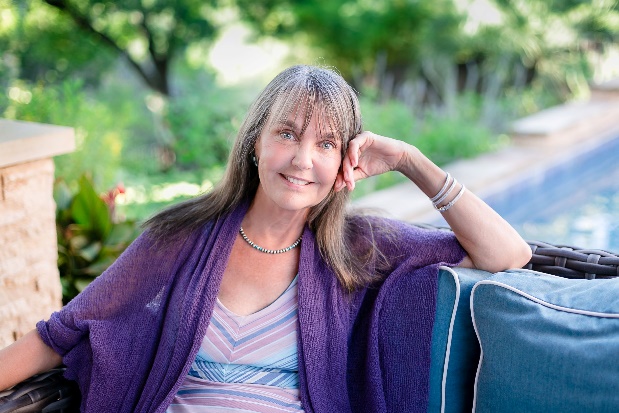
Susannah Perillat is a senior in the Creative Writing program at Southern Oregon University. She worked with Dr. Vaughn Davis Bornet for four and a half years. He was one of her biggest cheerleaders to keep up the good work.

Posted in Ideas and Opinions | Comments Off on Susannah Perillat remembers Vaughn Davis Bornet

Daniel Alrick remembers Stephen Weiner

Daniel Alrick is a graduate of the Professional Writing English program at Southern Oregon University and Chair of the Oregon Council on Developmental Disabilities.

EB: Tell our readers a little bit about Stephen Weiner and his work.

         Stephen Weiner

DA: Stephen Weiner was the publisher of the local newsletter The Suspicious Humanist, a newsletter of literature and political writing. He was a Stanford graduate and journalist who wrote extensively on mental health in personal essays that were published in Classics of Community Psychiatry and The Oxford Handbook of Psychiatric Ethics. Throughout his life, Steve was active in left-wing politics , counterculture, and Jewish identity. He also wrote about the experience of living with schizophrenia and being an “adult in need of the welfare state” to quote one of his articles, and social programs for the disabled.

And Steve was a community librarian, who kept a library of hundreds of books in his small apartment, often keeping multiple copies that he would loan out to others.

EB: What was The Suspicious Humanist and how did it come about?

C:\Users\battiste\Desktop\282E37080D624898AAA4C86E77619D1D (1).jpg

        Milton Weiner

DA: The “suspicious humanist” was his father, Milton Weiner, who was the original publisher, editor, and author of the newsletter in 1970 out of San Francisco and Sausalito, California. Steve inherited the newsletter and title from him.

Milton was a veteran of the Spanish Civil War, which he had fought in as an American volunteer on the Republican side.  He believed in fighting fascism in Spain because he had experienced anti-Semitism from the Ku Klux Klan while growing up in New Jersey during the 1920s. But while in Spain he discovered the war against Franco nationalism was sidetracked by the warring factions of the Communist party. When he returned to America, he enlisted in the Army and fought in WW II as a soldier in the Dixie Division.

Milt was wounded in both wars and was later an advocate for disabled veterans. After Milt’s service in WW II he was a soil scientist before he was blacklist and labeled a “premature anti-fascist” for his time in Spain and his membership in the communist party.

All these political disillusionments and betrayals led him to conceptualize the notion of being a “suspicious humanist,” a sort of ancient mariner of the old left who was skeptical of the new radicalism emerging from California in the 1960s–a political movement his son Steve would become a part of in his youth. In Milt’s view, he had fought in the battle of peace and fascism for real, while the New Left was just talking about revolution in a pretentious way. He believed that he had dealt with matters of existential importance and survival, so his children did not have to. Milt’s world-weary philosophy of humanism summed up was “Just like you, I was born without pockets and a fair share of my urge to help my fellow man.”

Steve embraced those values, but he was torn as a child of the sixties between his idealism toward leftist politics and his own challenge with understanding mental illness. Steve also experienced his own personal sense of betrayals in radical politics. On top of that how does he measure up to the looming presence of his massive father figure in Milt, a bona fide war hero. Being a suspicious humanist, as both father and son would come to believe, is marching to your own drum in politics and humor, a sort of ronin for having both survived and fought in the arena of life.

EB: How did you get involved in the publication of Stephen Weiner’s book When Nothing is Real: Notes of a Humanist?

DA: Steve had worked on his memoir for many years as a handwritten manuscript on notebook paper, which was then edited by local author Richard Seidman. I got involved with Steve primarily from our friendship and interest in politics and books. Through our conversations I gradually became interested in the story of his father, Milt. And through compiling research into Milt’s biography I became more involved in the stewardship of Steve’s papers from The Suspicious Humanist. As Steve became ill with stage four kidney cancer it became a race against time to complete his own memoir and secure the surviving records of Milt. What became apparent to me was that Steve was living out a lot of his own life in the shadow of Milt, whether or not his father loved him, and how he had measured up to the old man in terms of his political journey. It was in a way a release of two ghosts upon the end of that life cycle.

EB: How would you characterize his work: political theory, psychology, philosophy, advocacy, memoir?

DA: The book contains all of those elements. But it is primarily a philosophical memoir. What Steve undertook was a life of letters, reading and writing, to understand both his personal, mental condition and his times as a Baby Boomer and Jewish man in left-wing politics. Readers will find much to relate to in terms of Steve’s chronicle of the political upheaval in California of the 1960s, but also frank admission of loneliness and weariness at the hand he had been dealt. In comparing the lives of Milt and Steve, I was struck by how much more existential Milt is about matters of his security and survival, while Steve is drawn much more intimately into the anguish of family trauma, his parents’ divorce, the death of his sister, spiritual fulfillment, and his thoughts on sexuality, health, and mortality. Milt had a less enlightened view on mental and emotional illness. Steve was more the humanist, while Milt was the suspicious ronin.

EB: What’s the significance of the book’s title?

DA: We talked about the title in the days leading up to his death. “Nothing is Real” referring primarily to Steve’s struggles with paranoid schizophrenia, in reference to the Beatles song “Strawberry Fields Forever.” Which goes to show how Steve was very much a product of the 1960s. Steve believed in enlightenment values and secular humanism but rejected postmodern ideas.”. He resisted and resented the notion that life was an illusion or that objective reality was an ephemeral space, but he also wanted peace of mind in the basic common decency of kindness and thoughtfulness. He had joked to me that he wanted the quote “I tell you, we are here on Earth to fart around, and don’t let anybody tell you different” to be his epitaph, but decided on a quote from Henry Miller instead.

EB: What was the process of putting the book together like?

DA: It was a struggle of the sundown in Steve’s life. He was very ill with diabetes and COPD and then was dying quickly of stage 4 cancer. His memory remained sharp, even in his weariest moments, up until the final weeks in which those synapses started to fail. Richard Seidman did the work with Steve editing the manuscript and designing it for final publication in approximately the last two months of Steve’s life, while I was doing much of the final interviews with Steve and trying to trigger any bits of useful info. I was also collating all of Steve’s surviving papers, along with old records from Milt he had forgotten about. I wrote a draft of the afterword for the book while visiting Steve in the hospital and was watching a video tape of Milt when I received a phone call that Steve had died later that day.

EB: What’s been the reaction so far?

DA: Steve’s friends and family were very supportive, and the people who knew him in Ashland fondly remember his political advocacy and involvement in the Jewish community. Like Milt, Steve was strongly opposed to what he felt was anti-Semitic language on the political left. And what has become clear is how much resonance there was among people who knew Steve from his diligence to remain active and generous with his community in his knowledge and insights. Everyone who knew Steve remembered him as one of the brightest individuals they knew, as well as one of the most honest.

EB: Any plans for further publications?

DA: I have worked on and hope to finally publish a comprehensive biography of Milt. In recent years, concepts like “antifa” and the use of WW II metaphors to describe our political moment have reminded me of Steve and Milt’s struggle with political conflict both in their personal fight, while also a struggle to rise above ideology. Steve and I began our discussions about Milt during Bernie Sanders’ campaign for the Democratic nomination during the 2016 Presidential election. What Steve heard in Sanders was both a callback to the kind of Old Left rhetoric that Milt intoned, while identifying Sanders as exactly the kind of guy Milt was frequently skeptical of in the 1960s. The constant war between ideas and the yearning to carve out one’s place in the pantheon of “the good fight” remains a potent issue.

EB: Thanks for talking with us.

DA: Thank you.

Posted in Ideas and Opinions | Comments Off on Daniel Alrick remembers Stephen Weiner

An Interview with Cara Black, author of Three Hours in Paris.

Cara BlackCara Black is the New York Times and USA Today bestselling author of 19 books in the Aimée Leduc series, which is set in Paris.

From the California’s Bay Area, she travelled widely in Europe and Asia, studying Buddhism in Dharamsala in Northern India and studying Chinese history at Sophia University in Tokyo.

Her love of all things French was kindled by the French-speaking nuns at her Catholic high school, where Cara first encountered French literature She has been to Paris many, many times entrenching herself in it secret history.

Her 20th book is the standalone thriller Three Hours in Paris, published in April 2020 by Soho Press, which the Washington Post put on its Best Thrillers and Mystery Books of 2020 list.

You can visit Cara Black’s website here:

Ed Battistella: This is your first standalone novel. How did it feel to venture away from your Aimée Leduc Investigation series?

Cara Black: Quite scary at first. I’ve written Aimée Leduc for a long time and at first felt I was being ‘unfaithful’ but once I got writing it was a wonderful challenge. A great chance to write something new about a story that I became passionate about.

Three Hours in ParisEB: Where did the idea for the novel come from? What are the three hours in the title?

CB: The idea came from a historical footnote. Doing research I came across a footnote that detailed Hitler’s brief, one and only visit to Paris. It struck me as strange that he never returned or had a big victory parade on the Champs Elysées. It was only for three hours. Hence the title

EB: Were there really female snipers in World War II?

CB: Yes, the Russians had a whole unit of female snipers. The story of Ludmilla, who got 309 kills, inspired my idea for an American, like Kate, to also be a sniper.

EB: I enjoyed the way that the two main characters, the assassin Kate Rees and the policeman Gunter were both doing their part, as they saw, it and staying true to themselves. What’s the larger message?

CB: War is complex and so is the truth. I wanted to show a German man, a family man who is good at his job like Kate who is good at hers, doing his best. Gunter didn’t like his boss, the Fuhrer, and it was important he not be a cliché Nazi.

EB: What was the research like for this novel? There was a lot of spycraft, firearms, and military history.

CB: Research is the best part of writing. I started with the idea for this book about ten years ago, so research along the way was in fits and starts. Four years ago when I got the contract then I concentrated of going through 20 years of notes I took in Paris to do with the war, began purposefully visiting french Archives and war collections. I interviewed several female Résistants, now sadly who’ve gone, but felt very lucky to have spoken with them. Also in London, I went to the Churchill war rooms underground and the Imperial war museum. Stanford University has the Hoover Institute where I found WW2 spycraft gadgets – treasure trove.

EB: Can we expect more stories about Kate Rees in the future? The ending is open?

CB: I’m certainly thinking there’s a whole rest of the war for her to possibly work in.

EB: Perhaps an older Kate Rees might someday be a client of Aimée Leduc?

CB: Who knows?

EB: It was nice to see a protagonist who was a cowgirl from Oregon. Is ranching good training for being a spy?

CB: Definitely. Ranching fosters resilience, self-reliance and thinking on your feet. Three qualities a good spy needs.

EB: This is your 20th book. What’s next?

CB: I’m just working on the edits for the next Aimée Leduc novel – title TBA – set after 9/11 in Paris. This will come out in November 2021.

EB: Thanks for taking with us.

CB: Thank you.

Posted in Ideas and Opinions | Comments Off on An Interview with Cara Black, author of Three Hours in Paris.

Grad School: An Interview with Dante Fumagalli

Dante Fumagalli is a 2017 summa cum laude graduate of Southern Oregon University, with a double major in English and Art History. A member of the founding class of SOU’s Honors College, he was the 2017 student commencement speaker. 

Ed Battistella: What is your graduate school experience like so far, both in New York and now in Eugene?

Dante Fumagalli: I’ve had very different experiences in New York and in Eugene! I only made it through one semester in New York attending the Art History master’s program at Hunter College. It was a very academic program and I enjoyed all of my classes a lot, but I came to the realization that I rushed into graduate school without giving more thought to my long-term goals. I wasn’t sure what I planned to do with my Master’s so I came to the difficult decision to put off graduate school after that first semester.

Ultimately, I’m very glad I did that! I spent the next two years living and working in New York and realized that what I appreciated most about my work in museum education was the connections I would make with students with disabilities. This prompted me to check out the Master’s program in Special Education at the University of Oregon, where I’m now in my second year. I love the mixture of application and theory that a program like this provides – it’s really fulfilling to be able to use concepts we discuss in my graduate courses practically in my practicum site!

EB: What’s are your long-term plans?

DF: I went into this program with the idea that I would work specifically on reading interventions with students with reading disabilities. I think that this would be a great way to combine the skills I acquired during undergrad studying English with my current studies in special education. However, this term my practicum site is with a functional skills classroom at a local high school and I’ve been really loving it. I’m teaching a unit on functional reading skills which has me considering whether a life skills or functional skills setting might be a better fit for me. I want to make sure I keep my options open because I know that I will be graduating with this degree and entering into a field with great need so there is room for flexibility in where I go from here.

EB: What has been the most interesting part of your studies so far?

DF: My favorite thing about my program has been applying course content into my practice with my students. I’m currently taking a course called Design of Instruction and I feel like each week I’ve learned about a new principle of design that I can use to improve the instruction I am providing my students. It feels really gratifying to be able to apply the things I’m learning and see results with my students.

EB: What courses have you taking?

DF: During my first year, I took: Foundations of Disabilities, Behavior Management, Assessment in SPED, SPED Law, Diversity in SPED, Supporting Students with Low-Incidence Disabilities, SPED Math and a year long sequence on literacy. This year, I have taken Advanced Behavior Management, Design of Instruction, Practicum, and Professional Practices. Over the next two terms I will be taking a two-course sequence on transition programming which I’m very excited for!

EB: What’s been the best thing you’ve read as a grad student?

DF: We recently read some very interesting articles by Lisa Delpit regarding intersections between equity, access, and inclusion with traditional skill-based teaching methods and the liberal ethos of fluency-based instruction. She argues that many students of color already exhibit fluency but within different dialectical contexts than their white peers and that this liberal mindset does not address the skill gaps between these students properly, leaving students of color at a deficit. I would highly recommend that educators read Delpit’s writing!

EB: What has been the hardest part of grad school?

DF: The hardest part has definitely been time management and finding time for self-care. Especially now that school is all done remotely, I find myself sitting at my desk for hours upon hours each day and have a hard time pulling myself away to take mental health breaks.

EB: What’s next for you?

DF: I would love to find a job within the 4J school district here in Eugene at the end of this year when I graduate. I’ve grown to really like this city and I would like to continue to foster the community relations that I’ve been able to establish through my practicum here so far.

EB: What do you know now that you wished you knew earlier?

DF: You don’t need to rush into graduate school! It’s okay to take the time to figure out exactly what you want before applying.

EB: Thanks for talking with us!

DF: Thank you!

Posted in Ideas and Opinions | Comments Off on Grad School: An Interview with Dante Fumagalli