
 Follow
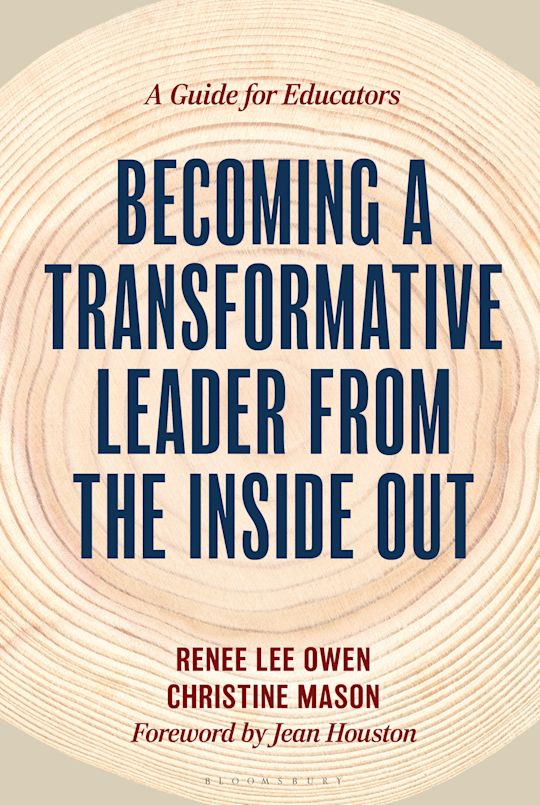
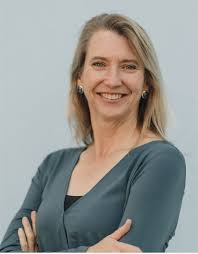 Renee Owen is an associate professor in the SOU School of Education and the co-author of a recently released book titled Becoming a Transformative Leader from the Inside Out (Bloomsbury Publishing, November 2025). Owen earned her bachelor of fine arts degree at the University of Michigan, a master’s degree in Educational Leadership at the University of Colorado, Denver, and a doctorate in Organizational and Adult Learning and Development from Columbia University Teachers College.
Owen is the executive editor of the Holistic Education Review and she coordinates the Principal Administrator Licensure program at SOU. Together with co-author Christine Y. Mason, an educational psychologist who is an assistant clinical professor in the department of psychiatry in Yale University’s school of medicine, Owen developed an educational model aimed at helping new and veteran teachers to shape schools as more positive influences.
Ed Battistella: Congratulations on your book. Can you tell us a bit about how the book come about?
RO: Becoming a Transformative Leader from the Inside Out is a book I’ve been wanting to write for quite some time. I was a school leader for 22 years at unique schools that found success in unusual ways, and to an extraordinary degree. I think part of that success came about because I wasn’t originally trained as an educator, so I didn’t think within that “box.” The first school I led was a high-poverty project-based charter school that I founded in rural Colorado, where I was living with my young family. Since I had no training in education or in leadership, I educated myself mostly with leadership books intended for corporate executives. That was a completely different approach to leadership than education takes – far more agile and adaptable. I applied what I was reading, partly out of ignorance of what a typical leader groomed in K12 education would have done. Sometimes ignorance really is bliss. Much of what I did was risky, but I didn’t know the difference at the time. And while I made a lot of mistakes, the overall results were beneficial.
As time went on, I wanted to write about my leadership experiences in the hopes other leaders could learn from a unique approach to leading schools…but I couldn’t carve out enough time to write a book while I was running schools. Too busy. Then, when I took the position at SOU of running the administrative licensure program, I wanted to write the book even more, because I couldn’t find the book that I wanted for my program. So I had to write it myself! Fortunately, I knew Chris Mason, my co-author, who has published a lot of books, to help me through the writing and publishing process.
EB: One of the things you discuss is transforming the industrial paradigm. What is that paradigm?
 RO: A paradigm in this case could be defined with several other words–worldview, frame of mind, and ontology, to name a few. It’s a way of being that is typically so ingrained in a people’s culture and society that most people don’t even question it.
I describe the industrial paradigm as a hierarchical system that values efficiency and productivity over relationships, interconnectivity, and sustainability. Communication flows from the top down, and resources from the bottom up, with those at the bottom benefiting those at the top more than the other way around. The system is, by nature, exploitative of humans and natural resources. Most Americans think of this system as normal, or “just the way it is” (If they even stop to think about it at all.) That’s because the system, or paradigm, we live in also shapes the way we think and behave.
Students are naturally at the bottom of this system, with the least power of all. Schools in the industrial paradigm are set up for efficiency, with students treated as a future resource for the economy – a resource that needs to be shaped to be of value. Most teachers, of course, don’t explicitly think of it that way, and might be appalled at my accusation. In my early years of education, when I worked primarily with kids in a high-poverty situation, I viewed my efforts to teach them the grammar – not just of the English language – but of the industrial system. I was helping them to rise up through the system. I wanted them to be able to compete.
But if everyone is competing with one another, that isn’t sustainable. There are always winners and losers.
Now I see it differently. I still want them to learn how to think and to gain skills that will, indeed, make them competitive in the economy; but I also want them to view themselves, other humans, and the natural world, as more than an economic construct. If they grow up seeing everything as interconnected and interdependent, the skills they learn would be employed in a very different way than competition, like helping everyone survive and thrive. When I think about what is most needed in today’s world, it’s how to get along. Almost all of the biggest challenges we face – climate change, nationalism, war – could have been avoided if we humans knew how to work together and get along. That’s probably the most important thing education can teach. That is, if we want to survive.
EB: Who is the audience for your book?
RO: I wrote Becoming a Transformative Leader with 3 main groups in my mind. 1) My students – aspiring educational leaders. 2.) A professional development book for current leaders in schools. These might be new leaders who need to learn basic leadership dispositions and skills, and 3) Veteran leaders who know deep in their bones the current system isn’t working. They are burning out, and they need the courage and strategy to instigate transformative change.
EB: I understand that SOU is one of the case studies in the book. Can you say a little about that?
RO: I wouldn’t use the word case study, which connotes an academic study. Becoming a Transformative Leader from the Inside Out is intentionally written to be easy to read for busy professionals who need to read quickly and who want to enjoy what they are reading. So “vignettes” are woven through the book, mostly stories that Chris and I tell about our own leadership experiences—often mistakes we made, and what we would do differently today. I think it adds a lot of authenticity to the book and makes us relatable. New leaders often feel pressure to be perfect. The pressure is especially strong in education, where any mistake we make could have negative ramifications for innocent children. But perfection isn’t realistic, and we want to model that learning is what leadership is all about.
Humans learn through story. Besides “Our Voices” are many other stories, including a brief story about the leadership style of SOU’s President Bailey.
EB: You talk about measuring progress. How does one measure transformation?
RO: The concept of measurement in the academic field of transformative learning is controversial. Without going too far down the rabbit hole of convoluted academic theory, many academics think it is fundamentally impossible to quantitatively prove that someone has transformed. Yet, we know it when we see it. In the natural world, when something makes a chemical transformation – like a piece of wood burning and becoming something different – we can prove it.
But we aren’t just talking about material transformation. We are talking about a change in how people think — a change in spirit, in consciousness. How can one prove that? We can look at behavior change (but ultimately no one can prove what’s changed on the inside). And how do we prove those changes are in service of the children in our schools and the communities to which we are responsible?
Here, I am asking more questions than providing answers. But in the book, we offer a whole chapter on measurement. If you transform the way you measure and what you measure, you can transform the antecedent. In practical language: What you measure is what you get. In wisdom language, “You find what you seek.” We are measuring the wrong things in education. If we started measuring growth, instead of achievement, we would be developing humans.
EB: What was most rewarding about writing this book?
RO: The most rewarding part is getting Becoming a Transformative Leader from the Inside Out into people’s hands. One of the main definitions of leadership is essentially “influence.” I want to influence educators. So the most rewarding part is when someone reads it and realizes that if they want to change education, they are not alone. And together, we can do this.
EB: Best of luck with Becoming a Transformative Leader from the Inside Out. Thanks for talking with us.
