An Overview of the Historical and Sociolinguistic Aspects of South African English, a guest post by Orianna Alter

Orianna Alter, a junior at Southern Oregon University, is interested in languages and mathematics. She is of South African descent.

South Africa, termed the “Rainbow Nation,” boasts a rich variety of climate zones, cultures, and ethnicities. Further diversity is reflected in the eleven official languages of this country, which include “Sepedi, Sesotho, Setswana, siSwati, Tshivenda, Xitsonga, Afrikaans, English, isiNdebele, isiXhosa and isiZulu” (Constitution of the Republic of South Africa, 1996). This paper focuses on one of the more widely used languages, English, and will explore both its historical development and subsequent impact in South African society. It will also review some of the linguistic features unique to South African English.[1]

THE SPREAD OF ENGLISH IN SOUTH AFRICA AND ITS IMPACT

In order to understand English in South Africa, it is necessary to understand the history of its development in the country. English was first introduced to South Africa in 1795 with the arrival of the British in the Cape Colony. Later, as additional groups of British and European settlers immigrated to the country, the language became more established, and in the year 1910 English and Dutch were both designated as official languages (Van Rooy 509-510).  Legacies of Colonial English describes South African English as an “extraterritorial language,” defining this term as a language “that has been transported from its original geographical home to another area” (363). Although both Afrikaans (from Dutch) and English can be defined as extraterritorial languages, it is interesting to note the differences in growth the languages have taken, especially in the years after apartheid South Africa. While the use of Afrikaans has dwindled in public sectors, English has grown considerably in influence.  In the paper “South African English: Oppressor or Liberator?” Silva explains this change:

Afrikaans became known as “the language of the oppressor”: apartheid was enforced in Afrikaans, as it was the language of the bureaucracy and the police force. In contrast, English was chosen as language of communication by the ANC and the other liberation organizations during the ‘freedom struggle’, and has “typically been seen as the language of liberation and black unity” (para. 19).

The ANC mentioned in the above quote refers to the African National Congress, a political movement first founded in 1912 to protect the freedoms of Black Africans. The ANC party first came into power when Nelson Mandela was elected in 1994 and has retained this position since that time (“A Brief History of the African National Congress”). The ANC’s decision to use English as their language of communication has played a vital role in the way English is perceived in South Africa. In the article “English in South Africa at the millennium: challenges and prospects,” English and linguistics professor Nkonko Kamwangamalu explains the subsequent use of English in South African society:

English has a special status in South Africa. This is evident from the language practices in the higher domains such as the media, the legislature, education, the army, and correctional services…The hegemony of English is also evident from the language practices for political events, such as the inauguration in 1994 of Nelson Mandela…the annual openings of Parliament…and various official announcements or press releases (161).

The widespread use of English in government and other public sectors has contributed to the popularity of the language, and has influenced the rise of the language as the lingua franca. Another motivating factor for adopting English as a common medium is chiefly economic, as The Oxford Handbook of World Englishes explains: “English also increased in its value as the African population urbanized and became part of the industrial economy which was dominated heavily by the English language (De Klerk 2006:11), leaving behind the agricultural economy that was dominated by Afrikaans” (513).  In today’s society, South Africans who are not fluent in English will not enjoy the same access to jobs and economic growth as other English speakers (Van Rooy 514). In addition, English is recognized as “the dominant language of academia in South Africa” (Report on African Languages 23). As a result, students who wish to pursue higher education must have a command of the English language to succeed in their studies. Therefore, although South Africa boasts a variety of official languages, the reality is that English has become a necessity for many Africans if they wish to understand the affairs of government, participate in society, attend university, and have access to better jobs and business opportunities.

LINGUISTIC CHARACTERISTICS OF SOUTH AFRICAN ENGLISH

As to be expected with a language in constant contact with other languages, many terms in South African English have been borrowed from Afrikaans and other African languages, and these words and phrases have become incorporated into mainstream speech. The Oxford Handbook of World Englishes notes that in earlier years, most borrowings came from Afrikaans, but later, once apartheid fell, there was an increase in borrowings from African languages (as qtd in Van Rooy 517). Legacies of Colonial English lists some of the borrowed Afrikaans terms including: “bakkie ‘pickup truck’…braai ‘barbecue’…stoep ‘verandah’…ja ‘yes’…sies ‘expression of disgust’” (382). Other words incorporated from Khoe and Bantu include “dagga /dɐxɐ/ ‘cannabis’…gogga / xoxɐ/ ‘bug, creepy-crawly’…muti ‘herbal medicine’” (382).

In addition to the rich variety of borrowed words and phrases, South African English also boasts a range of accents and pronunciations, all which differ depending on native language and regional dialects. Silva explains: “In SAE, pronunciation and intonation (and often vocabulary, and sometimes even grammar) differ markedly from one ethnic community to another (largely a result of the Group Areas act during the apartheid era, which separated communities into different residential areas, and segregated school-children into ethnically-based schools)” (para 16).  It is difficult to point to a standard South African Accent, as so many varieties exist, and research must compare White South African English (WSAE), Black South African English (BSAE), and other varieties including Coloured SAE and Indian SAE. In addition, these broad categories may contain subcategories to explore, along with changes that occur regionally and among genders, age groups, and socioeconomic classes.[2]   

Legacies of Colonial English identifies a “South African chain shift” in which the “short front vowels” such as in the words “trap” and “dress” have been raised and the vowel in the word “kit” is assigned a new value so that it no longer rhymes with “it” (374-375). Interestingly, further research has shown that the pronunciation of the vowel in “trap” may be undergoing a reverse shift in the opposite direction, a trend led by young females (Van Rooy 519).[3]

An additional feature of South African English that sets it apart from other English varieties is the use of “now”. Van Rooy explains: “The adverb now is used to indicate near future rather than immediacy in White SAfE (Bowerman 2004b), and even occurs in the reduplicated form now-now, where the immediacy is watered down further” (524). Lass concludes that the repeated now-now form has been modeled after similarities in the Afrikaans language (380). Another unique feature modeled after Afrikaans is the use of “must.” Whereas in other varieties of English, “must” is often used to denote some form of obligation, in South African English it has lost the feeling of command and has become more like a recommendation (Lass 381).

THE FUTURE OF ENGLISH IN SOUTH AFRICA

Although English has gained dominance in South Africa, there exists controversy over its use due to the wide range of ethnic and language backgrounds in the country. Some anticipate that the spread of English will endanger other less prominent languages and identities, including Afrikaans (Kamwangamalu 162). The History of the English Language reviews two of the most prevalent attitudes towards the spread of English in Africa, explaining one view it states: “The first advocates a change of balance between English and African languages in favor of the latter, a policy shift that would move African languages from the margins to the center of African life” (429). This view favors the rise of African languages to preserve the cultural and ethnic customs and identities of Africans in an attempt to prevent English from taking over valued cultural and language differences. However, others feel that English can be in effect “Africanized” and made to conform to the culture and society of the people that use it, as the following excerpt illustrates: “The second school of thought is the one that seeks to come to terms with English as part of the post-colonial African reality, appropriate it, reconfigure it materially to acquire an African identity and transform it to create a counter-(i.e., anti-imperialist) discourse” (Mazrui 429). This viewpoint seems to be more suitable for South African society, as creating equal language opportunities in a variety of public sectors, for example universities, requires more money and resources (Silva, para 24).

As changes in government and policy continue to unfold in South Africa, it will be interesting to see the implications for future English development. Since apartheid fell, the African National Congress has taken control politically. However, with the rise of new political parties, there may be shifts in attitude that affect the use of English in government and other areas, and we may see a rise in popularity of African languages. Moreover, as more racial integration takes place, South African English will surely continue to evolve, reflecting the increasing diversity of the country.

Bibliography

“A Brief History of the African National Congress.” African National Congress South Africa’s
National Liberation Movement, www.anc.org.za/content/brief-history-anc. Accessed 13 Mar. 2018.

Constitution of the Republic of South Africa, 1996. Chapter 1 Founding Provisions. https://www.gov.za/documents/constitution/chapter-1-founding-provisions. Accessed 16 March 2018

Kamwangamalu, Nkonko M. “English in South Africa at the millennium: challenges and prospects.” World Englishes, vol. 21, no. 1, 2002, pp. 161-63, http://onlinelibrary.wiley.com.glacier.sou.edu/doi/10.1111/1467-971X.00238/epdf. Accessed 18 Feb. 2018.

Lass, Roger. “South African English.” Legacies of colonial English: studies in transported dialects. Edited by Raymond Hickey, Cambridge University Press, 2004, pp. 363-384.

Mazrui, Alamin M. “English in Africa.”The History of the English Language. Edited by Haruko Momma and Michael Matto, Wiley-Blackwell, 2008, pp 423-430.

“Report on the Use of African Languages as Mediums of Instruction in Higher Education.” Published by the Department of Higher Education and Training, pp 23.

http://www.justice.gov.za/commissions/FeesHET/docs/2015-Report-UseOfAfricanLanguages-MediumsOfInstruction.pdf Accessed 16 Mar. 2018

Silva, Penny. “South African English: Oppressor or Liberator?” The major varieties of English: papers from MAVEN 97, Växjö 20-22 November 1997. https://www.ru.ac.za/media/rhodesuniversity/content/dsae/documents/articles/Silva_article.pdf  Accessed 18 Feb. 2018

Van Rooy, Bertus. “English in South Africa.” The Oxford Handbook of World Englishes. Edited by Markku Filppula, Juhani Klemola, Devyani Sharma, Oxford University Press, 2017, pp.508-526.

                                                                                                                

  1. Abbreviated as SAE

  2. Observed from examining research in The Oxford Handbook of World Englishes

  3. See chart on page 7

Posted in Ideas and Opinions, Language | Comments Off on An Overview of the Historical and Sociolinguistic Aspects of South African English, a guest post by Orianna Alter

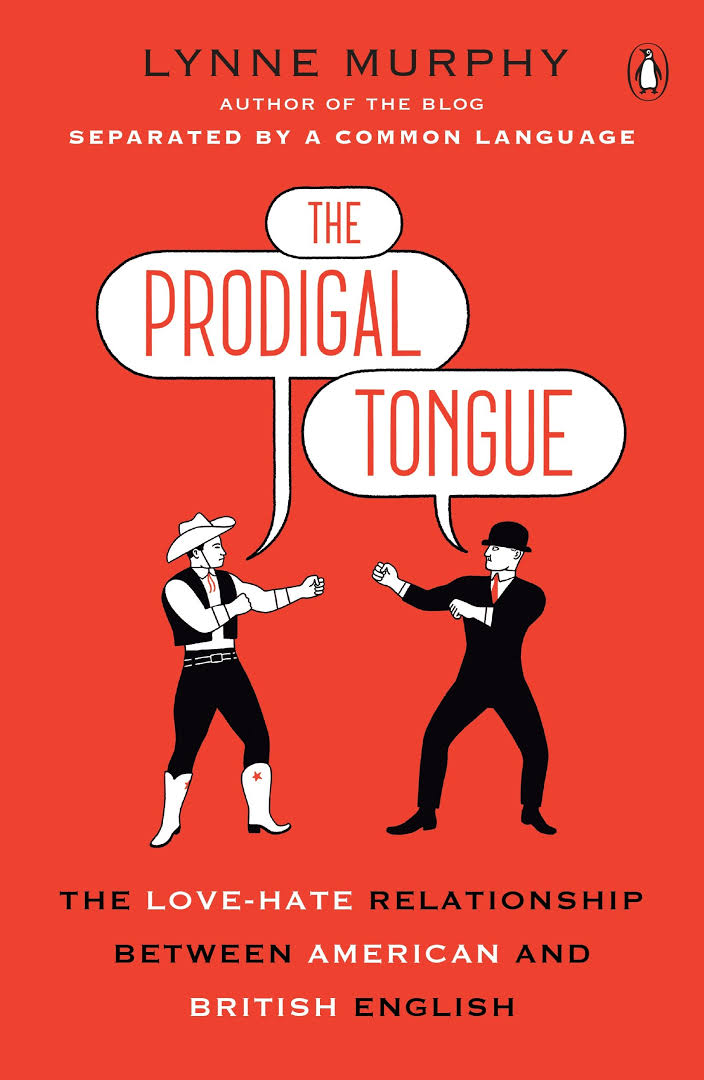
An Interview with Lynne Murphy, author of THE PRODIGAL TONGUE


Lynne Murphy is Professor of Linguistics at the University of Sussex. She grew up in New York state, she studied Linguistics at the Universities of Massachusetts and Illinois, and has taught in South Africa and Texas. Since 2000, she has lived in Brighton, England, where she now has an English husband and English daughter. She blogs as Lynneguist at the award-winning blog Separated by a Common Language and in 2016 she was a National Endowment for the Humanities Public Scholar.

Murphy is the author of several books, including Lexical meaning (Cambridge Textbooks in Linguistics, 2010) and Semantic relations and the lexicon (Cambridge University Press, 2003). Her most recent book, released this spring in the US and UK, is The Prodigal Tongue: the love-hate relationship between American and British English.

Publishers Weekly calls The Prodigal Tongue “thoughtful, funny, and approachable” with a “commitment to inquiry.”

You can follow lynneguist on Twitter: https://twitter.com/lynneguist

Ed Battistella: I’m really enjoying The Prodigal Tongue. You’ve coined the term Amerilexicosis. What is that?

Lynne Murphy: Thanks, Ed! I’ve coined a number of words relating to the British media’s treatment of American English, because a lot of that treatment seems to be pathological in nature. Amerilexicosis is the most extreme form of the disease, marked by paranoia and “delusions of America”. You see that when British people blame Americans for the now-popular British pronunciation of controversy as conTROVersy or when they think “It’s a big ask” is an import from US business culture. In reality the pronunciation is 100% British and big ask is an Australianism, but that hasn’t stopped some English people from pointing at them and saying “Look! The Americans are taking over our language and ruining it!”

EB: Do the British have a linguistic superiority complex? Or does the US have a bit of an inferiority complex, language-wise?

LM: They both can be true—and they feed each other. There’s a tendency for British (especially English) people to view standard British English as “the real thing” and to see the parts of American English that differ as “mistakes” or “non-standard”. But Americans don’t tend to see the British differences as mistakes, and they often assume that if it’s said in England, it must be proper. Americans often admire British English, and that helps stoke the British feeling that their English is the best one.

A big part of what I’m trying to communicate through The Prodigal Tongue is that the assumptions underlying those attitudes are often just wrong. The English spoken in Britain is no older than the English spoken in America, in that they both started with the same people on a certain island. The differences we see in Britain and the US aren’t there because a new English sprouted up in the colonies, but because the language forked and developed in different ways in different places. The English now spoken in England is not “original English”. It’s just “sedentary English”.

EB: Does language mean different things emotionally to the average Brit versus the average American?

LM: We probably have to be careful here when talking about “the average Brit”—since not all Britons are English and the English have a different relationship to the language than the Scots or Welsh do. The thing that’s hard for Americans to really understand is how much accent matters in Britain and how much accent is intertwined with social class—and even what social class means in the British context. I mean, Americans have accents and they belong to socioeconomic classes, of course. And we know some accents are discriminated against in America. But most Americans just do not have the kind of accent–class sensitivity that comes naturally in England, where the highest-status accent has its own name: Received Pronunciation. It even has a nickname: RP.

Americans seem to get more exercised about grammatical things and punctuation and the like. Perhaps not the average American, but those who have reason to think about language. When I get a new follower on Twitter and I see they’ve written “Team Oxford Comma” in their bio, I can be pretty sure it’s an American. The style guides, like the Chicago Manual of Style or Associated Press Stylebook, are huge in comparison to their modern UK counterparts. National Grammar Day is an American invention—and so forth. In some places where Americans use hard-and-fast rules about grammar, British writers and editors are more willing to say “see what sounds right in the context”.

Which is to say, Americans are more willing to be told what to do grammar-wise (and to then tell others what to do). That sounds kind of subservient to the rules, which you might not think of as an American characteristic. But it is! And I think it comes from a really democratic urge. If the rules of grammar are written down, they can be the same for everybody and everybody can pull themselves up by their bootstraps and learn those rules. The British way relies on having an “ear” for the language—something that you’re not taught and that not everyone can be expected to do well. I talk about this a lot in the book—that for Americans, English is a tool that anyone can learn to use well (if they try hard enough). In England, though everybody uses English, there is a sense that not everyone is expected to be able to really master it—it’s not so clearly seen as a teachable skill. Though I think this difference goes way back to the start of the United States, it’s probably been strengthened by the fact that most Americans have not-so-long-ago ancestors who had to learn English as a second language.

EB: As an American living and working in England do you find people commenting on your speech? What do they say?

LM: When you’re an American in England, Americanness becomes your main identifying characteristic and personality trait. I’m not “that red-headed woman” or “that professor from the university”, I’m “that American woman”. These days, I tend to get comments like “Your accent is rather soft”—because I often hit my t’s in words like butter and my vowels have moved in the direction of the people around me. (I’ll never be mistaken for English in England—though I’ve had people in the States think I’m British.) But a big part of the reason those vowels have moved is because I was mocked for my Great Lakes vowels when I first moved here. So, when I say box in England, it’s a bit more like “bawks” now, rather than my native “bahks”.

People do tend to assume that anything unfamiliar that comes out of my mouth must be an Americanism—so often I have to explain, “no, that’s just a Lynneism”.

EB: A lot of the differences you discuss are very subtle and go beyond the usual biscuit-and-cookies sort of thing. Can you give us a couple of examples of the complexity of linguistic differences?

LM: Well, even the biscuit-cookie thing is complex, because the British now use the word cookie, but they don’t use it like Americans do. Many Brits make a distinction between biscuits (which are the cookies they’re used to eating—they’re always crunchy) and cookies, which are the big soft, round ones you can buy in the mall, plus Oreos and anything with chocolate chips—that is, the specific recipes that have been imported from the US. When I make cookies out of my Betty Crocker cookbook, my English friends don’t recognize them as cookies. They compliment me on my “little cakes”. Their meaning of cookie just doesn’t extend as far as the American one does.

I have a lot of food examples in the book, I could talk about them for days. But to try to give you something different, there’s middle class—which in American has the feeling of ‘normal, just like everybody else’, whereas in Britain middle class often connotes something more like ‘well off’ and even ‘pretentious’.

And then there are the differences in how we use polite words. The way Americans use excuse me before cutting in front of someone can sound really pushy in England, because there it’s usually used after the sin, not before it. The English use please twice as much as Americans do, because they mostly use it when making very small requests. Adding please to little requests in American can make the speaker sound impatient or like they’re pleading. So in ordering in a restaurant, for example, Americans tend not to use it. They say things like I’d like the salad where Brits often order in a way that sounds (to an American ear) like asking permission: Can I have a salad, please? In new work that I’m doing with my colleague Rachele De Felice, we’re looking at thanking and we’re finding that Americans thank a lot more than British folk do. We’re wondering if that sometimes does the work that Brits would do with please. To give one example, if you put a plate of cookies in front of me and said “Would you like one?” I might Americanly say “Yes, thanks.” But the Brit would almost certainly say “Yes, please.”

EB: You also have a terrific blog, Separated by a Common Tongue. Did the book emerge from the blog?

LM: I’d say the blog gave me the opportunity to write the book. I started the blog as a hobby, to satisfy my lexicographical desire to write down the words and meanings I was learning in England. As the blog became more popular, I started talking about the subject in a lot of public venues. I gave a talk called How America Saved the English Language to a lot of English audiences. It provided the outline of the first six chapters of the book.

When I started writing the blog, my professional research was more about how vocabulary is organized in the mind. I was researching things like how children learn which words are opposites. This is to say, I was not a sociolinguist or a language historian. But as I wrote the blog, I wanted to learn more about the hows and whys behind the differences, and so I learned a lot about it. And then I had enough for a book that really looks at the issues, rather than just listing differences.

EB: Are there some Briticisms that play better in the US than others? And vice versa?

LM: Depends on what you mean by ‘play better’. Americans are acquiring Briticisms all the time and not always knowing it. For instance, people who disappear go missing now. That was an import from Britain about 20 years ago, but I don’t think most Americans knew it was British at the time. It just slipped in. Similarly Americans now take gap years, they vet candidates, they’re gutted when those candidates don’t win, and I just today read a Facebook status from an American friend having a lie-in. Do Americans know these came over from Britain? I’d say most don’t. So they play well with American English. (I have to recommend Ben Yagoda’s blog Not One-Off Britishisms here. He is keeping track of Briticisms that are sneaking into US journalism.)

But if by “play better” you mean that Americans enjoy these words as Briticisms, my sense is that Americans love British words that sound a bit silly to them. I’ve been watching The Good Place and there are a number of points where British English is gently mocked as silly and incomprehensible. My colleague Justyna Robinson and I are currently doing some research into how British English is stereotyped in American culture and I’ll be including some Good Place material in that!

In the UK direction, there are the Americanisms that aren’t noticed and just slide in and get used, then there are the ones that are noticed and they usually have someone complaining about them until they’ve been around long enough that they just feel like English. I love it when British people complain about the American use of reach out and they say “Why do we need this Americanism? Why can’t we just stay with contact?” And I get to reply “Well, why would you want that Americanism?” because the verb to contact came over from the US in the 1930s. (Incidentally, I hate reach out too. But I’m not going to pass up the opportunity to make that point about contact!)

I have a project in development where I look at how British people continue phrases like “As the Americans say…” or “This is what the Americans call…”. These crop up a lot in British media and politics, and they’re often expressions with roots in metaphor. Whether they’re actually things that Americans say is another matter. Sometimes they’re not, but they reveal a bit about what the British sense of “Americanness” is. So it might be said that colorful American metaphors go down well.

EB: I imagine that some difference between British and American are dialect sensitive —and that some differences pertain to some British speech but not others. Is that the case?

LM: Absolutely. It’s pretty much impossible to compare accents on an international scale because two accents in Britain might have less in common with each other than they have with one accent from the US. And it’s important for Americans to note that Brits will get very annoyed if you’re heard talking about someone having a “British accent”, especially since most Americans use it synonymously with “English accent”, ignoring that there are other countries in Britain. (I’ll pause to note here that English people conflate “English” and “British” a lot too, but that they tend to notice that conflation more when Americans do it!)

At the level of spelling, it’s easy to make the international comparisons. For vocabulary and grammar, you have to be a little careful.

EB: Can you enlighten us on the pronunciation of “h”?

LM: You mean the name of the letter? The usual in Britain, like in the US, is to call it “aitch”. But in the UK, it’s increasingly called “haitch”, which is a fairly common pronunciation in Ireland and may have some class connotations in England — that is, haitch is often heard as a bit down-market. Some might say it that way because they are hypercorrecting—they want not to be dropping their h’s, since h-dropping has been a marker of lower-class speech since the 1800s. So they add an extra h just to be sure. (The British did the same with herb—starting to pronounce its h in the 19th century.) But haitch also might stem from the sense that almost all the other letters have names that start with their sound. So why shouldn’t H? All I know is: my 10-year-old says haitch a lot, but she also sometimes catches herself doing it and corrects to “aitch”. I think it must be a matter of discussion in her school.

EB: Are you working on another book?

LM: At the moment, I’m trying to get some smaller projects into press. But I do tend to have book-sized ideas, and I’ve got two book proposals burbling in my head. The problem now is choosing between them.

Cover of the UK edition

EB: Thanks for talking with us. I love The Prodigal Tongue. But I notice that the UK and US editions have different covers. What’s up with that?

LM: It has two different publishers, so they get to have their own way with it, and publishers have firm ideas about what will work in their markets cover-wise. I think they know what they’re doing, because both my husband and I have had books with different covers in the US and UK, and our American friends tell us that the US covers are better, and our British friends tell us the UK covers are better.

I insisted that the subtitle differ by country: that American should come first in America and British in Britain. It was a nice idea, but it’s made talking about the book a bit more difficult when I’m speaking with international audiences!

It’s been great talking with you, Ed. Thanks!

Posted in Interviews, Language | Comments Off on An Interview with Lynne Murphy, author of THE PRODIGAL TONGUE

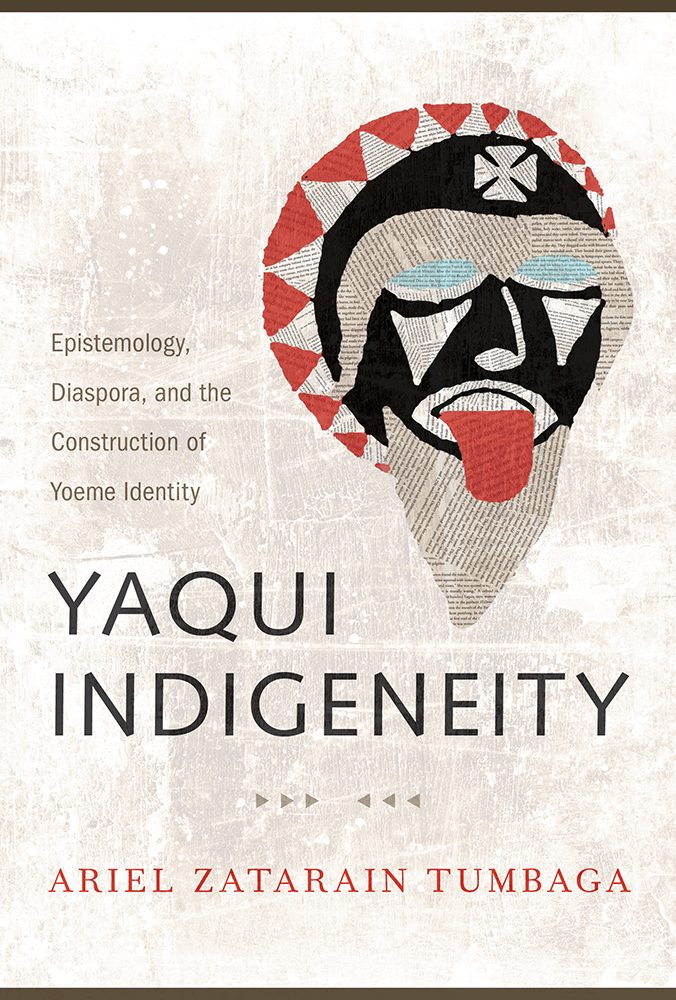
An Interview with Ariel Zatarain Tumbaga, author of YAQUI INDIGENEITY: EPISTEMOLOGY, DIASPORA, AND THE CONSTRUCTION OF YOEME IDENTITY

Photograph of Dr. Tumbaga by Bella Jeanne Photography

Born in Sonora, Mexico, Ariel Zatarain Tumbaga is a scholar of Mexican and Chicana/o Indigenous literature and culture. He has a PhD in Hispanic Languages and Literatures from the University of California Los Angeles. His book Yaqui Indigeneity: Epistemology, Diaspora, and the Construction of Yoeme Identity was published by the University of Arizona Press in March of 2018.

Ed Battistella: Congratulations on your book. Can you tell our readers a bit about it? What fascinates you about Yoeme Identity and the trope of the Yaqui warrior?

Ariel Zatarain Tumbaga: Thank you Ed. Yaqui Indigeneity: Epistemology, Diaspora, and the Construction of Yoeme Identity is a study of the representation of the Yoeme (or Yaqui) indigenous nation in Mexican and Chicana/o (Mexican American) literatures. In it, I study Native depictions with an emphasis on Yaqui history and culture. Until now, there has not been a book length study on this community’s representation in literature, despite their historical and political importance in Mexico, and their presence in the United States. Yaqui Indigeneity is also unique in that it looks to Yoeme history, cosmology, and traditional ceremonies (oral tradition known as etehoi and dance) as a basis for its literary analysis. Finally, it identifies a group of authors that I call Chicana/o-Yaqui writers, who are the sons and daughters of the Yoeme diaspora, often a direct result of Mexican Wars of Extermination perpetrated by federal and Sonoran state authorities. Yaqui Indigeneity works to retrieve an indigenous voice to nonindigenous portrayals of the Yoeme community.

What I found fascinating about the Yaqui warrior trope is the polysemy with which it has existed since the 1500s. Like other scholars, I was taken aback by the varying ways a Native nation’s assertion of its territorial tenure became, one the one hand, a subject of admiration by would-be conquerors, and on the other hand, justification for the dehumanization and violence colonial Spaniards, as well as 19th and 20th Mexican regimes, used in land grabbing efforts. Even today, Sonoran Mexicans will brag about the fierceness of their indigenous “ancestors,” while simultaneously considering it offensive to be called an indio. While the Yoeme people have a war history, that history is seldom told by them or from their perspectives.

EB: How did you first get interested in Yaqui culture?

AZT: This book has been a long time in the making, beginning with early childhood stories about invincible indigenous warriors and later with the Mexican and Chicana/o literatures I studied as a graduate student. My mother, a Mexican woman of Mayo descent, still tells popular and personal stories of Yaqui (Yoeme) and Mayo (Yoreme) history and people. She likes to remind people about the Mexican Revolution Era Mayo general Yocupicio who became governor of Sonora. As a child, she accompanied her Yoreme language-speaking grandmother in Mayo celebrations, like Santísima Trinidad in Júpare, San Juan in Navojoa, and Easter celebrations. She likes to tell us about the time when my tío Mario received a whipping from a sacred fariseo performer for disrespectfully mocking him during Holy Week. One of her favorite stories was about the defiant Yaqui warriors who drew a line on the ground to delineate their territory before impending Spanish invaders. The former story, based on the 1533 first Yaqui encounter with Spanish Conquistadors, is legendary and historical, but also serves as the beginning of the Yaqui warrior myth.

When I began studying Yoeme literary representations, I studied Yoeme culture out of necessity. In many instances, Yoeme defense of their territory is described as both political and religious. Therefore, I reasoned that studying their community’s presence in literature purely from a Western literary perspective would result in a superficial study of the Yaqui warrior myth.

EB: How has that construction of indigeneity evolved in literary works?

AZT: Indigeneity has had a long life in nonindigenous literature. Colonial literatures in Latin America were highly ethnographic, as if the power to rename indigenous people gave conquerors and colonial authorities a sense of power over them. For example, though they referred to themselves as Yoemem, they were nonetheless called Yaquis by Spanish priests and soldiers; the latter has persisted in public discourse. Literary and academic indigeneity has since been largely an exercise in denying Native people participation in their own representation. Nineteenth century representations were Romanticist depictions in which Native contemporaries represented peculiar national pasts differentiating Latin America from Europe and the United States. By the early twentieth century, literary depictions had become unapologetically anthropological works that, while well-meaning, often presented indigeneity as more Other than contemporary. Chicana/o literature had made progress in its representation of indigeneity, considering that Mexican Americans were racially and culturally part indigenous. At times, Chicana/o writers have focused heavily on pre-Columbian empires, which proposed Native American history and mythology to be as significant as Greco-Roman cultures. Though, a pre-Columbian focus has at times had the effect of obscuring the experiences of contemporary Native Peoples in Mexico and the United States. Indigeneity will keep changing in accordance with varying nonindigenous ideologies and political ebbs and flows, until we recognize and support self-identifying Native authors. Chapter five of Yaqui Indigeneity studies the question of Mexican American authors who are also of Native descent.

EB: You talk about the Yaqui as a transborder culture. Can you elaborate on that a bit?

AZT: The Yoeme people’s homeland is in southern Sonora, which is home to a coveted water source and fertile lands. This territory, and their much admired labor, made the Yoemem the targets of violent land grabbing efforts that resulted in waves of refugee migrations, as well as forced deportations, within Mexico, as well as into the United States. The result is the federally recognized Pascua Yaqui Tribe in Arizona. Arizona Yaquis participate in ceremonial traditions in the United States and across the border in Sonora. The diaspora resulting from the Wars of Extermination, of course, spread beyond Arizona, which forced many Yaquis to lose touch with their religion and culture, but not their history. In my final chapter, I offer my analysis of Chicana/o-Yaqui writers who use their writing as a form of cultural reclamation. These are writers of Yaqui descent who in some cases recovered some of their heritage through the process of researching their family histories. Seminal Chicano playwright Luis Valdez controversially represented the sacred deer dance in his play Mummified Deer as part of his artistic portrayal of Yaqui history and diaspora from Sonora, Mexico, into California. The late Yaqui-Chicano writer Miguel Méndez’s “Tata Casehua” reimagines heartbreaking instances of genocide against Yaqui resistance fighters and their families. Alma Luz Villanueva and Alfredo Véa Jr.’s works reveal creative adaptations of an impressive knowledge of Yoeme history and culture. And in the historical novel The City of Palaces premier noir novelist Michael Nava steps outside his genre to reimagine an award winning reinterpretation of the Mexican Revolution in part through Yaqui politics and religion. This body of work depicts individual and collective Native cultural-political experiences, and their historical significances, in Mexico and the U.S. So, the Yoeme people, culture, and the literature in which they appear are a transborder phenomenon.

EB: There was a lot of historical research involved in this book. Can you describe that process?

AZT: There are some studies on Yaqui history by authors like Evelyn Hu-Dehart and Edward H. Spicer, but not enough to satisfy a book length study like Yaqui Indigeneity. Luckily, the historical and geographical ubiquity of the Yoeme nation in Colonial, post-Independence, Revolution Era, and contemporary politics, has compelled historians to recognize them in their studies. Nonetheless, I relied on anthropological studies or anthropologically inspired biographies that informed my studies. For my chapter on the Mexican Revolution, Rosalio Moisés’s The Tall Candle: The Personal Chronicle of a Yaqui Indian, by archaeologists Jane Holden Curry and William Curry, provided me with real instances of Native survival, family disintegration, and diaspora into the United States. Jane Holden Kelley’s Yaqui Women: Contemporary Life Histories, which follows the lives of four Yaqui soldaderas, women who participated in the Revolution, was an invaluable source for its historical significance and its affirmation of Yaqui rituals during the Mexican Revolution. David Delgado Shorter’s We Will Dance Our Truth: Yaqui History in Yoeme Performances validated many of my conclusions regarding the importance of Yoeme religion, storytelling, and dance traditions. So, it was a real enlightening process of putting together relevant historical context from a multidisciplinary array of sources.

EB: What was the most surprising this you found in your research?

AZT: I was astonished not only by the Yoeme community’s hundreds of years of persistence, but also by their presence. As a collective, they staved off Spanish conquerors, thrived during colonial rule, rebelled after the War of Independence, fought in the Mexican Revolution, and recently publicly fought against the state appropriation of their water source. Individually, they participated in the California Gold Rush, served as military generals, were seminal Chicana/o activists, and, in the case of Alfredo Véa Jr. and Michael Nava, have been lawyers and award winning novelists. But I suspect that we might find it surprising partly because of how little people know about the Yoemem despite it all.

EB: Based on your research, how is your view of the Yaqui culture different from earlier work on the topic?

AZT: Well, Yaqui Indigeneity certainly follows in the footsteps of Spicer, HuDehart, and the work of Larry Evers and Yoeme scholar Felipe S. Molina. As I point out throughout my study, despite the complexity of many Mexican and Chicana/o works, their depictions of Yaqui culture has often been limited to a superficial understanding of deer dancers and warrior legends. Yoeme means “the people,” people who have been denied a public voice. And as such, their communities have given and sacrificed extraordinarily. I think that the more we learn about Native communities’ history and culture, the clearer their dehumanization, be it in the form of literature, regional legends and myths, military weaponry, or sports mascots.

EB: Thanks for talking with us.

AZT: On the contrary, it was my pleasure.

You can order YAQUI INDIGENEITY EPISTEMOLOGY, DIASPORA, AND THE CONSTRUCTION OF YOEME IDENTITY using the promotion code below.

Posted in Interviews | Comments Off on An Interview with Ariel Zatarain Tumbaga, author of YAQUI INDIGENEITY: EPISTEMOLOGY, DIASPORA, AND THE CONSTRUCTION OF YOEME IDENTITY

Australian English, a guest post by Dillon Garrison

Dillon just completed his bachelor’s degree in Political Science with a minor in English at Southern Oregon University. He works as a freelance copywriter and editor.

Australian English has been perceived in a variety of ways over its relatively short history. With its distinctive accent and penal colony beginnings, Australian English has often been looked down upon in popular mythologies, being seen as “slovenly,” “poorly articulated,” and “nasal.” Yet beginning in the 1980s, the popularity of the Crocodile Dundee movies and television personality Steve Irwin led many to associate Australians and their unique dialect of “Strine” with friendliness, a more relaxed lifestyle, and exotic natural environments. Throughout its evolution separating from British English dialects, Australian English has developed largely through its speakers’ rebellion against British class consciousness and their interaction with the Australian landmass and its original Aboriginal occupants.

Australian English first emerged from the establishment of the British penal colony of New South Wales in 1788. The colonists and convicts who formed the colony came from all over the British Isles, and had to smooth out their regional dialect differences in order to communicate with each other in a process known as “leveling down.” The children of these early colonists were the first speakers of what could be considered the Australian English dialect. By the 1820s a distinct dialect had emerged, and in 1827, Scottish naval surgeon Peter Cunningham released Two Years in New South Wales, documenting the unique accent and vocabulary of the native-born colonists. Cunningham characterized the young colonists as differing from their parents through a heavy London influence. By the 1840s, some English visitors to Australia claimed that Australians were speaking “the purest English on earth:” English with the dialect variations taken out. The discovery of gold in the 1850s brought new waves of (non-convict) migrants to Australia, and new influences upon the language.

Cockney English, the dialect traditionally spoken by working-class Londoners (particularly of the East End), became a big influence on the new Australian dialect, as many of the new arrivals came from London’s slums and prisons. According to Anthony Burgess, ”Australian English may be thought of as a kind of fossilised Cockney of the Dickensian era.” Just why Cockney had such an influence compared to other English dialects is a matter of debate, considering the majority of convicts were from the north of England, as well as Scotland, Ireland, and Wales.

Two more forms grew of Australian grew out of that original dialect. Linguists, beginning with A.G. Mitchell and Arthur Delbridge in 1965, classify three main varieties of Australian speech: Broad, Cultivated, and General Australian (These “varieties” are not distinct but rather are rough markers along a dialect continuum). Starting in the 1880s and well into the 1950s, the elocution movement swept through Australian in response to the newly-developed Received Pronunciation in Britain. Socially-aspirational Australian speakers modified their vowels and diphthongs in order to more closely resemble RP. This form came to be known as Cultivated Australian, and is historically associated with higher social status and levels of education. Some Australian speakers went the opposite way, and in the early twentieth century, a new form now known as Broad Australian emerged, which emphasized the nasality, flatness of intonation, and elision of syllables present in the Australian dialect. While Cultivated Australian expressed a longing and nostalgia for Britain and an upper-class consciousness, Broad Australian expressed Australian nationalism, the working class, and egalitarianism in opposition to the British fixation with class. Meanwhile, the original Australian dialect continued as the most common and became what is now known as General Australian. General Australian is prominent in urban areas and is the standard language for Australian broadcasting.

At the time of colonization, Australia was home to 700-800 Indigenous language varieties across the continent, which can be grouped into over 250 distinct languages (with some estimates as high as 363) and around 28 language families, spoken across a population of around one million people. Many language varieties were spoken by small populations of 40-50 people, with the largest populations speaking a single language numbering around 3-4000 people. The process of colonization proved to be devastating to the traditional Aboriginal languages of Australia; of the 250 distinct languages spoken in 1788, only around 15 are now learned by children as a first language. Another 100 have only small numbers of speakers remaining, and most have no fluent speakers left at all. Australia has experienced the greatest and most rapid loss of languages over the last century of anywhere in the world, with some estimates predicting if current trends continue, there may be no speakers of Indigenous languages at all by 2050.

Most of the vocabulary assimilated into Australian English from Aboriginal languages came from the language spoken in the Port Jackson (now Sydney) area, known variously as the Port Jackson, Sydney, Dharuk, Dharug, or Eora language. The majority of Aboriginal words were used for place names (such as the capital Canberra, which means ‘meeting place’ in Ngunnawal), the unique flora, fauna, and landscape features of the continent, and some slang terms. The first words to come from Dharuk include the names of now internationally-known animals, such as dingo, wallaby, wombat, and koala. The first and most famous borrowing, kangaroo, has long been a matter of debate in terms of its origin. Unlike the others, it did not originate from the Dharuk language, but was encountered by the crew of Captain James Cook during contact with the Guugu Yimidhirr people in 1770, when Cook’s ship the Endeavor was beached for repairs near modern north Queensland. One famous theory claims that an Endeavor crew member pointed at the animal, and an Aboriginal replied something like “kangaroo,” which translated not as the animal’s name but as something like “I don’t understand what you’re asking.” Whatever the term originally meant, the name stuck. In addition to the animal, the word has become a symbol for Australia, used to refer to members of Australia’s international rugby team, to Australian soldiers during both world wars, and in the creation of a wide range of compounds (i.e. ‘kangaroo bar’).

Other popular borrowings include the slang term bung, originally from the Dharuk language via Sydney pidgin English, meaning dead, useless, or broken; cooee, a shout used to attract attention or find missing people; hard yakka, meaning hard work, derived from yakka in the Jagera language; billabong, meaning “dead river” and now the name of a global surf clothing brand; and boomerang, whose exact origins are unknown but refers to an Aboriginal hunting tool which has also become a popular toy and symbol of Australia. Many names for the local fish and birds are also borrowings (and many are onomatopoeic, imitative of the birds’ calls), such as currawong, while others were adapted from English names for similar birds (i.e. magpie). In the same way many American borrowings from Indian languages became localized in use or obsolete, the use of Aboriginal terms in Australian English had long been dwindling; however, the usage of Aboriginal terms has been slowly rising since the 1980s. In 2016, the Australian National Dictionary listed around 500 words in common usage from 100 different Aboriginal languages, up from 400 words from 80 languages in 2008, and 250 words from 60 languages in 1988.

Separate from the Aboriginal languages is Australian Aboriginal English (AAE), a dialect of Australian English used by a large section of the Indigenous Australian population, which has a number of varieties that have developed in different parts of Australia. AAE does not make use of auxiliary verbs such as “to be” and “to have,” and the masculine pronouns he and him may also be used for females and inanimate objects, particularly in northern Australia. Several slang words used by young Australian Aboriginal English speakers have begun to spread to Australian English speakers, such as deadly to mean “excellent” or “good” (in the same way wicked is used) and dardy, meaning “cool.”

American English has also been a big influence on Australian English, particularly since World War II and the expanded international influence of American media, entertainment, and pop culture. Some North American borrowings, such as bushranger, phoney, and squatter, have been so thoroughly integrated they are thought to be of Australian origin. Australians overall seem to be less concerned with the impact of adapting American terminology upon national cohesion. However, studies have shown Australian borrowings from American English to be selective and often readapted for other purposes.

In addition to borrowings from indigenous languages and American English, Australian English has coined a large number of its own words, some of which descend from older British dialects, and in particular, working-class and prison slang. Some of the most popular and important of these have to do with fairness and hard work. A battler is a person who works hard to make a decent living in difficult circumstances, while its opposite is the derogatory bludger, a person who expects another person to do all the work. Related to these terms in dinkum or fair dinkum, which originally meant “work” or “a fair share or work,” evolved to mean “above board” or “true,” and is now used to mean “true” or “is that true?” (among other things depending on context and inflection). The term fair go also arose as an Australian principle, referring to the lack of formal class distinctions in Australia and the importance of fair play and equality of opportunity.

One of the most famous phrases associated with the Australian dialect is “shrimp on the barbie,” thanks to a series of Australian tourism commercials in the 1980s and a 1990 movie of the same name (with “barbie” in this case referring to barbecue). Such diminutives are a core feature of the Australian dialect. With over 5000 recorded, Australians use more abbreviations and diminutives than any other English speakers. Common uses include: arvo (afternoon), footy (football), sunnies (sunglasses), rego (registration), servo (service station), brekkie (breakfast), cuppa (cup of tea) and sanga (sandwich). Brand names are not exempt, such as Maccas for McDonald’s, Blunnies (Blundstone boots), Subie (Subaru) and Suzy (Suzuki), nor are new technologies: lappy (laptop), webby (webcam), remi (remote control) and mobes (mobile phone). Unsurprisingly, the now internationally-popular term selfie originated in Australia.

While such hypocoristics exist in many dialects of English, they are particularly frequent in Australian English and considered one of its major differentiators, with one estimate finding that these forms make up 4% of the Australian lexis. In an elicitation study, Kidd, Kemp, and Quinn (2011) asked 115 speakers of Australian English to generate as many hypocoristic forms as they could in 10 minutes, and reported more than 1,500 different forms. Diminutives are no modern degradation, but rather a long tradition with examples going back to the 1800s. Use is common even in formal contexts such as by politicians and journalists, and some hypocoristic forms are now more common than their standard forms, such as uni for university and Salvos for Salvation Army. This pervasive use of diminutives has generally been interpreted to reflect core Australian cultural ideals of informality and egalitarianism, as they sound more informal and relaxed, and usage is reinforced as a marker of in-group identity and a shared cultural history.

Australian is a non-rhotic (r-less) variety of English, meaning the /ɹ/ sound does not appear at the end of a syllable or immediately before a consonant. As with most dialects of English, it is distinguished primarily by its vowel phonology. The Australian English vowels /ɪ/, /e/ and /eː/ are noticeably closer, pronounced with a higher tongue position, than their Received Pronunciation equivalents. Like General American, General Australian has completed the weak vowel merger, which is the loss of contrast between /ə/ (schwa) and unstressed /ɪ/, that occurs in certain dialects of English. Most speakers of Australian English replace the unstressed weak /ɪ/ with schwa, although where there is a following /k/, as in paddock or nomadic, some speakers maintain the contrast, while some who have the merger use [ɪ] as the merged vowel. While relatively homogenous, there is some regional variation with phonology, including the celery-salary merger in Victoria (where the words celery and salary sound the same), and differences in the distribution of the trap-bath split. In the trap-bath split, the lengthened vowel in words such as bath, laugh, grass, and chance, which in RP is pronounced as a broad A or long A [ɑː], is pronounced more near the front of the mouth ([ɐː] or[aː]). Australian English has also diverged from Cockney since the settling of Australia in the use of a glottal stop where a /t/ would be found, in th-fronting, and in h-dropping. In terms of intonation, the variable that has been most extensively investigated is the “Australian questioning intonation,” or AQI (also known generally as high rising intonation, high rising terminal, or rising intonation), where declarative clauses end with a rising intonation. The AQI began to appear in the 1970s, and there is general agreement among linguists that the function of AQI is to seek verification of the listener’s comprehension. As with American English, but unlike British English, collective nouns are almost always singular in construction. However, Australian spelling is closer to British than American spelling. As with British spelling, the u is retained in words such as colour, honour, labour and favour.

Evolving from a mix of transplanted local English dialects, then interacting with indigenous Aboriginal and migrant languages, American English, and other global varieties of English, Australian English has emerged as a unique dialect expressing Australian national identity values. While it shares much of its phonology and grammar with the other major varieties of “settler English,” Australian English manifests uniquely egalitarian and anti-authoritarian leanings based in its underclass past, a pervasive relaxed informality, a wry understated humor, a desire for fairness, and a set of distinctive vocabulary drawn from the island’s original Aboriginal inhabitants.

Bibliography

Baker, Sidney J. The Australian language; an examination of the English language and English speech as used in Australia, from convict days to the present, with special reference to the growth of indigenous idiom and its use by Australian writers. Sydney: Currawong Publishing Co., 1966. Print.

Bragg, Melvyn. The Adventure of English: the Biography of a Language. New York: Arcade Publishing, 2011. Print.

Kidd, E., Kemp, N. & Quinn, S. (2011). “Did you have a choccie bickie this arvo? A quantitative look at Australian hypocoristics.” Language Sciences, vol 33, no. 3, pp. 359-368. DOI: 10.1016/j.langsci.2010.11.006

Koch, H., & Nordlinger, R. (Eds.). (2014). The Languages and Linguistics of Australia : A Comprehensive Guide. De Gruyter, Inc., 2014. ProQuest Ebook Central. Retrieved from https://ebookcentral.proquest.com/lib/sou/detail.action?docID=1075528.

Kortmann, B., & Lunkenheimer, K. (Eds.). (2012). The Mouton World Atlas of Variation in English. De Gruyter, Inc., 2012. ProQuest Ebook Central. Retrieved from https://ebookcentral.proquest.com/lib/sou/detail.action?docID=894066.

Moore, Bruce. “The English of Australia | Oxford Dictionaries.” Oxford Dictionaries | English, Oxford Dictionaries, en.oxforddictionaries.com/explore/varieties-of-english/the-english-of-australia.

Ramson, W.S. Australian English. Canberra: Australian National University Press, 1966. Print.

Posted in Language | Comments Off on Australian English, a guest post by Dillon Garrison