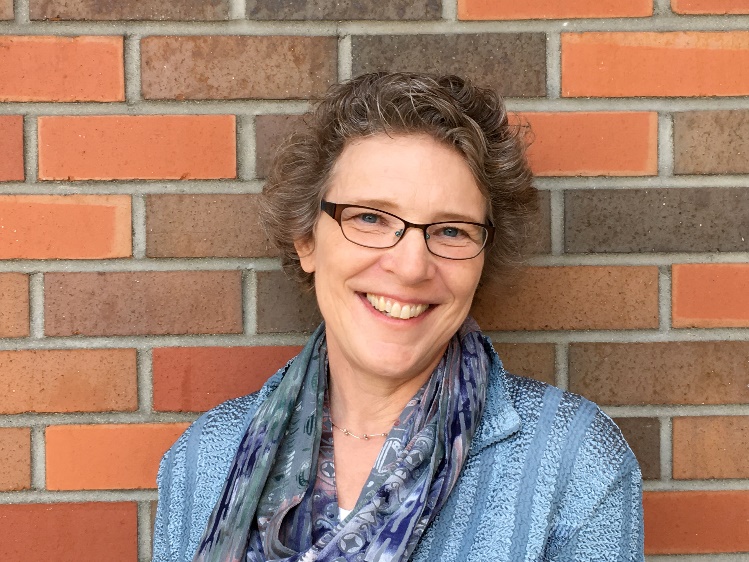
 Dr. Margaret Perrow is Professor of English and English Education at Southern Oregon University, where she has taught since 2006. She has a BA from Yale University and an MA and PhD in Language, Literacy, and Culture in Education from the University of California, Berkeley and is the co-director of the Oregon Writing Project at SOU. Prior to joining Southern Oregon University, she worked at the Bay Area Coalition for Equitable Schools.
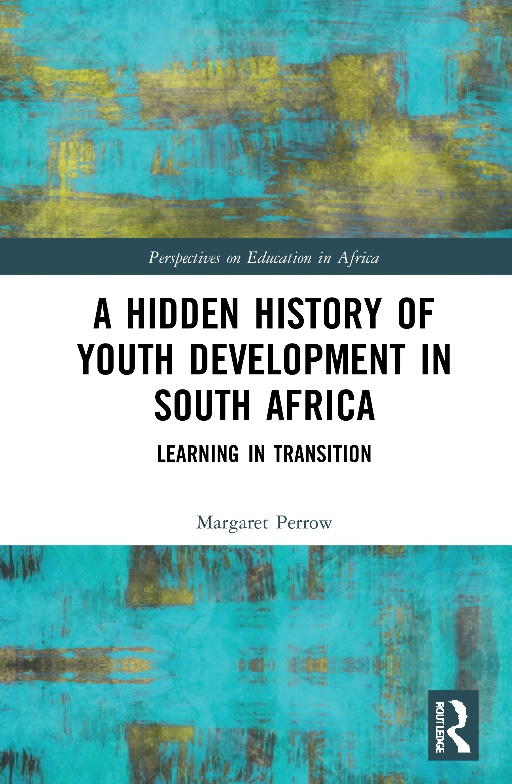
As part of its Perspectives on Education in Africa, Routledge has just released her book A Hidden History of Youth Development in South Africa: Learning in Transition, which draws on two decades of interviews and ethnographic fieldwork with a South African non-governmental organization called the Joint Enrichment Project.
Ed Battistella: Congratulations on A Hidden History of Youth Development in South Africa: Learning in Transition, which reflects your long involvement with education and democracy in south Africa. Can you tell us a little about your history and how this book came about?
Margaret Perrow: This book was nearly 25 years in the making! In 1997, I took an exploratory research trip to South Africa. I had both personal and professional reasons for that trip. My father, who’d passed away in 1982, was South African – but he had never really talked much about his childhood or his young adulthood there. I had relatives in Johannesburg and Cape Town, and I wanted to explore some family history.
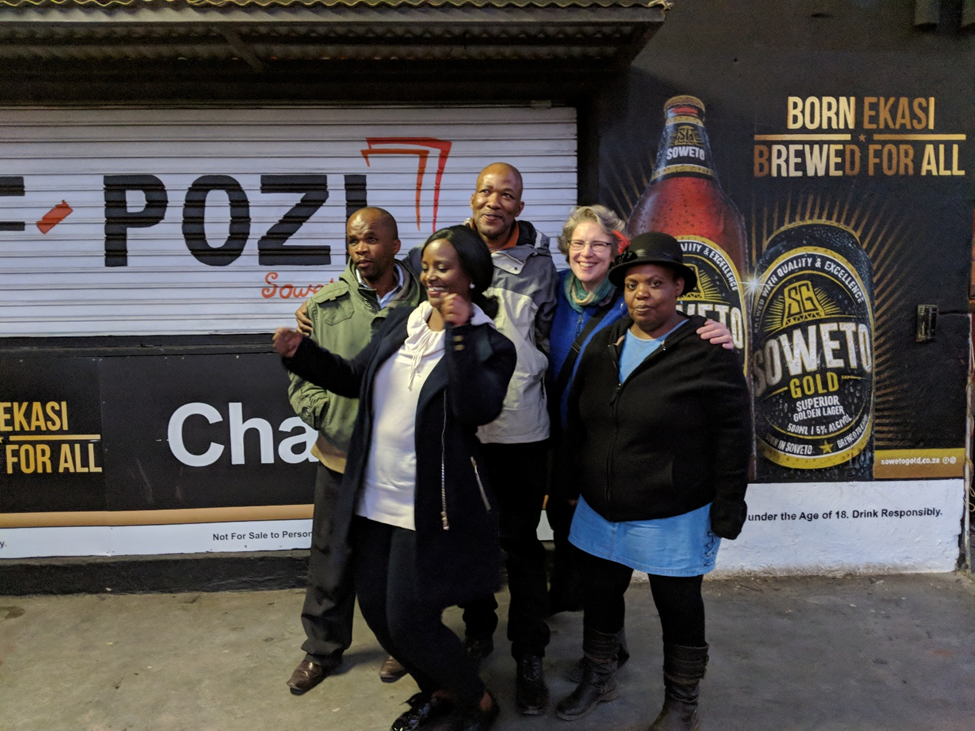
 On the professional front, I had been teaching in an alternative education (GED) program for young adults in San Francisco. My master’s thesis had investigated their perceptions of learning — what learning meant for them — and I was feeling around for a good related focus for my PhD dissertation. South Africa had recently held its first democratic elections after years of anti-apartheid struggle, and it seemed like an interesting place to do a similar study, looking at what learning might mean in alternative education settings for young adults in a country that was undergoing rapid socio-economic and political transition. Post-apartheid South Africa was also a good bet for finding research funding at the time. Several grants, including a Fulbright dissertation fellowship, made it possible for me to spend 18 months in Johannesburg. A series of fortuitous connections led me to the Joint Enrichment Project (JEP). JEP was a prominent youth-development NGO with strong roots in anti-apartheid resistance. I was privileged to be invited into JEP as a visiting researcher, where I got to know a group of young adults from Soweto, the townships outside Johannesburg.
I returned to California, completed my dissertation in 2000, and then did not follow the advice of my advisors at the time, to “write the book now!” But the friends I had made, both participants and staff at the NGO, tugged at my heart. I returned for several extended visits over the years, and periodically toyed with the idea of writing a book. By the time of my sabbatical from SOU in 2018, I was finally ready! In fact, the intervening years presented a unique opportunity to look back at how the lives of JEP’s participants and staff had changed over two decades. It was exciting and gratifying to reconnect with so many people who’d been young adults in the late ‘90s.
EB: I was intrigued by the idea that one of your interviewees had that they were “old youth”. What did that mean?
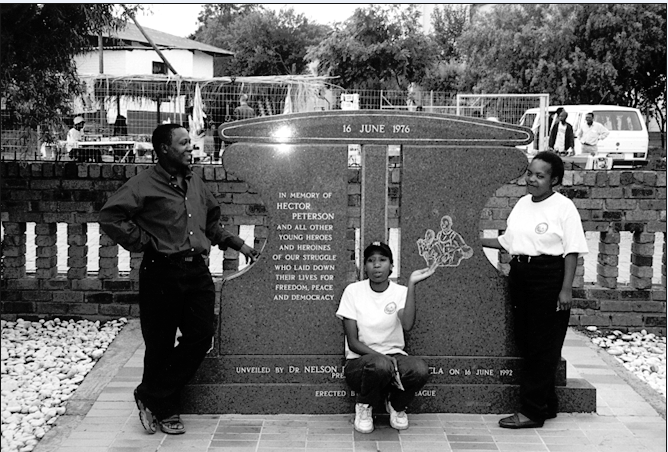
MP: Great question! In 1994, Nelson Mandela officially declared June 16 as Youth Day, making it a public holiday commemorating the young people who led and participated in the 1976 anti-apartheid uprising in Soweto. That man who wrote “we are all old youth” to me in a text message, replying to my “Happy Youth Day” message, was in his early 50s. The collective memory of the important role that youth played in the anti-apartheid struggle is still powerful today, 45 years after the Soweto uprising. You might even say that the idea of youth evokes a sort of nostalgia for agency and power that people today – particularly black South Africans, who make up the majority of the population – do not experience in their daily lives.
The people featured in my book were in their 20s when South Africa was emerging from apartheid. They were too young to have been leaders in the 1976 uprising, but as participants at JEP in the late 1990s they experienced a strong sense of purpose and agency. The memory of this feeling stuck with them – that’s one of the things I write about in the chapters on “repositioning” and “negotiating identity,” and also in the chapter titled “A time-being thing.” The NGO offered them the space and the language to gain an exciting feeling that they were in transition personally, in a country that was undergoing rapid transition. As adults today, that feeling remains an emotional touchstone for them, and they look back nostalgically at that period of their youth.
EB: How has South Africa changed since you first went there? You’ve got an interesting vantage point I think.
MP: With the 1994 elections came political freedoms, and also exuberant anticipation that socio-economic changes would be widespread and quick, especially for the majority-black population living in poverty. But change after 1994 was both astonishingly rapid and excruciatingly slow. Today South Africa is a better place in many ways for black Africans, who make up approximately 80% of the population: universal citizenship; legally desegregated education; business and employment opportunities theoretically available to all; an expanded social-grants program for pensioners and parents of dependent children; increased government housing; greater access to water, electricity and sanitation; more paved streets and streetlights in urban townships; a free press; business and government leaders who reflect the country’s racial demographics.
Yet the country is still plagued by an enormous and persistent gap between a well-off minority (which includes a growing percentage of black Africans) and the vast majority who continue to struggle with poverty and unemployment. The historian Colin Bundy has put it well, saying that in South Africa “the past permeates the present,” inhibiting real structural transformation. The JEP participants’ material circumstances have improved slightly over twenty years, but none have achieved the sort of upward mobility they hoped for when they completed the program in 1998.
EB: The subtitle of your book is “Learning in Transition.” How has learning been in transition in urban South Africa?
MP: I tried to make learning a kind of understated central character in the book. For decades under the system known as Bantu Education, education for black people in South Africa had the express purpose of developing a large supply of manual labor to support the capital interests of the minority white population. To greatly oversimplify things, it was this view of learning that young people were protesting in 1976. When high school students took to the Soweto streets in 1976, they were demanding “education for liberation” rather than education that systematically reproduced the racialized inequities of apartheid. Another significant shift in the meaning and purpose of learning took place in the 1990s, when terms like learner-centered education, a culture of teaching and learning, and learnerships became part of the language of education policy. These concepts – and a new curriculum that included “life skills” – suggested that learning could be viewed as a process of personal development. But in actual practice, learning in the schools attended by most black Africans has remained a matter of acquiring skills and information. That is, a view of learning as the development of human capital in service of the economy.
EB: The JEP or Joint Enrichment Project you worked with helped to construct identity for the Sowetan youth involved. Can you tell us a little about that identity construction?
MP: Yes, that is another shift in the meaning of learning that I tried to highlight: learning as a process of identity-construction. JEP modeled this in its youth-development programs, which emphasized what they called “personal development.” When education’s primary purpose is the producing human capital, development of the whole person is easily neglected. Emerging out of the violence and oppression of the apartheid era, young black South Africans had social and emotional needs that a human-capital view of learning did not address, even if the new curriculum had some content called “life skills.”
Many of the participants came to the Joint Enrichment Project feeling, as I came to see it, “stuck in-between” in their lives. Most were too young to have actively participated in the resistance movement, but too old to have benefited from post-apartheid changes in the education system. Many hadn’t finished formal schooling, and they all were unemployed. They had the feeling that the country was changing around them, and they didn’t want to be left behind. In addition to new skills, the NGO offered them new ways of talking and interacting that led to a personal sense of being “in transition” in a transitioning country. That shift in self-identity was palpable and powerful by the time they completed the program.
EB: In a couple of places you mention discourse paradoxes or discourse shifts. What was the role of language in the politics of education you studied?
MP: Any story about South Africa is at some level a story about language and languages – and which voices are heard or unheard. South Africa officially recognized eleven languages in its new Constitution. Eleven! You can imagine the challenge this creates for public education. Remapping the national discursive terrain, especially in education policy, is not as simple as legislating language protections.
English and Zulu tended to be the lingua francas at JEP. But all the participants were fluent to some degree in multiple languages. Language-meshing was common, with Afrikaans, Sotho, Tswana, and Xhosa woven into conversations.
My view of language in the book draws on critical discourse analysis, a methodology that analyzes how language use both reflects and constructs social realities. Shifts in the Joint Enrichment Project’s focus, purpose, and identity are visible in its shifting discourse over the years—from its formation in 1986 to its closure in 2008. It was fascinating to trace this history, especially as the NGO played a key role in the anti-apartheid movement and subsequent development of youth policy in South Africa.
I think JEP’s biggest challenge as an NGO was to shift from an anti-apartheid agenda to promoting a partnership with the government – a complete pivot in identity! Over time, a discourse of resistance gave way to a discourse of skill-building, which shifted to a focus on personal development, and eventually to a discourse of self-promotion in a free-market economy. What was fascinating to me was how these shifts in the institutional discourse were reflected in the participants’ own talk and interactions.
EB: As you point out, it’s difficult to write about race and privilege. Were there certain disciplines or perspectives that were particularly helpful for you?
MP: As a white, foreign researcher in a predominantly black African context, I worried a lot about committing what philosopher Miranda Fricker has called “epistemic injustice.” I’m acutely aware of the risk of misrepresenting people’s experiences, or interpreting their experiences in ways that would seem unfamiliar to them. At a couple of points, I almost actually gave up the project for this reason. But ultimately, I’ve come to believe that there is value in sharing my particular viewpoint, informed as it is by my whiteness, my foreignness, my position of relative privilege. So I’ve found Fricker’s concept of the researcher as “virtuous hearer” to be extremely helpful. It’s helpful to remember that in all our interactions, our relative social identities shape what people tell us, and also how we interpret what they say.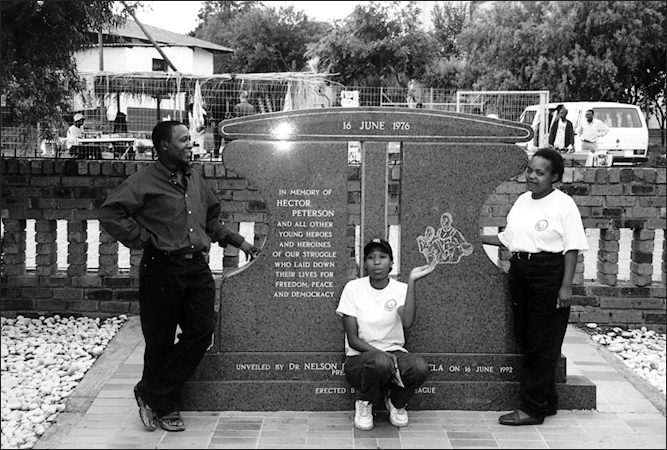 There are some particular disciplinary perspectives that I think have helped me put this concept into practice. Providing readers with sufficient context is critical to writing about race, privilege, and oppression. This is why I’m a fan of the extended case-study method popularized by sociologist Michael Burawoy, which allowed me to situate particular events in a broader socio-historical context. As an ethnographic researcher, immersive participant-observation over many years helped me find an empathic stance. So did learning some isiZulu from the JEP participants. And as I mentioned earlier, critical discourse analysis has been a helpful lens for understanding how racialized privilege and oppression are reproduced or challenged through everyday language use.
EB: On a different note, how has the experience of studying youth development in South Africa shaped your understanding of learning in the US, especially in this time of pandemic?
MP: I must say first that it’s been difficult to hear the news from South Africa – they’re currently experiencing a third wave of COVID, with infection rates at an all-time high. Less than 5% of the population is fully vaccinated. Lockdowns are continuing, including school closures. This has been especially hard on people with young children living in townships or rural areas with limited or no Internet access at home. Like here in the US, pre-existing racialized inequities have been exacerbated by the pandemic.
Studying youth development through the lens of a South African NGO has strengthened my belief that learning is most powerful when it’s understood not as simply acquiring marketable skills and knowledge, but as a process of identity construction. The students in my classes are human beings first and foremost; how and what they learn is shaped by who they are, and affects who they’re becoming. As teachers, it’s important to remember that learning and identity are inextricably linked. And that the process of learning – our teaching techniques, our use of language, the way we help students connect with each other – affect who our students become as much as the content or skills they are acquiring.
EB: Thanks for talking with us and sharing your insights.
MP: Thank you for the thought-provoking questions!
Book (hardcover and e-book versions) available from Routledge here: https://www.routledge.com/A-Hidden-History-of-Youth-Development-in-South-Africa-Learning-in-Transition/Perrow/p/book/9780367261412
 Follow
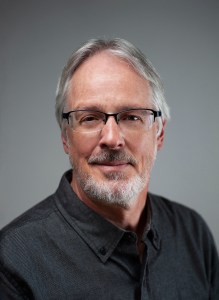 Award winning author Michael Niemann is the author of six novels featuring UN investigator Valentin Vermeulen. Niemann grew up in a small town in western Germany before moving to the United States. He has studied at the Rheinische Friedrich-Wilhelms Universität in Bonn, Germany, and the Graduate School of International Studies, University of Denver where he received a PhD in International Studies.
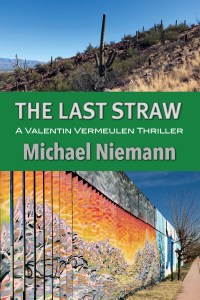 MN: I must say, I had a really good time creating the key confrontations and then developing strategies for the protagonists to escape from them. Delano’s confrontation with the Cartel De Jalisco Nueva Generación was a lot of fun to develop. It’s easy getting characters into trouble, but much more difficult getting them out again in ways that are plausible but not obvious. Who knew that potatoes are a cheap and effective means to disable cars?
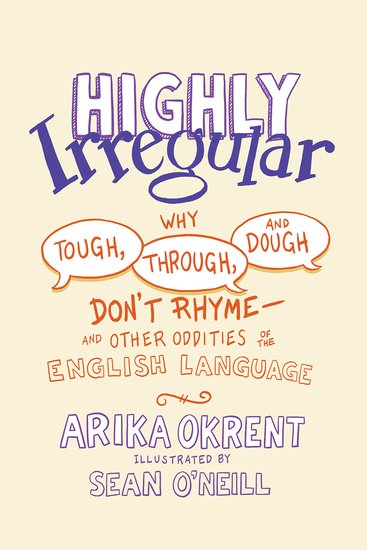 AO: I wanted to include a good distribution of questions, from different levels of language: letters, spellings, sounds, words, meanings, phrases, sentence structures. I think weird spellings are the most noticeable irregularities about English, but there is weirdness at every level, and it can get harder to see the more fluent you are. But kids and non-native speakers see it right away. The best questions come from them.
 Dr. Michael A. Rousell
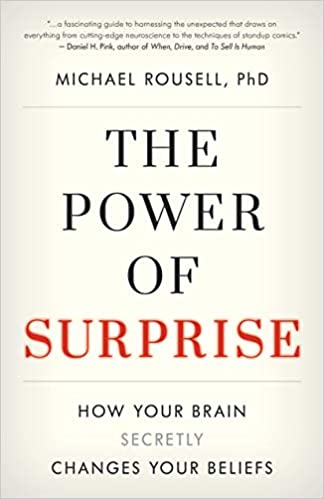 MR: Surprise boosts attention and facilitates long-term memory. So, use it as much as you can. Here’s an example I use in my teacher-preparation classes. I ask my students to predict the correlation between self-esteem and school success. Is it positive, as one increases, so does the other, and if so, is it strong, moderate, or weak? I give them a moment to think about it, then right down their answers, then discuss it within their groups. After a minute, I tell them to openly discuss their responses. The vast majority predict a strong positive correlation. They now expect me to begin a lesson on how to raise students’ self-esteem. I tricked them. I tell them that the correlation does not even exist. This surprises them, “What the,” and this surprise drives curiosity, a need to know. Now they listen thoughtfully as I give challenging examples. You know, the bully who loves himself but gets low grades, victims of ridicule that earn great grades but feel horrible about themselves. If I had simply lectured on the topic, it would have the same results as any lecture material. But because I surprised them, they will all remember this lesson and maybe even try to surprise other teachers. The media and entertainment use surprise strategically all the time to keep your attention. Think of news teasers, “And you thought dogs were your best friend—stay tuned. You won’t believe it.”