An Interview with Curt Colbert

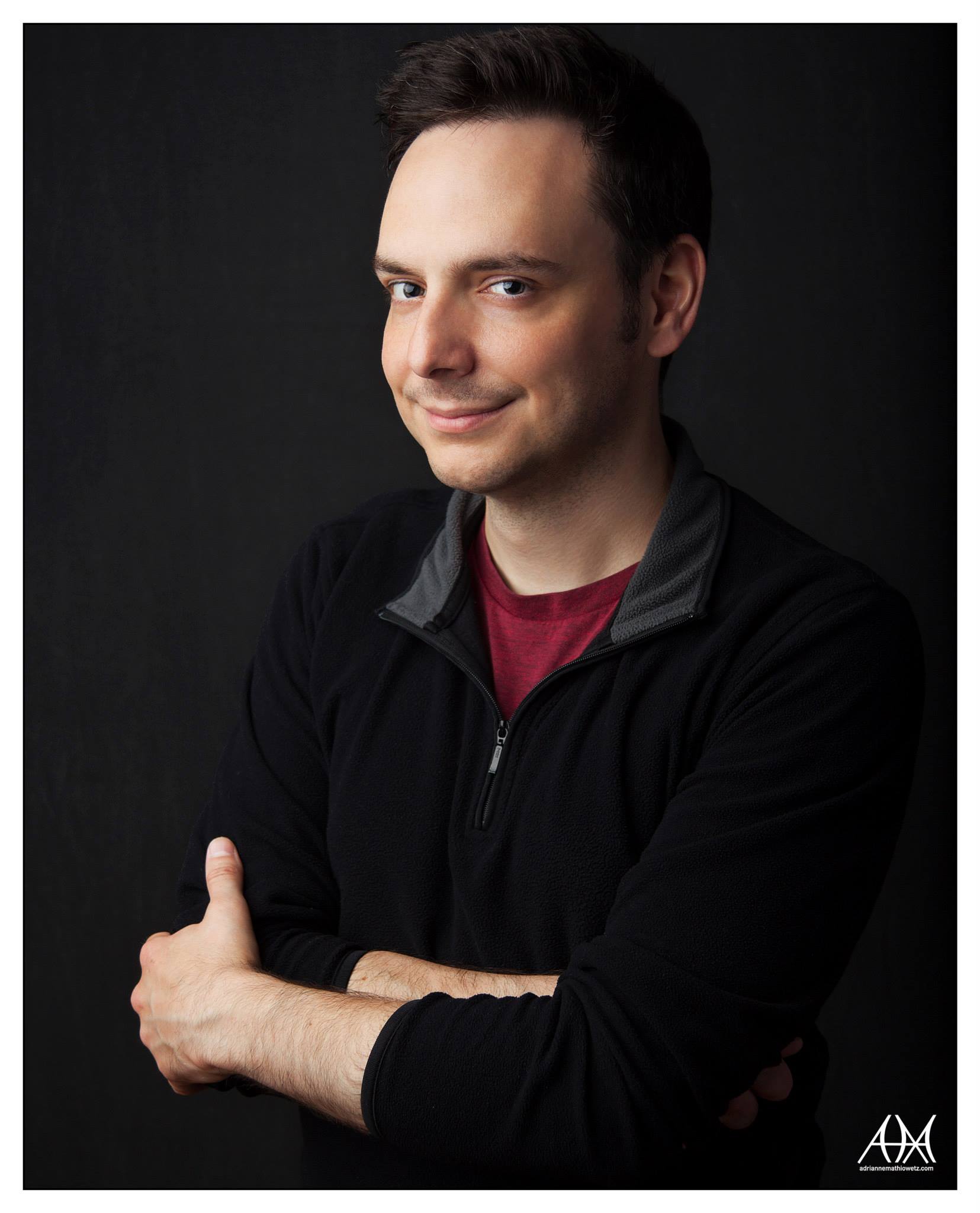
Curt Colbert is a Seattle native, a history buff, an avid fisherman, a Vietnam veteran and the author the Jake Rossiter series of hardboiled private eye novels set in 1940s Seattle.

Curt Colbert has written five humorous mystery novels in the Barking Detective series under the pen-name Waverly Curtis, with his co-author, Waverly Fitzgerald: Dial C for Chihuahua, Chihuahua Confidential, The Big Chihuahua, The Chihuahua Always Sniffs Twice, and The Silence of the Chihuahuas. He was also the editor of Seattle Noir, published by Akashic Books in 2008.

His book All Along the Watchtower, featuring Vietnam Veteran and private eye Matt Rossiter appeared in 2019.

Ed Battistella: I really enjoyed All Along the Watchtower. It’s set in 1999 and I know you’ve been thinking about this story for a long time. Why is the story appearing now?

Curt Colbert: The Vietnam war has been kind of “been there, done that” with publishers for a lot of years. For instance, the superb, award-winning Vietnam novel, Matterhorn, was turned down by scads of publishers, with one saying that it was great but asking the author, “could you change the setting to the Iraq war?” LOL I believe any well written novel about war is relevant at any time. Accordingly, it took time to find a publisher who had faith in my book. Aside from that, it was a tough novel for me to write as it’s partly autobiographical and partly based on other vets I have known. In addition, I wanted to show that the casualties of war often linger long after a war is over.

EB: Can you tell us about the Jimi Hendrix-related title?

CC: I think Hendrix is emblematic of the 1960’s, along with Buffalo Springfield, and Country Joe and the Fish, among others. An irony in using All Along the Watchtower as a title attracted me – in Vietnam’s case, it suggests the futility of trying to guard against an ongoing calamity (which ultimately cost the lives of almost 60,000 Americans).

EB: How did you come up with the plot?

CC: In a dream. My protagonist, Matt Rossiter, was and is a huge Hendrix fan and played Jimi’s music throughout his time in Nam. In my dream, Hendrix tunes were set against the fear and carnage Matt experienced during the war. Upon waking, I thought it would be ironically wicked if the music that gave Matt so much pleasure turned into the calling card of the villain who is killing his old platoon members. In the end, Jimi’s music and Matt’s past and present seem to merge into one as he finally identifies and confronts the killer. In doing so, he has resolution to the mystery, but no absolution for his past and present.

EB: Matt Rossiter also makes an appearance in Waverly Fitzgerald’s Hard Rain. What’s the story there?

CC: As I was working on the book, Waverly and I decided it would be quite unique for us to write parallel novels that share characters and events. In Waverly’s Hard Rain, also set in 1999, Seattle PI Rachel Stern focuses on the anti-war movement of the 60’s and early 70’s. In Curt’s All Along the Watchtower, Seattle PI Matt Rossiter, a Vietnam vet with PTSD, hunts for the killer attacking his old platoon members. Certain conversations, dramatic events and colorful characters appear in both novels, but each can be read as a satisfying stand-alone mystery.

EB: I enjoyed the 1940s series: Rat City, Sayonaraville and Queer Street with Matt Rossiter’s father Jake. Can we expect him to turn up in this series?

CC: Yes. Although Jake barely appears In Watchtower, he will have more of a role in later books. He’s gotten up in years but is still kicking and quite hard-boiled. I thought it would be interesting to have generational interplay between the father and son as the series continues. I have high hopes for their interactions in future books.

EB: How would you compare Matt and his father?

CC: Jake was in the last “good” war, while Matt was in anything but a “good” war. Service members were cheered and celebrated when they came home from WWII. Service members were often spat upon and demeaned when they returned from Vietnam. Both Jake and Matt are tough customers, but Matt doesn’t have the veneer of having “fought the good fight” like his dad does.

EB: You are working on a second Matt Rossiter novel called Strawberry Fields Forever. I sense a theme in the titles. Can you give us a preview?

CC: ‘Strawberry Fields Forever’ is a song that Matt always played when things got too tough in Vietnam, and in his present postwar condition. In this second novel featuring Matt, he is dealing with a new mystery and still trying to deal with his wartime memories. He is also dealing with his aged and cantankerous father, as well as a perjury charge hanging over him, plus the fallout from his actions against Vietnamese gang leader, Benny Luc.

EB: There is a lot going on in All Along the Watchtower—character development, action, pathos, flashbacks and period details. What was the biggest challenge for you as a writer?

CC: Trying to paint the tragedy of the war in Vietnam by focusing on only one veteran and his old platoon, while keeping it entertaining.

EB: What was the most fun?

CC: The research, the writing itself, particularly when it worked. The re-writing, which is always an opportunity rather than a drudge. And gaining more clarity about my own past through hindsight – the old “no pain, no gain” cliché.

EB: Who are some of your must -read crime writers?

CC: Elmore Leonard, James Ellroy, the old masters Dashiell Hammett and Raymond Chandler, the English author, G. M. Ford, Colin Dexter, Swedish authors, Maj Sjowall and Per Wahloo, and Scottish author, Val McDermid.

EB: Thanks for talking with us.

CC: You bet. My pleasure and my thanks!

Posted in Interviews | Comments Off on An Interview with Curt Colbert

An Interview with Jeffrey Ostler

Jeffrey Ostler is Beekman Professor of Northwest and Pacific History at the University of Oregon, where he specializes in the history of the American West and American Indian history. He has a PhD from the University of Iowa and his books include Prairie Populism: The Fate of Agrarian Radicalism in Kansas, Nebraska, and Iowa, 1880-1892 (University Press of Kansas, 1993), The Plains Sioux and U.S. Colonialism from Lewis and Clark to Wounded Knee (Cambridge University Press, 2004), and The Lakotas and The Black Hills (Viking, 2010). His most recent book is Surviving Genocide: Native Nations and the United States from the American Revolution to Bleeding Kansas (Yale University Press, 2019)

Ed Battistella: What drove policy toward Native Americans in the period from George Washington to Andrew Jackson? Are there some key rhetorical and sociopolitical themes?

Jeffrey Ostler: The basic driver of policy was the imperative to take land from Native Americans so that it could be converted into private property for the benefit of settlers, speculators, and capitalist economic development more generally. But how to take Indigenous lands? The preference of U.S. political leaders was that Native nations give up their lands “voluntarily” through treaties and then eventually be Christianized and assimilated into the dominant society. But Native nations did not want to do this and so the U.S. had to use deceitful practices, including the threat of exermination, to coerce some Native leaders to “consent” to treaties. When this happened, other Native leaders with good reason regarded the treaties as illegitimate and claimed a right of self-defense against settlers who they saw as invaders. As a matter of policy, the U.S. then waged war against Nations resisting American expansion. And, this was not just any kind of war, but rather, as U.S. officials often said, it was “exterminatory” warfare, meaning the targeting of Native communities including non-combatants (women, old men, children), or, in other words, genocidal war.

In 1830, a year after Andrew Jackson became president, the U.S. was sufficiently powerful to formally enact a policy of Indian removal—forcing Native nations with homelands east of the Mississippi to new territories in the West. Although U.S. officials justified this policy in humanitarian terms as necessary to save Indians from an otherwise certain fate to vanish, the policy had horrific consequences as it unfolded from 1830 into the 1850s. Thousands of people (Cherokees, Choctaws, Chickasaws, Seminoles, Creeks, Potawatomis, Sauks, Mesquakies, Ottawas, Senecas, Ho-Chunks, and others) died on multiple trails of tears and in the years after their relocation. In my view, the loss of life was sufficiently severe to justify concluding that the policy of Indian removal had genocidal consequences.

EB: Were there influential dissenting voices in that period?

JO: I assume you’re thinking here of dissenting white Americans and that we’ll get to Native voices in a minute. At times, there were influential dissenting voices within the United States. Probably the best example is the opposition by missionaries and northern political leaders to the passage of the Indian Removal Act in 1830. But it is possible to overstate the significance of these dissenting voices. Those who opposed the Indian Removal Act did not ultimately believe that Native people should be allowed to retain their homelands east of the Mississippi. What they objected to was the coercive process by which the Jackson administration was pursuing removal. They wanted a process that would be “voluntary.” All Americans during this period of time shared core beliefs that their way of life was superior and that it was their God-given right to have Native lands. To the extent that Americans disagreed about Indian policy, their disagreements were limited to the process for obtaining Native lands, not the ultimate goal.

EB: What were the perspectives of Native leaders during this period? Did they fear extinction?

JO: One of the things I discovered during my research was that Native leaders frequently voiced the belief that colonists (before 1776) and U.S. Americans (after 1776) intended not only to take their lands, but to kill them all. In fact, in the first written treaty between the United States and an Indian nation (negotiated with the Delawares in 1778), the United States explicitly addressed Native fears that it was the design of the United States to “extirpate the Indians and take possession of the country.” So, yes, they did fear extinction and understood that what they had to survive was not just hardship, loss of land, and some loss of life, but the very real possibility of complete and total annihilation. I think it’s also important to realize that when the United States adopted its policy of Indian removal, Native leaders explained to U.S. leaders that they were deeply concerned that the policy would result in terrible suffering and death. U.S. leaders paid no heed to these concerns, even though they proved to be accurate.

EB: Surviving Genocide balances analysis of the documentary record of indigenous and US leaders with attention to demographic data. How do those two threads come together in the book?

JO: In writing the book, I tried to balance three things: to tell stories, to analyze what was happening, and to assess the impact of U.S. policies and actions by documenting the number of people killed through violence and removal and the demographic impact over time. What I discovered surprised me. When I started my research, I would have thought that the Native population east of the Mississippi River would have declined from 1776 to 1830. In fact, however, despite periods of destructive warfare and significant dispossession, the population of most Native nations either remained stable or increased. This, I think, is a testament to the adaptability and resilience of Native communities. But I was also surprised by how catastrophic the demographic impact of the policy of removal actually was. Historians have documented some of this through looking at the removals of specific nations, but no one had tried to come up with a picture of the total impact. And, by the total impact I mean not just the impact on the eastern nations that were removed to the west, but on the nations with homelands in the west such as the Osages and the Kanzas. They, too, were adversely affected by the policy, as they were squeezed onto smaller and smaller reservations to make room for the relocated eastern nations. The results was that these western nations were increasingly subject to impoverishment, hunger, and multiple diseases.

EB: Was the impact of removal different regionally? In the North and the South?

JO: Another very interesting question. It turns out that the southern nations suffered greater loss of life than the northern nations on the trails of tears themselves. One reason for this is that as they journeyed west the southern nations were exposed to a more deadly form of malaria (which thrives in warmer environments). Northern nations were also exposed to malaria during their journeys, but the type of malaria present in areas they traveled through is less deadly. But, the northern nations had a harder time once they were in the west than the southern nations. The relocated southern nations (removed to what would eventually become Oklahoma) had more land and weren’t forced to move more than once. Some of them continued to see their populations fall, but not as much as for the relocated northern nations. Many of the northern nations (removed to what would eventually become Kansas) were removed more than once, because settlers kept coming west and the government had to find new reservations for them. Because of this, conditions were worse for the northern nations, and some saw losses of life of 40% or more over a period of several years.

EB: As a linguist, I was intrigued by your discussion of the term genocide. What went into your decision to adopt that term rather than any of the possible alternatives?

JO: Using “genocide” to describe U.S. policies and actions toward Native Americans is, of course, likely to provoke lively debate and opposition. One objection might be that it is anachronistic to apply a term coined in 1944 to earlier history. In my view, though, the terms U.S. officials regularly used, “extirpation” and “extermination,” are synonyms for genocide. That said, though, is genocide an appropriate category, and if so, why use it as opposed to a category like “ethnic cleansing,” which some historians have proposed as a more appropriate term than genocide? Ethnic cleansing is a serious charge (it’s a war crime under current international law), but it can also be euphemistic and it leaves open the question of what kind of ethnic cleansing. In theory, people can be deported without massive loss of life, though forced deportations often are accompanied by violence and population decline. So, when I looked at what happened and saw not only massacres of entire communities but the horrific loss of life resulting from the U.S. policy of removal, I felt that it would be less than fully truthful not to use the term genocide. As I wrote in the book, genocide was not happening all the time, and so to write the history I’ve written as if it was a story of genocide, genocide, and nothing but genocide, would be simplistic and miss a great deal. On the other hand, though, to write the history I’ve written as if it was a story without genocide would miss much, too.

EB: When I was growing up, much of the history was of the manifest destiny nature. But it seems to me that today’s readers—and students—are much more open to considering the complexity of the nation’s history. Do you have any thoughts about what changed? Have we just grown up?

JO: I agree that today’s readers and students are much more open to considering the complexity of the nation’s history. In an earlier book I wrote (The Lakotas and the Black Hills), I dated this shift in consciousness to the 1960s and 1970s when we saw opposition to U.S. foreign policy (especially the Vietnam War) and the Civil Rights movement. Prior to that time, the U.S. political and judicial system had been unwilling to consider the possibility that the U.S. taking of the Lakotas’ sacred Black Hills in the 1870s had been unjust, but in the 1970s, courts began ruling in favor of the Lakotas, and I think the reason is that many Americans were willing to recognize injustices in U.S. history. That said, I think part of what we’re experiencing in 2019 is a huge push back against considering the complexity of the nation’s history. A substantial minority, but an empowered one, would like to have us worship the Founding Fathers and embrace the vision of a nation in which whites are understood to be racially superior. And, there are also many liberals who want to write stories about American greatness that neglect to take Indigenous histories very seriously. I’m thinking here of David McCullough’s The Pioneers, but there are many others. I’d like to see the day when most Americans are ready to fully reckon with the fact that the U.S. was built on stolen lands—I really do believe this—but we’re a long way from that.

EB: Surviving Genocide is the first of two related books. Can you give us a preview of the second book?

JO: The second book will look at the impact of the United States on Native people in the west from the 1770s to around 1900 (I’ll also look at the many communities that remained in the east despite the policy of removal). Right now, I’m writing a chapter about the Pacific Northwest and learning many new things. For one, I didn’t realize how much violence U.S. commercial ships inflicted on Native people along the coasts of Oregon, Washington, and British Columbia from the 1780s into the 1810s as they sought to gain advantages in trading for sea otter pelts. And, of course, I’ll eventually need to write about the so-called Rogue River War in the early 1850s when militias and vigilantes carried out a war of extermination against the Indigenous peoples of southwestern Oregon. I’ll also want to write about the survival of those people in the aftermath of genocidal violence. Native people are still here in Oregon!

EB: Thanks for talking with us.

JO: Thanks very much for your interest in the book and the great questions. I enjoyed the conversation.

Posted in Ideas and Opinions, Interviews | Comments Off on An Interview with Jeffrey Ostler

Robert Arellano Interviews Stanley Crawford, author of The Garlic Testament

Stanley Crawford is an award-winning author whose modern classic Mayordomo: Chronicle of an Acequia in Northern New Mexico received the Western States Book Award and earned him comparisons to Edward Abbey, Wendell Berry, and Terry Tempest Williams. He is also a New Mexico garlic farmer who recently gained international attention by filing a petition with the US Department of Commerce asking it to review the trade practices of Harmoni International Spice, the American branch of a large Chinese garlic producer and importer. He argues that the corporation is flooding the American market with cheap garlic through an anti-dumping loophole, undercutting small farms like his.

In Crawford’s new book, The Garlic Papers: A Small Garlic Farm In The Age Of Global Vampires, the farmer chronicles his attempt to challenge the corporation and its team of international lawyers. He is featured in the new Netflix series Rotten (season 1, episode 3: “Garlic Breath”), about small farmers fighting corporate agriculture.

A conversation with Crawford on November 13 will invite audience participation and address this year’s SOU campus theme: Uncertainty. It is presented by the Oregon Center for the Arts in partnership with the Office of the Provost, the Division of Humanities and Culture, and the Environmental Studies & Policy Program.

Robert Arellano: Your Western States Book Award-winning Mayordomo: Chronicle of an Acequia in Northern New Mexico was my literary introduction to becoming a landowner and (accidental) micro-farmer in the Rio Grande Valley. (I had the good fortune of living next-door to you one summer, so I read it with expert caveats and knew what I was getting into.) Do you ever have a stranger come up to you at a farmer’s market and thank you (or blame you) for making them “buy the farm”? Any anecdotes? 

Stanley Crawford:  A couple of friends have moved to Dixon because of the first garlic book, or so they claim, notably John Gray, former director of the Autry-SW Museum in LA, former director of the American History section of the Smithsonian. Said he read A Garlic Testament, decided to move here, build a house, etc., well before we even met.  

Robert Arellano: Your early novels have made you a favorite among some prominent post-postmodernists. Derek White calls Travel Notes “a boot-strapping map to your own brain, projecting psychotherapeutic color on the otherwise gray matter of real-world events,” and Ben Marcus is such a fan of Log of the S.S. the Mrs. Unguentine that he wrote the afterword to a recent Dalkey Archive reissue. What do you think it is it about your first forays into fiction that resonate so much still? Do you consider yourself an experimentalist, a postmodernist, or something else? 

Stanley Crawford: Why people like books probably has to do with why they got written in the first place. The Log was written in ‘68 in San Francisco, a time of both personal and political turmoil, one of those end-of-the-world times. The nature of the end of the world has changed, but not the sense. So: it’s probably the strange combination of the post-apocalyptic and the sensual that keeps it alive. As for Travel Notes, that came out of an ecstatic time in Greece—and I have no idea why it still now and then appeals. To others. Category? Some of my work is mildly experimental, some quite conventional (the nonfiction, The Canyon). If anything, I consider myself “a stylist,” though what does that say? That I try to write well?

Robert Arellano: At your SOU Campus Theme presentation in Ashland on November 13, we will discuss the (uncertain) territory around your US Department of Commerce petition to review the “dumping” practices of Harmoni International Spice. What is one aspect of this ongoing fight (which several newspapers have dubbed a “global garlic war”) that you’re awaiting news on in November?

Stanley Crawford: There’s a Federal Circuit Court (in DC) hearing on Nov 4 though we don’t expect a decision then–we’re contesting Commerce’s various decisions against us.  The RICO suit against all US defendants has been dropped, and we’re hoping that the Chinese defendants will also soon be released. And, of course, we’re hoping someday, someday Commerce will review Harmoni–which we have been asking for the past 5 years.

Robert Arellano: As you and I conduct this interview for Literary Ashland, it’s been one week since The Garlic Papers was published, and you have already had major signing events as well as garnered reviews from Modern Farmer, several big-city dailies, and the Associated Press. Is the attention this book is getting at all different from what you expected?

Stanley Crawford: It’s always surprising where a book takes and where it doesn’t.  A surprise has been the syndication of the Albuquerque Journal North review to papers all over the country.  Meanwhile an important local arts supplement, Pasatiempo, is now only taking reviews from the New York Times and Washington Post—which haven’t picked up my book. Edible may also take it national. But in all, it’s a crap shoot. I’ve never had a book go national in a big way, though everything is still in print, which is something. With five different publishers…..  A surprise is also how much interest the book has generated with friends—long commentaries on it vs the more usual phrase or two. Not sure what might be resonating here, though the title usually gets a smile. Probably the David and Goliath aspects.  

Robert Arellano: Will you be bringing any garlic to Oregon on November 13?

Stanley Crawford: Yes, will be bringing garlic to Ashland.  

A Conversation with Stanley Crawford

Western States Book Award winner and garlic farmer

Wednesday, November 13, 7pm-8pm

Meese Auditorium (Art Building 101),

corner Siskiyou Boulevard & Ashland Street

Southern Oregon University, Ashland

FREE and open to the public

Robert Arellano is a professor in the Oregon Center for the Arts at SOU. He lived for 7 years in Dixon, New Mexico.

Posted in Ideas and Opinions, Interviews | Comments Off on

Robert Arellano Interviews Stanley Crawford, author of The Garlic Testament

What Kind of a Teacher Am I This Time? A guest post by Benjamin Lucas Garcia

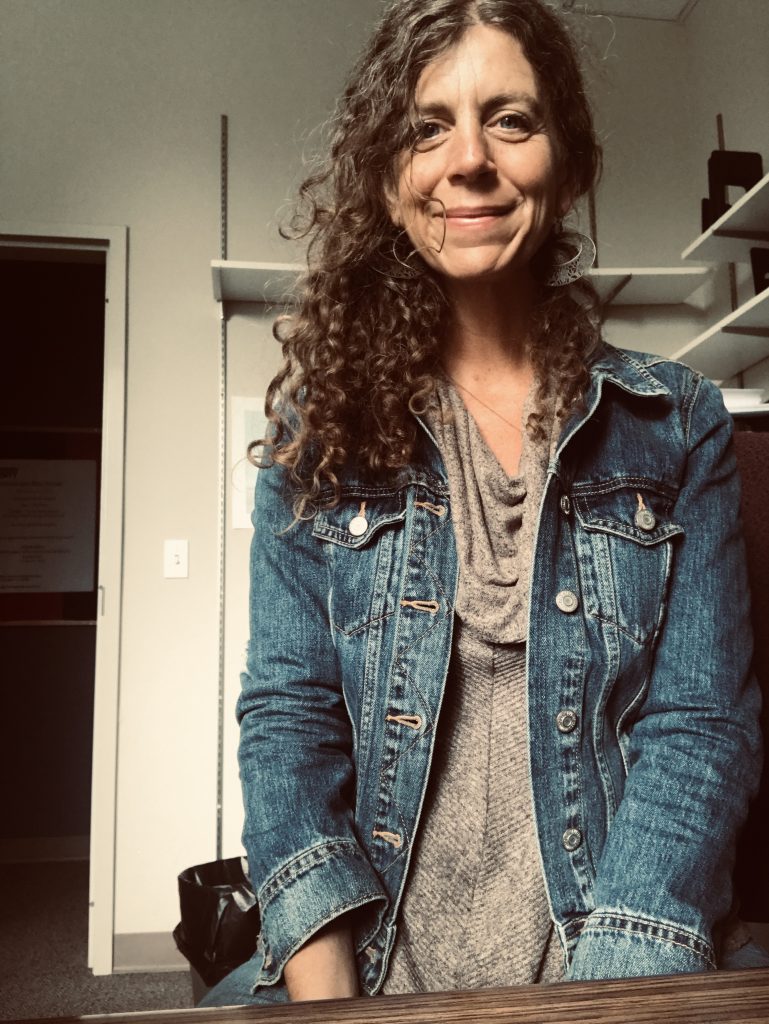
Benjamin Lucas Garcia is the Education Coordinator & PBS Teacher Ambassador for Southern Oregon Public Television. In 2017, SOPTV became one of five stations in rural areas across the U.S. to become part of the PBS Teacher Community Program, which seeks to connect local media arts educators.

My world has been turned upside down. I’m now teaching a video class at North Medford High School as an industry instructor. It has put me back in a role that I once inhabited for six years.

Being the proclaimed “permanent teacher” in a classroom with 30 plus teenager students used to having substitutes changes the dynamics of a learning environment immensely. I quickly rediscovered that cooped-up students do what comes naturally to an improvising new teacher: test them. After the first class I looked in vain for an employee bathroom to cry in, but in all my trips to this school the previous year, I’d somehow never used one. I found a quiet place in the library, fought back my tears, and wrote two pages of questions any new teacher might think of, starting the list with “Teacher facilities?”

I’ve been working alongside teachers and students as a “Teacher Ambassador” the last 2.5 years. I was hired by NMHS a few weeks into the fall semester 2019. On my first day at the school, I was given keys, an employee handbook and sent to a classroom where none of the essential software worked — such as the attendance software. A teacher named Mike watched me start to introduce myself to students, a student interrupted asking if I was a substitute teacher, I backtracked to explain that I was the permanent teacher. Mike walked out of the classroom as I began my PBS Newshour Student Reporting Labs elevator pitch again, but it was interrupted again by another student wanting to know if he could use the bathroom. Then the side conversations started, then the phones came out, and by the time I was done with my 30 second spiel one of 31 students was paying attention to me. A day later, the IT guy and a front office lady began to help me gain access to crucial systems I needed to do my job. A week later, a vice principal had time to cram the orientation teachers get during “in-service” week into an hour. I began to feel better. Two weeks later, about two thirds of the students looked at me when I spoke. Three weeks later no one slept in class anymore.

“Teacher Ambassador” I wish I had one of those

Midway through the first semester I’m somewhat in the rhythm of solo teaching mode, but I occasionally find myself wishing I had my own PBS Teacher Ambassador to co-plan my lessons with, or to take the lead with advanced students during class so I can focus on the bottom of the to-do list tasks like: “differentiate for struggling learners in the class.”

Also it would be nice just to have someone to confide in when crazy things happen, which seem to happen daily, and they pile up contributing to a sense of “how isolated it can feel to be an educator” — especially when all the adults around you are too busy to listen. For example, the first week we undertook a class exercise where students wrote the most important news issue to them on sticky notes and posted their top three on a class poster. Privately, one kid shared his top three with me: “damn liberals,” “church bombings” and “mass shootings.”

After class, in a state of shock, I went to talk to an educator further up the chain of command about this. This person was busy with another student and so I said “It’s about one of your students; I can come back later; do you have availability after school?”

This person bluntly said, ”No.”

Then I asked, “Do you have availability any time this week or the next?’’

“Sorry I’m booked solid.”

And so lastly I said, “I’ll email you about it.”

“I’m so behind with those; it could be awhile.”

I had a follow up talk with the student myself, and our short chat convinced me that he is just fascinated by deeply controversial issues, which he emphatically and emotionally explained to me were “tragic and should be prevented by any means necessary.” I still emailed the educator I spoke with earlier.

The case of the adjustable table feet heist

In a few short months on the job, I can already tell a few more stories like the aforementioned — the case of the adjustable table feet heist, for example. One day we were setting up cameras and tripods, and to create more space in the classroom for 30 students to set up we stacked tables on top of each other. The tables stacked on top had their legs upright, and by the end of the “block” (period) five tiny adjustable feet were missing from the ends of the table legs. I didn’t notice until the tables were upright and the next teacher who uses the room pointed out that some of them weren’t quite level. The feet weren’t the only items to go missing in Term 1.

Anyhow, within the last month a very sweet teacher on special assignment, Bonnie, has been helping me figure out the grading software, and also a teacher friend, Jamie, with whom I’d participated in Coffee EDU meet-ups last year, stopped by my classroom to let me know she’s right around the corner and that the monthly meet-ups would be starting again soon. Both helped me understand how the gradebook works the day after mid quarter grades were due.

Recently, I met up with Tisha Richmond, who I co-planned and co-facilitated a teacher conference with last year, “Make Learning Magical!” She’s going to pop in to help me with a Google Classroom issue soon — ah, how good it feels that a teacher community is being felt so quickly in my new role. Teaching this one class underscores how important my media teacher support and mentorship work is. After I leave this classroom I very much look forward to the synergetic TCP work I do alongside hard-working media arts teachers at Hedrick and Central High. I hope these two teachers consider continuing their PBS Newshour Student Reporting Labs next school year, but for now I look forward to lightening their load and helping students learn the fundamentals of video production and journalism.

Where it all started

Shortly after the PBS Teacher Community Program (TCP) adventure began, April 2017, all five of us “Teacher Ambassadors” worked together to craft our individual elevator pitches for the educator support work we were embarking upon in rural areas where our TV stations are located: Iowa, North Dakota, Montana, Idaho and Southern Oregon:

As a Teacher Ambassador, I am the bridge between Southern Oregon Public Television (SOPTV) and local educators. I support our shared goal of improving learning outcomes for Southern Oregon’s students. From my experience teaching for the past six years, I know first-hand how isolated it can feel to be an educator. In SOPTV’s Teacher Ambassador role, I am working to address educator needs in our community in ways that are authentic and effective. My goal is to connect local educators with each other and with SOPTV, which is a resource for teachers to network, access peer-to-peer professional learning opportunities and enhance their teaching practice.

This message still rings true for my local support of educators, although I’ve since added the descriptor “media arts” before “educator” and “students”. The original mission was too broad for a one-person education program at our local station to tackle in a meaningful way, so my efforts are currently focused on supporting video teachers who are interested in piloting PBS Newshour Student Reporting Labs (SRL) sites. The NMHS video teacher stepped down, and they needed a video teacher, so I thought I’d pilot my own lab. I also have another SRL site up and running at Hedrick Middle School, which is going much better because we didn’t start late, and also we have industry standard equipment–oh, and having only nine students helps too. Lastly, there’s a possibility of a third site at Central Medford High starting the second term, but so far there is just one student signed up for it. Thus, at these two sites is probably where it will all end for this short lived SRL experiment as the Teacher Community Program grant runs its course June of 2020.

Posted in Ideas and Opinions | Comments Off on What Kind of a Teacher Am I This Time? A guest post by Benjamin Lucas Garcia