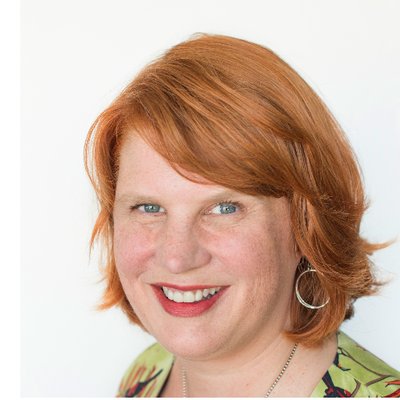
Grad School: An Interview with Eric Worthey

Eric Worthey is a Graduate student and First-Year-Writing Instructor at Eastern Michigan University. He was a Ronald E. McNair scholar at Southern Oregon University, graduating in 2015.

Ed Battistella: What is your graduate program like?

Eric Worthey: Fun and intense. I am studying children’s literature and working on a creative thesis, so I get to enjoy the imaginative aspects of writing and utilize my artistic skills. Part of the intensity stems from the subject matter and complex themes found in children’s and young adult literatures, but also from the theoretical frameworks that provide a lens in which to analyze these texts. They may be written for kids, but most of the time adults do the writing and present controversial social, ethical, philosophical, religious and often political concepts. The program itself offers cutting-edge and rigorous courses in mythology and folklore, the history of children’s literature, adolescent literature, illustrated texts, as well specialized graduate classes on topics such as multicultural children’s literature and films, global children’s literature, as well as the teaching of children’s and adolescent literatures. The program’s course of study is tailored to prepare master’s level students for careers as educators, librarians, authors, editors, as well as those who desire to obtain a doctoral degree in children’s literature.

EB: How has your experience so far shaped your career goals?

EW: Recently, I received the advice that between Thanksgiving and Christmas may not be the best time to reconsider career goals. One of the reasons I chose EMU was because, like SOU, it originally opened as a Normal school. One way the University retains this heritage is through the motto ‘Education First.’ Combined with the opportunity to teach WRTG 120 and 121 for the First Year Writing Program, I also assist professors in the children’s literature lecture halls. These two positions create opportunities for me to experience diverse teaching environments and work with professors who maintain unique pedagogical approaches. EMU’s student population is much larger than SOU’s, so I have learned that I prefer the teaching and learning environments created with smaller faculty to student ratios. I still aspire to teach writing and literature, as well as produce some writing and literature myself, but I am not sure in what capacity or location these goals will manifest. I have looked into a few Ph.D. programs, but after spending the past eight years devoted to my education I think I would like to take at least a year or two off from being a student. I have learned that a big part of being a graduate student is not knowing for certain how things will unfold or where research will take you, so being open to future possibilities and job opportunities is an important way to reduce the stress associated with being attached to outcomes.

EB: What courses are you taking and what sorts of things were you reading?

EW: This semester, I branched out beyond the children’s literature discipline and signed up for an introductory course on written communication and a teaching of Shakespeare literature course. As part of my graduate assistantship benefits I receive eighteen tuition credits per year, so I am utilizing the extra six credits that I do not need to graduate to meet the qualifications for a post-graduation job opportunity. To have a chance at this job, in addition to a master’s degree in children’s literature and two years’ experience teaching first year writing, I also need at least twelve credits in literature, writing, or English.

In the written communication course, we are mostly reading academic articles which illuminate the history of the field and help us gain a sense of where we would position ourselves academically and professionally since it encompasses many different majors, ranging from technical communication to rhetorics and composition studies.

In the Shakespeare class we are reading an average of one play per week except for a few we discussed during two class periods, including A Midsummer Night’s Dream, Measure for Measure, All’s Well that Ends Well, Hamlet, Othello, King Lear, and The Tempest. I never knew that there was such a wide spectrum of gender performance and ambivalence toward gender in Shakespeare’s works until this semester. I also came to realize that queer readings of these plays are not very popular, but that they do exist.

I am also taking a multicultural children’s literature course that is cross-referenced as a teaching course, so we are reading a broad range of classic and contemporary books and discussing films that represent numerous types of diversities that students may experience or encounter, including age, race, religion, ability, gender, sexuality, as well geographic location: Snowy Day, Lon Po Po, King & King, American Born Chinese, The Hate You Give, The Perks of Being a Wallflower, Brown Girl Dreaming, The Book Thief, George, The Hunger Games, and films such as Disney’s Inside Out and Pixar’s Up. We examine these multicultural texts in terms of their literary, aesthetic, ideological, political contexts. This class is mostly discussion based, so it helps to gain insights not only from the professor but also from my peers who are also teachers or aspiring to teach.

EB: You are also teaching. How do you enjoy that?

EW: I enjoy working with the students. The relationships I develop with my writing students differ than the ones I have with the students in the large lecture hall, but I find them both rewarding in their own ways. All writing is personal, so when teaching introductory writing I like having the freedom to create a community-based classroom that operates like a writing workshop, rather than a traditional lecture-style course. I think that the lecture-style works for larger class sizes. However, when delivering lectures in this environment, I find myself assigning class activities to encourage students to participate in small group discussions. I like being able to try different pedagogical approaches and apply this knowledge to the creation of my teaching philosophy statement.

EB: What is the most rewarding part of your graduate program?

EW: The opportunity to teach and assist in teaching undergraduate students provides one of the most rewarding experiences of being a part of any graduate program in EMU’s Department of English Language and Literatures. This invaluable experience not only covers the cost of tuition, but it also offers a stipend in exchange for twenty hours of work per week during the fall and winter semesters. It is also rewarding to have three months off during the summer, but it is a little odd to have spring break amidst a Michigan winter: February.

EB: What’s been your academic focus? Has it changed at all since you began?

EW: Focus. Focus. Focus. That was Dr. Alvarez’s advice before booting me off to grad school. Initially, I had wanted to continue my research of mythology and religion representations in contemporary young adult literature. However, during my first semester several events on campus inspired me to focus my independent study on learning about the dimensions of racism. I quickly realized that I had not diverged from my original focus, but I was still attempting to answer the research question that I had first proposed as an undergraduate in a world religions class: Why has the bible been used to usurp the power of women, children, people of color, and gender and sexuality diverse people for the past two thousand years when Jesus’ and Paul’s words create oppositions? The professor’s response to my proposal to pursue this research question for my final paper will always be a cornerstone moment for me in my educational path. Also, I will never forget that it was in this class I first heard the words mythology, non-duality, and Joseph Campbell, and learning their meanings helped shape my academic focus. I did not understand what the professor meant when he identified his religious/spiritual beliefs as being ‘non-dual,’ but I do now and am trying to find ways to encourage others to consider this worldview. Two years hardly feels like enough time to try to focus on one thing that I would like to specialize in for the rest of my academic career.

Last semester, an assignment for one of my children’s literature classes involved creating something. It could be anything if we developed a rationale for the creation. I was reluctant at first, but I took one of my old University Seminar style guides and used its pages to create a postmodern version of the Grimm’s animal fable “The Bremen Town Musicians.” I incorporated drawings and collage materials to draw attention to how the contemporary American political climate seems a lot like the early days of Nazis Germany. I decided instead of writing a traditional thesis, I was going to finally create a children’s book that incorporated mythological elements and symbolism to break down binary perceptions, going back to much of the research I conducted as a McNair Scholar.

It is funny how I am still researching the same question, but at the same time I am learning new ways to look at the trouble with duality. I finally discovered that one of the difficulties of this arises because the place where oppositional forces break down remains indescribable by our languages. Thus, I am back to square one and trying to draw pictures that are highly symbolic and open to interpretation to create a graphic novel that challenges binary perceptions and socially constructed identity markers.

EB: Any advice for students considering going on for more school?

EW: If I were to offer advice to prospective graduate students, I would draw their attention to the amount of time, or lack thereof, that is required to succeed in graduate school. The sheer volume of the reading lists is enough to overwhelm the most avid readers, especially if they desire to have a social existence (not really a reality for a graduate student). Also, don’t invest your own money. Find programs that offer graduate assistantships or scholarships that include the tuition and stipend to cover living costs while you work on your degree. There are plenty of opportunities, but keep in mind that the applications deadlines usually come earlier for these than the program of study applications. Don’t rack up a lot of student debt going to graduate school because another degree does not necessarily translate into post-graduation job opportunities.

Before applying to a graduate program, conduct preliminary research about the availability of jobs on the market by joining your discipline’s organizations, listservs, or by reading or subscribing to higher education publications. Also, when seeking a potential program and a faculty member to work with on major academic projects it helps to discover which scholars or professionals are already working in that area. What institution are they from? What is their academic discipline? What organization sponsored the journal their article appears in? Was there a co-author, an editor(s), or an academic advisor? This will help gain a sense of potential institutions and/or faculty that will support your research goals.

EB: What’s next for you?

EW: I began my postsecondary educational career when my life hinged on the space between my twenties and thirties. I lingered there and wondered what had I done with my life. Nearly eight years later, and following two degrees, I currently anticipate graduating with a Master’s degree in Children’s Literature in April, so I have began reflecting about my experiences and future possibilities. I do plan to take a year or two off before pursuing a Ph.D. program because I would like to gain some teaching experience before I hit the forty mark. While on the Oregon coast this past summer, I spoke with the dean of a community college about a potential post-graduation job opportunity. I plan to apply for this position, as well as for teaching positions at few other community colleges along the Northern California and/or the Oregon coast, and see what happens. Additionally, since I am completing the first issue of a graphic novel for my master’s thesis project, I hope to submit a copy of it along with a book proposal, like the one I created when I participated in your history of publishing course, in hopes of continuing to develop the story line into a middle-grade reader series.

EB: Thanks for talking with us.

EW: It was my pleasure, and thank you!

Posted in Interviews | Comments Off on Grad School: An Interview with Eric Worthey

Grad School: An Interview with Allegra Lance

Allegra Lance is a writer and editor from the pacific northwest who regularly moonlights as a writing teacher and burrito connoisseur. In her free time, Allegra practices circus arts and dabbles in game design. She can be contacted by chanting “Roll for perception” three times into a venti iced coffee between the hours of 1 pm and 3 am. She graduated from Southern Oregon University 2017 with degrees in English and Writing.

EB: What is your graduate experience like so far?

AL: It’s a little strange! I moved home after graduation and immediately started a fulltime job as a teacher which I did all summer, and now I’m exploring options for grad school, looking at programs for creative writing and publishing. When I finished teaching I realized I hadn’t really sat down and just done nothing for two or three years so I took three weeks to eat ice cream and sleep. Now I’m taking some lower level linguistics classes to sort of see if I’m interested in that as a career option and sort of supplementing my editing skills, and it’s weird because I feel like I went a little backwards! My classes are full of freshmen and my final papers only need to be three pages long! I’m also at a much larger school, and that is a bit of a culture shock.

EB: What courses are you taking and what sorts of things were you reading?

AL: I’m currently taking a class on the structure of English, so grammar and word classes and all that fun stuff, and then I started taking ASL in case I continue in the program. It’s very different from what I’m used to, which I’m finding is nice. Taking two classes instead of five is also pretty great.

We don’t read much but very dense textbooks, but I’ve been reading in my spare time things like Big Magic and Swimming Lessons, so some non-fiction and some fiction and all just to get back into reading for fun and working towards being a better writer. Having time to read whatever I want again is fantastic.

EB: What has been the most fun so far?

AL: I think, really, it was teaching. There were definitely hard days and it’s the most difficult job I’ve ever had to do but an overwhelming majority of the time it was a blast. I think, even though it was insanely difficult and exhausting, having something to do that I really cared about and being able to make a path for myself and make a living that way was extremely gratifying. Also I got flowers from one of my students and it was the sweetest thing ever.

EB: What has been the weirdest?

AL: So I grew up in Portland, and now I’ve moved back to Portland, and there are so many things that I had no idea existed before or that came into being the four years I was away and it feels like I’ve stepped into an alternate universe where everything is just shifted six inches to the left, or, for example where the Freddie’s is two stories tall and has a tattoo parlor in the basement. It’s nice, though, because so many of the things I’m discovering are just things I never cared about before because I was young and it just didn’t matter to me yet, so being able to sort of rediscover the city I grew up in is neat.

EB: What’s next for you?

AL: Right now I’m looking for some kind of job or internship in publishing and then within the next year I’ll be applying for grad school and hopefully starting my master’s. I’ve also kept working on some poetry, some short stories, a novel or two, so we’ll see where those go.

EB: Any advice for students considering going on for more school?

AL: Definitely make sure that you look for opportunities outside of school. I originally was planning on going straight into grad school, but now I’ve realized there are a lot of things, like internships or partnerships with people who are already out there doing what I want to do, that are really good resources and experiences. Working and doing something other than school has helped me figure out where I am in my life now and what I want to do going forward, since before now the goal had just been to graduate! Also, just be open to possibilities, even if you have a really specific idea of what you want to do. Taking an opportunity, even if it isn’t exactly what you had in mind, can still teach you a lot and open up other possibilities that you might not have even considered before. Even if you still decide to do exactly what you wanted at first, having the extra experience and that certainty can do wonders for your confidence.

EB: Thanks for talking with us!

AL: Thanks for the questions!

Posted in Ideas and Opinions | Comments Off on Grad School: An Interview with Allegra Lance

An Interview with Robert Arellano, author of Havana Libre

ROBERT ARELLANO is the award-winning author of six novels including Curse the Names, Fast Eddie, King of the Bees, and Don Dimaio of La Plata. His latest novel, Havana Libre, is the standalone sequel to his Edgar-nominated Havana Lunar. His nonfiction title Friki: Rock and Rebellion in the Cuban Revolution, will be released in 2018.

Ed Battistella: Back in 2009 you published Havana Lunar, which introduced us to the young doctor Mano Rodriguez, who was trying to practice medicine in the “special period” when the Cuba was no longer supported by the Soviets.

Can you give us a quick recap of the first book?

Robert Arellano : Manolo Rodriguez is stuck in every way: in a grueling and unrewarding job for Cuba’s socialist healthcare system, in a cycle of dead-end relationships, and in Periodo Especial 1992 Havana. Then he meets Julia, a young woman trapped in Cuba’s black-market underworld, and while trying to help her he becomes a straw dog in the police investigation to find a pimp’s killer. Like every unlikely noir hero, Mano is also an insomniac. That’s half the story of the “lunar” in the title.

EB: And the lunar is also a condition you invented? Why?

RA: It fell into place thanks to a Spanish double-entendre: lunar means both “of the moon” and “birthmark”. The lunar on Mano’s face conceals a story that’s at the heart of his predicament, and which also might hold the key to his liberty.

EB: Havana Libre, named after a hotel, is billed as a stand alone sequel. What exactly is that?

RA: It means you can read either book first without needing the other’s context. Although there are one or two cues in Havana Libre hinting at how Mano and Detective Emilio Pérez have met before, today it may actually be most rewarding to start with the sequel and, if you enjoy it, work your way backwards. I think most mystery authors try to configure their series in this way (after all, the way media works, the “new” gets a lot more attention than a book published just five or seven years ago). I’m currently reading through Jo Nesbo’s Harry Hole series beginning with book two, and the characters and scenarios are jumping to first light for me such that I’ll probably hopscotch through the other titles with impugnity.

EB: In Havana Libre, Mano falls for Mercedes, who had been connected with the frikis. It’s a minor mention but I know you’ve done some research on that movement. What can you share?

RA: Los frikis are rock-music fans who were targeted by the Castro government early in the Special Period for their long hair, ripped jeans, and “social dangerousness” (an actual law on the books in Cuba). They have been fined, beaten, and jailed simply for looking and behaving like rockers, and in response as many as 200 frikis took upon themselves one of the most extreme acts of resistance conceivable. For people who want to learn more, I love to this Radiolab podcast that Jad Abumrad and Luis Trelles produced with the help of my own archive and interviews.

EB: Mano is a character trying to good the right thing in a system that doesn’t encourage that. As a writer, how did you try to instill this humanity in him?

RA: This characteristic—human virtue in the face of systemic depravity—was actually one of the first things to rise from the notes that started my Cuban noir series. During trips to Cuba 25 years ago, it seemed like corruption was everywhere, the result of a black-market economy fueled by the ongoing U.S. embargo. But there were also so many very good people. The trick for me, upon meeting each new person, was figuring out what end of the exploitation-integrity spectrum they were on. Sometimes it took months, and sometimes it was a moving target, and this is where the stories arose. For instance, my friend Yorki would spend all day chasing after some frozen cutlets to feed his family, only to fry them that night and discover they were actually breaded dishtowels instead of beef.

EB: I am starting to warm to Pérez as well. Have you changed his role?

RA: I think this time we’re discovering that Pérez, too, is aware of being something of a puppet in an absurd system. He is subjugated by his own capricious controller (Daniel Caballero, the head of Cuban State Security), but he will find ways to resist the strings, if only briefly, creating moments of agency for himself and dignity, perhaps even beauty, for others around him.

EB: Were the bombing based on real events and attempts to destabilize the country?

RA: Yes. My story is mapped so closely (dates, places, perpetrators) to the actual bombings of ‘97 that to set the wheels of Havana Libre in motion all I had to do was insert Mano and one other fictional character (Mendoza) on the side of the bad guys. Anyone who would like the nonfiction account can pick up Brazilian journalist Fernando Morais’s riveting book The Last Soldiers of the Cold War: The Story of the Cuban Five, which was recently published in English translation by Verso.

EB: Another question about craft: you do a certain amount of code switching in the novel—bits of Spanish which adds to the atmosphere—how do you decide how much is too much?

We all have our ideal reader, and mine is actually a two-headed beast: Johnny Temple, publisher and editor-in-chief of Akashic Books, and associate editor Aaron Petrovich. They helped immensely with the language balance. And just this morning I’m emboldened by a quote from our Rogue Valley friend and neighbor in this New York Times article, How Pixar Made Sure ‘Coco’ Was Culturally Conscious:

“The original idea was to have the characters speak only in English with the understanding that they were really speaking in Spanish,” said Octavio Solis, a Mexican-American playwright who was a consultant on the film. “But for us, language is binary, and we code-switch from English to Spanish seamlessly.”

EB: Havana Libre and Havana Lunar seem to be not quite so magical realism as some of your other work? More noirish. How do you see yourself as a writer?

RA: I like this catchphrase that Johnny came up with 16 years ago when he published the first of my five books in the Akashic catalog: “urban surreal.” Besides that, I still cop to the genre created in part by my greatest teacher, Robert Coover (along with Angela Carter, William Gass, Donald Barthelme, and other fine writers): postmodernism.

EB: Can we expect a third Havana book?

RA: You must.

EB: I know you have a lot of other projects in the works. What are you working on this week?

RA: Friki: Rock and Rebellion in the Cuban Revolution, the nonfiction project that has obsessed me for a quarter-century.

EB: Thanks for talking with us.

RA: You’re welcome. And thank you for reading me.

Posted in Interviews | Comments Off on An Interview with Robert Arellano, author of Havana Libre

An Interview with Joe Biel of Microcosm Publishing

Ed Battistella: How did Microcosm Publishing come about?

Joe Biel: ​I grew up in Cleveland​ during the bankruptcy and recession​ in the 70s and 80s. ​My upbringing was abusive, I was uneducated, and I had autism that wasn’t diagnosed until my 30s. Being involved in the punk scene led ​me ​to Harvey Pekar, the Dead Boys, Dennis Kucinich, and a long union history of corporate hegemony versus public power. I was desperately lacking necessary resources that I needed to be a functional person. I had a problem with alcohol from age sixteen and could see that crime was the easiest path for someone like me. I drunkenly confided to a peer at the punk club that I was involved with as a teenager that I was going to start something. ​Soon thereafter, I began creating the kind of resources that I needed as a child about gender, mental health, grassroots organizing,​ punk rock,​ history, queerness, ​political power, race and class, and analytical skills. I founded ​Microcosm with any money leftover from my job delivering pizzas. ​Microcosm was a matter of desperation; of nothing meaning anything at a time when I desperately needed it to and it still is.​ We made a comic about our story, with the publishing industry portrayed as dinosaurs and ourselves as rats. Oddly, not much has changed in 22 years other than Microcosm has made my life much more stable. I wrote a book, Good Trouble that details this history in greater depth.

EB: What sorts of things does Microcosm publish? There seems to be quite a range.

JB: All of our books originate from a single point of criteria: “Does this book empower the reader to make positive changes in their life and in the world around them?” If so, our staff does a thorough comp analysis and finds if demand and a niche exists. We aren’t terribly concerned about what subject or shelf the book will land on as you have pointed out. We publish about 20 books per year so our diversity also helps to keep our staff learning and interested. I am autistic, which leads me to be plenty stubborn and to really enjoy the challenge of the changing landscape ​in publishing. I now understand the role of my own meaning and purpose and see suffering as opportunity instead of pain.​ We use data to make decisions in a pretty intense way and communicate internally more like a technology company than a publisher. ​Creative projects move quickly through a pipe with everyone offering feedback and giving their touches.

Some examples of books that I really love:

​​Soviet Daughter looks at the history of Soviet Ukraine and growing up Jewish there before emigrating to the U.S. and becoming a radical occupier! It’s the first-ever graphic novel to be published in the Ukraine!

Things That Help is your guide to self-care in a Trump presidency.

​The Prodigal Rogerson is the first look at the life of the songwriter, bass player, and forgotten member of The Circle Jerks.

Unfuck Your Brain gets to the nerve of how we can unravel neuroscience and be happy!

Chocolotology is a critical and deep taste of how imperialism made chocolate so bittersweet and delicious.

​Basic Fermentation ​is the first book by world fermentation expert Sandor Katz that he sent to us with a very modest letter in 2001. It’s now one of our top ten sellers.

​Henry & Glenn Forever depicts Rollins and Danzig in the ultimate idol killing environment: a bare, romantic relationship where egos are visible and emotions are raw. ​

Sick compiles stories of people living with illness in the most compelling way that evokes sorrow and sometimes hope in the way great literature should.

Xtra Tuf is the story of one woman fishing in Alaska during labor stand downs ​while dissent brews.

White Elephants is a story of dealing with recovery and loss through picking through yard sales.

Cambodian Grrrl provides ​a new perspective on what it’s like to be a student at Cambodia’s first college for women and how history and social mores continue to play a part of a generation that wasn’t even aware of their own past.

F​irebrands collects heartwarming, powerful stories about radical visionaries who left indelible marks on their societies and our world with a portrait for each from the Just Seeds art collective.

EB: Microcosm has been around for over twenty years. What does it take to be successful In the publishing business?

JB: The issues that Microcosm’s list engages on are just as relevant as they were in the 90s and my heart gets more invested as my developmental senses improve. I think the key is to service a niche, both in terms of having a clear audience and a clear editorial niche; one that is both vacant but has adequate demand.

I often hear pie-in-the-sky ruminating about how the industry should be, which I just don’t find helpful since a few monopolies maintain such stringent control over so many aspects. My decision making is so intellectual and analytical that I only focus on actionable choices with impact. I understand that this is a very emotional time in publishing as things change but I enjoy it quite a bit. The changing game has kept me interested in something that I’ve done for nearly 22 years while not getting comfortable or bored. Our average book sells more than the industry average of 3,000 copies and we have five titles that have sold over 50,000 copies and one that has sold over 100,000 copies. These books pay for ones that we really lose our ass on, which fortunately only happens once per year and those books eventually recoup across years as we find their audiences. Our sales in 2017 are on track to exceed $750,000 and we are gearing to exceed that this year, which would again make it our best year ever. Granted, we didn’t always have these titles and so my punk rock intuition told me never to invest too heavily in any one title and to try and treat them all equally like children.

EB: What do you look for in a book or author?

JB: I’ve spent this past month overhauling our trade catalog grids for our Fall 2018 catalog. Part of my process has been seeing how companies that I respect and appreciate highlight their frontlist. And the results are fascinating. I’m watching more and more of them develop titles as we have for the past decade.We’ve worked with numerous New York Times bestselling authors and we have the best success working with first-time authors. For a new title, we are looking for a book that is similar but not identical to three titles that we’ve done in the past five years and fulfills a vacant niche for a clear audience. “A Guide to the Trees of Portland,” “The Story of Service Dogs in America,” or “A Graphic Novel About the History of Jesus People USA.” They are all have a clear audience and are developed around the reader’s benefit instead of the author’s expression. Every book here gets more or less the same treatment and attention. Putting tons of money behind something with bad development will never sell books. Being comprehensive in title/subtitle/cover development to clearly communicate the emotional payoff of each book is what makes a title successful as well as ensuring that there’s room for it on the shelf in the first place. We publish all of our numbers annually and now we even produce charts and graphs.

EB: Can you tell us about some of the books and zines you’ve designed?

JB: Yes, I’m not sure how this happened but my principal duties are in finances, management, acquisitions, and design. I really enjoy the design aspect of the job though it certainly requires understanding each title and creating something representative that also feels professional. Some of my favorite projects are the entire works of Dr. Faith Harper, Homesweet Homegrown, Basic Fermentation, this poster about being a successful artist, and these tote bags. I love it that I get to incorporate the aesthetic of my punk youth into these projects that legitimately address and help people with their problems. That gets me out of bed every single day.

EB: What do you enjoy most about the publishing business? What’s most challenging?

JB: Almost everyone that I interview for an internship wants to be an editor. That job has no appeal for me. It’s so stressful and socially isolating. I love the books and I find them much more enjoyable if I can read the final draft like it was an effortless endeavor. I really like hammering out strong identity graphics, videos, and clear values that tell our audience what we care about and where we are coming from, artistically and politically. Mostly, I like helping people, whether that’s creating useful work or helping someone who has a specific question about a specific project that I can draw on my experience to answer. There’s a ton of potential for small presses and it’s more fun than ever.​

Microcosm has been growing faster these past five years than the seventeen years before that. The reasons are multifold, but it ultimately come down to the fact that there are very few independent publishers left that are about our size. Most of our former competitors have either been sold to bigger companies or gone out of business so we don’t have to compete for titles like we used to. So honestly financing our own growth has been the most challenging thing these past few years. We need an additional warehouse to keep up with the sales that we could be managing so ultimately we are losing sales because we can’t grow as fast as the industry demands us to. That’s been frustrating and stressful, especially this past year. At the same time it’s important to stay independent and it’s completely satisfying to know that there’s more demand for our books than we can satisfy!

EB: Microcosm Publishing bills itself as “a vertically integrated publishing house that equips readers to make positive changes in their lives and in the world around them.” Can you tell our readers a bit more about that mission? Is that part of the future of publishing?

JB: We strive to make all of our offerings made the reader feel good about themselves while offering tools and perspective to create the life that they want for themselves while changing the world around them. We offer sliding scale pricing on our website so that everyone can afford our books. We work hard to challenge an industry that is 88% white and has a bigger pay gap for women than the U.S. average. ​All of this results in many heartwarming phone calls, emails, and pieces of fan mail.

​Even 22 years later ​I ​still think of Microcosm ​like the punk band Black Flag on those trailblazing tours where they created a DIY punk touring network of rental Halls and teenage promoters. We’ve done many book tours in a similar fashion and even made a new board game about that. I also still think of myself as the taste barometer for most of our books. What books would I find interesting? What would alienate me?

Our mission was initially just a way for me, a depressed kid without options in life, to find meaning and purpose in the world. Since then, as a result, I’ve met a lot of other depressed kids without options and we’ve been able to grow together and challenge each other. What I didn’t count on is that because of my editorial focus and interests, the majority of our customers are low income women of color below 30. In hindsight, this was an audience that few people were speaking to or respecting so, in a way, it makes sense that they latched on so hard to Microcosm. And having autism, I can totally relate to few written works respectfully speaking to my experience or goals. And now, 22 years later, this is called the “diverse books movement.” So apparently it is part of the future of publishing!


EB: You also co-founded the Portland Zine Symposium. What’s that?

JB: Back in Olde Portland, I was part of a growing countercultural self-publishing movement borne of sci-fi, wrestling, and punk obsessions. Eleanor Whitney, Nicole J Georges, and I wanted to recreate the feel and politics of the music festivals of our teenage years so we founded the Portland Zine Symposium in 2001. Portland soon ascended to become ground zero for zine publishing and within a few years when we asked people how they had heard about the event, one respondent said “It’s like FAMOUS!” I was involved for five years and we grew the event to attract thousands of people each year and we would house and feed everyone. At that point I felt like I had accomplished everything that I had set out to do with the event and resigned. I believe that PZS is still happening but it’s begun to chew on its own tail and seems more content shrinking attendance and infighting than bringing the movement to new people.

EB: Microcosm seems to be a whole community. Who are some of your collaborators?

JB: We now have a staff of 13, an office, a warehouse, a book store, about 100 authors, and a booming distribution business. We work closely with numerous stores when we are developing new titles or to manage sales at events in their neck of the world. At one time our biggest customer was a taco shop in Tokyo who focused on American tourists. We are a diversified publisher, wholesaler, and distributor so we sell books from a wide variety of publishers to better explain the core​ messaging of our mission and values. I wish that Microcosm had more peer publishers as even in a busy office the work can be pretty isolating, though I’ve always really been a loner.

EB: Thanks for talking with us.

JB: Thank you! I’m gearing up to spill the beans on how to mimic our success with my new book, A People’s Guide to Publishing in 2018!

Posted in Ideas and Opinions | Comments Off on An Interview with Joe Biel of Microcosm Publishing