 Follow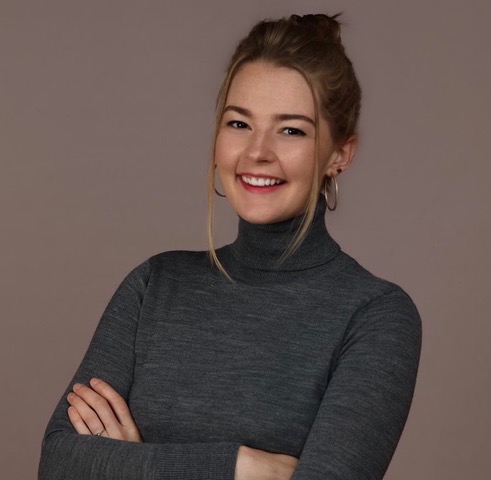
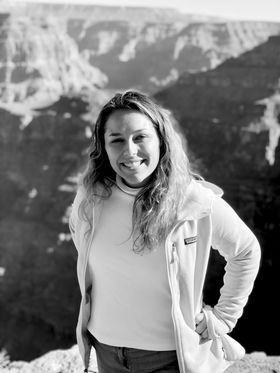
Alexis Noel Brooks is a fiercely feminist learner, dog mom, graduate student, coffee addict, “novel in progress”ian, wannabe chef, t-crosser, i-dotter, and lover of all things writerly. After graduating from Southern Oregon University in 2018 with a Bachelor of Arts in English and Gender, Sexuality, and Women’s Studies, Alexis went on to pursue a Master of Arts in English at the University of Nevada, Las Vegas.
Ed Battistella: What has your graduate school experience been like so far?
Alexis Noel Brooks: Grad school has been exhilarating, stressful, exhausting, challenging (in the best possible sense of the word), and deeply rewarding. Honestly, I am just trying to soak it all up, to learn everything I possibly can from anyone who is kind enough to teach me. I feel really lucky to have ended up at UNLV. When I left SOU, I was terrified that I’d show up to grad school only to discover I had inadvertently chosen a program where my professors and colleagues didn’t really care like the people I studied with through undergrad. What I found instead, though, was a community of scholars who are excited about what they do and excited to learn along with me. Grad school is endless labor, but a welcoming, warm environment makes it exponentially more pleasant to do good work and be human in.
EB: What is your focus as a scholar?
AB: Maybe I am reading into this question too much, but my scholarly focus and my focus as a scholar are actually two different things to me. That said, they definitely inform one another. Let me explain. My scholarly focus—as in, my research area—is in Black women’s literature and Black feminist theory. My research has been centered around the ways that Black women writers negotiate and reimagine spaces of literary fictionality. My focus as a scholar, on the other hand, is this: how can I amplify the perspectives, voices, and feelings of Black women as they continue to work toward equality in a culture that actively works against their freedom, joy, and very existence? The difference between these two definitions, to me, is that the first is the product of my research and the second is the undercurrent, the driving force, behind my research.
EB: What sorts of things are you reading and writing?
AB: I am currently reading so much amazing stuff, and a lot of it all at once (because that is grad school for you). I am almost done reading Morgan Jerkins’ beautiful new release, Wandering in Strange Lands. It is fantastic. Most of my reading is thesis research these days. I love it. For the first time in a long time, I feel like I have the flexibility to choose what I read. In academia, reading loses some of its magic. When your reading choices are dictated by packed syllabi––even if they’re packed with great material––it simply does not leave much room for literary exploration. Now, I can read that random monograph or sci-fi novel I’ve been dying to read, all in the name of possibly using it in my thesis. As for my writing, most of it is academic writing right now. I spend most of my time working on my master’s thesis, which explores how Hannah Crafts reimagines fictionality in The Bondwoman’s Narrative and situates Crafts within a long tradition of Black women writers who use creativity as a tool for subverting the master narrative. I do set aside small batches of time for creative writing, which is one way I practice self-care.
EB: What has been the most interesting of graduate work so far?
AB: I work for the UNLV Honors College as a writing consultant, which essentially means I tutor students one-on-one, teach writing workshops, and guest lecture in Honors classes. One of the most interesting things about my job is the variety of students I get to work with. In a given day, I read first-year students’ papers on anything from mythical cosmogonies, to exposés on “home,” to education reform. I love getting to read and discuss their personal takes on life. They have so many interesting things to say and ways of expressing their unique styles.
EB: How has your graduate study experience changed you?
AB: I am a first-generation college student, which I think is part of why I felt relatively lost and self-doubting entering into graduate school. In my head, it was the most formidable of intellectual spheres. I didn’t know what to expect or whether my ideas would “measure up.” My graduate study experience has made me a far more confident person, not because I haven’t made mistakes but because I’ve been supported along the way. I think it was my first semester, when I sat silently afraid that I’d be asked to read “Goethe” out loud and a fellow student admitted to not knowing the pronunciation either, that I realized we are all in this learning journey together. “Imposter syndrome is real” is something I’ve heard regularly from grad students and professors alike. We all live it. I’ve learned to be okay with this and to put myself out there anyways.
EB: Is there anything you know now that you wished you knew earlier?
AB: That it is okay to not know and to admit to not knowing. I re-learn this constantly.
EB: Can you share any long-range plans?
AB: What are “plans” even, in the middle of a pandemic. It is so hard to know. What I know for sure: I will graduate with my MA in English in May 2021. What I hope for: a career that allows me to put my unique skillset and interests to positive use, and eventual international travel again.
EB: Do you have any advice for undergraduate students considering going on for more school?
AB: Do what makes you happy. This cannot be said enough. Practical tips: If you don’t get accepted into any grad schools the first time around (which I didn’t), try again (which I did, successfully). By the way, if you still want to go to grad school after this, that’s a pretty clear indicator that it is where you need to be. Don’t just research schools’ and professors’ credentials; it is equally important to research the environment. Talk to professors you think you might want to work with and to current graduate students. Ask what they think of their department. Ask whether they feel supported. Ask whether they feel they’re given the tools to thrive. Trust me, it makes all the difference.
EB: Thanks for talking with us!
AB: Absolutely! Thank you!