Dennis Powers has worked in business, practiced law, and taught business law at Southern Oregon University. He has published eleven nonfiction works, five in the maritime field, and has recently embarked again on writing fiction. His non-fiction book, The Office Romance, was his publisher’s lead book and he was on a national book tour. Dennis lives in Ashland with his wife, Judy, and writes for Jefferson Public Radio’s “As It Was.” He is also active in this community, when not enjoying the outdoor amenities of our area, and his website is www.dennispowersbooks.com.
 EB: You are trained as a lawyer and then worked as a professor of business law. How did you get started as a writer? Did you always write?
DP: My mother, who was a passionate reader, writer and librarian for years, instilled in me a love of the “word” and books. I remember reading works in the fourth grade from The Red Badge of Courage and Johnny Tremain to the Call of the Wild. By the seventh grade, I was writing poetry, including being published in Junior Scholastics. I was hooked. From college (C.U.) to law school (D.U. Law) and business school (Harvard MBA), I entered different contests and was fortunate to win, from a Colorado Trial Lawyer’s Best Paper Award to others. Afterwards, I wasn’t able to write on a consistent basis, being too busy in earning a living from working for a mutual fund to running the cash investments for a Fortune 500 company.
Later on, I moved to Santa Barbara where I established a law practice, was a single dad, and began writing poetry again, newspaper and magazine articles, fiction, and nonfiction books, earning my keep during the day as an attorney while writing at night. Deciding that teaching would give me more time to write, I joined the faculty in 1995 at Southern Oregon University to teach business law. My first books were Legal Street Smarts (1994), Beating the Tough Times (1995), Legal Expense Defense (1995), The Office Romance (1998), and The Internet Legal Guide (2001). My non-fiction book, The Office Romance, was my publisher’s lead book for the year, and I was on a very extensive–and intensive–national book tour.
In 2005, my book The Raging Sea, about the 1964 devastating tsunami that crashed down the U.S. West Coast, became a regional book tour. Then, the book Treasure Ship, about the loss and final discovery of a gold-laden ship, was published one year later. Sentinel of the Seas (2007) was about the building of the most dangerous, remote and lighthouse in this country’s history. Taking the Sea came out one year later and tells the tales of the wreckers, or salvagers, of ships and their passengers from the days of the fleet clipper ships to today’s huge ocean liners. The fifth book in this maritime series, Tales of the Seven Seas, was published in 2010 and is about the adventurous exploits of Captain Dynamite Johnny O’Brien. I’ve had three other books published since then.
EB: What’s the role of the sea in your books? Is it a character, a setting, something that drives the plot? I’m curious how you put the sea to use as a writer.
DP: This is an excellent question. Actually, the sea is a medium, at times a capricious but major character, and always the setting. I mentioned the books above so that you would see the diversity–and also the consistency. These books are about people, ordinary folks like all of us, who are forced to reach for uncommon heights of valor (The Raging Sea and Treasure Ship), or to fight the sea as a horrific adversary (Sentinel of the Seas). The last two maritime books were about heroic, charismatic sea captains who were famous then, but are historical figures now.
I came about these books in an unintentional way, near serendipity in manner: The book on the tsunami centered on the heroics of those in Crescent City, and then this led to the sunken treasure ship and monumental lighthouse (St. George Reef Lighthouse) that were located close by. An interest in the sea captain who leased out his ships in the lighthouse construction then led to the next two books.
EB: Your work seems to involve of a lot of researching of primary sources? What’s been most helpful in finding the kind of factual material you need? And what’s been most difficult?
DP: Ed, I must say that libraries are the key to any research, from reviewing past newspaper articles and books to the interlibrary loan of important materials. For me, Southern Oregon University’s Hannon Library has been so helpful in these ways, and I have acknowledged this in every book. Whether an author is into fiction or nonfiction, you need this base from writing realistic settings to understanding the essence of the nonfiction being undertaken. A key is to continue searching from one source to another: For example, a newspaper article may have a reference to another article or writer, and this in turn leads to another source, as you unravel the tapestry of your story.
My last maritime book, Tales of the Seven Seas, was the most difficult. I became enamored with the story of a famous sea captain on the West Coast and Alaska, and I read that he had written his memoirs–but that no one knew where they were or still in existence. I started researching and writing that book from the available materials. However, I knew that this one could not be published until I had discovered those memoirs. I worked from one lead to another over two years, but nothing turned up–until I received a tip leading to Dynamite Johnny O’Brien’s handwritten, 500-page autobiography in an obscure library in Alaska. The Hannon Library arranged for the lending of the microfiche of these writings, so that I didn’t have to spend weeks inFairbanks,Alaska. I had my book.
EB: Let me ask you about the publishing process a little bit. What’s been your relationship with agents, editors and publishers? Have people come and gone over the year? Which is the writer’s best friend?
DP: My relationships with all three have been excellent. As in any business and especially in writing, people are what are important. I have been back to three publishing houses to publish a sequential or later book (all but one being in New York City); I have been with the same literary agent for twenty-five years. People tend to come and go, depending on the publisher, but I worked with the same people on Taking the Sea ten years later after the first book with them. And it does depend on the size of the publishing house as to their staying power.
The greatest turnover is in media, as I work in supporting my books with a number of TV, radio, and Internet hosts. These folks tend to circle from TV to radio or other media forms, especially in today’s economy. As I think about this, I believe that a writer’s best friend(s) are always the people one meets–whether agent, editor, or publisher–and keeping in mind that they have a job to do and depend on you.
EB: You’ve been remarkably prolific. Can you tell us something about your writing, research, and revising routine?
DP: Like yourself and other authors, I typically have a number of different irons always being heated in the fire. After Tales of the Seven Seas, I was curious about gold mining and Southern Oregon. I hiked the mountains of our region and began discovering another area of interest: gold, gold, gold! I wrote an Images of America: Gold Hill book (2010) which was sold in Costco, for example, and assigned all of the proceeds to the Gold Hill Historical Society. This was an image book and quite interesting. At the same time, I was reworking my fiction with this continuing passion for the “word”.
I try to write at least one to two hours each day, or do research for the time period. However, I must admit that I am one of those authors who drives to completing a project: Once I have researched an area, I create my outline and write eight-hours a day, if at all possible, punctuated by board meetings, “Honey Do’s”, and other activities. When running my law practice, I would write every early morning from 2:00 am to 7:00 am and then head off to my office. When teaching at SOU, the proximity to Hannon Library and working in my research among my teaching responsibilities, then writing during summers and breaks and odd times was great. And I truly enjoyed all those years at SOU while teaching and working with my colleagues.
EB: A recent book is a fiction ebook called The Gold Bugs, published on Smashwords.com. What brought you back to writing fiction?
DP: I actually started writing fiction before I ventured into nonfiction. I had written four different fictional works, from The Gold Bugs to one entitled The Neighbor, but I could not get them picked up. I decided to write nonfiction and be published; this decision led me into my eleven nonfiction books. This doesn’t include four other books, entitled the Power of Attorney Legal Series, a series of computerized business forms and real estate forms that were sold across the country in a joint venture of mine prior to joining SOU.
In any event, The Gold Bugs twice went up to St. Martin’s Press editorial board for review, but just missed being selected for publication. The following book was my first nonfiction work, Legal Street Smarts. However, Carolyn See at a later workshop at the Ashland Writers Conference (who wrote The Handyman, among others) encouraged me to continue with this book–which I did. One year ago, I decided to go back to my first love: fiction! I’ve reworked two so far.
The Gold Bugs is based upon travels by me and my wife in Costa Rica. In this book, Ceci Dunaway is touring Costa Rica with her boyfriend and adult son, while trying to locate stolen Mayan artifacts. As Ceci follows the trail of another investigator who had disappeared while there, she finds that the dreaded secret police also want her–and the just stolen gold artifacts from itsGoldMuseum, the Museo del Oro. With everyone running throughout the country and dangerous jungle, the question becomes who lives and where are the priceless objects? Along the way, we meet characters such as a drug-taking ex-pat, a fence hiding from the law, a beautiful hooker, or two, and assorted crazies, such as a sly, ex-rock musician and a fireman who sings opera at misguided times. This ebook is up on Smashwords, including Apple’s iTunes bookstore, Barnes & Noble (Nook), and Amazon’s Kindle, among others.
EB: You also have published in the last month another fictional ebook entitled A World Within Worlds? Could you tell us about this one?
DP: Have you ever seen someone in passing that looked exactly like you, or a friend told you that she absolutely saw you on another day—but you were out of town? A World Within Worlds starts with that observation. Paul Hastings sees his exact duplicate and is led to the other’s beaten apartment on the wrong side of town. At the same time, a deranged man driving a white Cadillac is following him, playing a deadly game of life or death. Paul must wind his way through the metaphysical and spiritual universe in order to survive, a path that leads him into different worlds. These are worlds where the question of “What if…?” is answered as to his life, even ours, including a life that none of us would ever want to live. Lovers are alive in one world—but not in another—as the Cadillac man emerges in different ways. This story is an exploration of what could actually be, a journey as to how lives can change in an instant and force us onto the untaken paths. This ebook is also up on Smashwords, including Apple’s iTunes bookstore, Barnes & Noble (Nook), and Amazon’s Kindle, among others.
EB: Do you like the Smashwords format? Do you see any advantages over the traditional publishing house approach?
DP: There are various ebook publishers, including print-on-demand sites such as iUniverse. I came across Smashwords owing to its reputation and ability to understand its uploading, formatting requirements. What is important is that the different readers being used–whether it’s Kindle or an iPad or Nook–all have different software and reader requirements. I found that Smashwords.com was easy for me to work with through its Style Guide, the important criteria being the formatting and presentation of your book in those differing formats. I like this format over the others, including Kindle’s (which an author will still be on.)
Once the formatting and presentation is down, then the real advantage is that you can be published by just uploading your book and then this is distributed to different reader sites. An author can send links to different agents or publishers with a book that is easily read. Unless you work a print-on-demand site with this, however, you will not have a paper book to sell at book fairs or conferences. Also, a writer has to be confident of their editorial and writing abilities, as unless you hire a freelance editor, you are on your own.
Although you do not need to sell an agent on an idea, then the publisher, a writer still must have a good product. Without a good product, authors can have their book or novella uploaded, but no one will read it. In fact, the majority of works on these ebook sites will probably not be sold, even on Amazon’s Kindle, the caveat being the author must market strongly what is at the same time a strong product. This will always be important.
EB: What’s your next project?
DP: Once the research is completed, projects can take different shapes–fiction or nonfiction (or even poetry)–all depending on where the author wants to go. Years ago, I wrote a fictional treatise based on the 1964 tsunami that ripped down the West Coast. I decided to change this to a nonfictional treatment, entitled The Raging Sea, which sold very well and also placed by the publisher on Kindle and other e-bookstores. Now, I am into exploring how this can be reworked into a fictional story involving our coast, legal and illegal marijuana growing, coastal real estate development, different shady characters–and a crushing tsunami thrown in that changes all of the equations!
EB: What have you enjoyed most about writing books?
DP: I truly enjoy writing, as when I am doing this, it is like playing a piano concerto where the time flies by and I am so much the better for this. Writing books brings me into contact with such interesting people and in an endeavor where all of us pull for the other. My life is richer and fuller by these experiences, and I would never have done this differently.
Ed, we are so fortunate to be able to explore these different writing worlds–and thank you very much for this opportunity to share my views with you and your readers.
 Follow
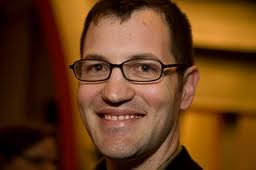 Anderson’s forte is book reviewing, and he takes it seriously, as a genre of engaging criticism. In 2004 he won the Best Essay Award from The American Scholar, for an essay on James Joyce, and in 2007, the National Book Critics Circle awarded him the Balakian Citation for Excellence in Reviewing.
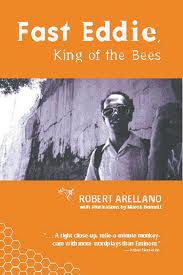 Everyone likes a good dystopia, from Wells and London to Zamyatin, Huxley, Orwell, Burgess and M. T. Anderson’s Feed. In Fast Eddie–King of the Bees, Robert Arellano takes us to the dystopic Boston of the near future, where a big-footed pickpocketing contortionist becomes the leader of underground Dig City.