An Interview with Mary Z. Maher and Alan Armstrong

In their just-released book Oregon Shakespeare Festival Actors: Telling the Story, Mary Z. Maher and Alan Armstrong interview a baker’s dozen Oregon Shakespeare Festival actors talking about their process and telling some behind the scene stories as well.

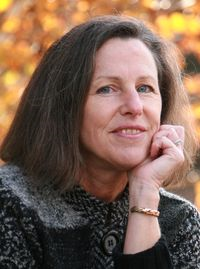
Mary Z. Maher has a PhD in Performance Studies from the University of Michigan, and is professor emerita at the University of Arizona in Tucson. She has written Modern Hamlets and Their Soliloquies on an AAUW fellowship, Actor Nicholas Pennell: Risking Enchantment at a residency at the Centro Studi Liguri in Italy, and Actors Talk About Shakespeare (Limelight/Applause Books). She was in the NEH seminars directed by Bernard Beckerman and Michael Goldman at the Folger Shakespeare Library and was a researcher on the Time/Life BBC’s The Shakespeare Plays series. Maher has interviewed Kevin Kline, Kenneth Branagh, Derek Jacobi, Stacy Keach, Zoe Caldwell, Martha Henry, Ben Kingsley and Simon Russell Beale, among others.

Alan Armstrong has PhD in Renaissance literature from Cornell University and served as Director of Shakespeare Studies at Southern Oregon University from 1986 until 2008. He has also been a senior scholar for the National Endowment for the Humanities national institutes for college professors at the American Shakespeare Center in Virginia and Shakespeare’s Globe Theater in London, dramaturg for seven Oregon Shakespeare Festival productions and co-editor of the journal Literature and History.

Oregon Shakespeare Festival Actors: Telling the Story is available from Wellstone Press.

EB: How did you come up with the idea this book and why did you call it Oregon Shakespeare Festival Actors: Telling the Story?

AA: Mary has done a couple of interview-based books, and once she retired to Ashland, it was natural to think about one on OSF actors. Conversations with actors had always been an essential part of the Shakespeare Studies programs I directed at SOU, and I had published interviews with Dan Donohue and Robin Goodrin Nordli. We kicked the idea around for years before the right moment—when we both had time to pursue the project—finally came. The main driver of the project, of course, was the fact that we have an extraordinarily large and talented company of actors here in Ashland, some of the best in the country. They deserve more recognition.

MM: My philosophy about titles is that they should be straightforward and should duplicate the inquiry that is going on in the mind of a Googler or an Amazon searcher: “Okay, I want a book where actors are talking about performing Shakespeare.” How about Actors Talk About Shakespeare (the title of my third book). There. You got it. Done. Actors say frequently, “My job is to tell the story.” So the actor’s goal in life can be found in the title of our book. I submitted several ideas and Alan arranged them into one neat and comprehensive title, Oregon Shakespeare Festival Actors: Telling the Story.

EB: How did you pick the actors to focus on? It must have been difficult to choose?

MM: One would think so, but it wasn’t. We’d both flirted with this book idea, and when push came to shove, we decided to meet for coffee on the Starbucks on campus, and each was to bring a list of a dozen actors. It was astonishing how close we were. Even wilder was that we split the list in seconds, and both of us were happy with our choices. There are always a couple on your partner’s list that you were drooling to interview, but life being what it is–full of surprises–sometimes you stay jealous, and sometimes you say, “Whew. Glad I didn’t get that one.”

AA: Mary remarks in our introduction that choosing the actors was easy, in the sense that the lists we brought individually to that discussion overlapped so much that we could agree on a final list. But it was hard to settle on any list of a dozen actors, knowing that there were dozens of others we’d be just as eager to include. Practical considerations also narrowed the field. It made sense for me to interview actors I had worked with and known, in some cases for decades. We wanted a mix of veterans and new faces, and of different kinds of actors. Some of the actors we admire hadn’t been doing Shakespeare recently, or were leaving the company, or were busy with other projects. Any OSF playgoer who reads the book is likely to say, “Why isn’t X here, too? What were they thinking?” I would, too—but we couldn’t do a 600-page book. What we could do is make sure that at least twelve of those beloved actors are there, in print, forever.

EB: Who did you have in mind as the audiences for the book? OSF afficionados? Students training to be company actors? Theatre historians?

AA: All of the above. But playgoers were first in our minds. OSF has such a large and loyal and knowledgeable audience that we felt sure they would want to read a book like ours. The actors we interviewed are not just respected but loved; they have followers, who are eager to know more about their stories and their skills. At the same time, since conversations with actors have been part of my classes and symposia and NEH institutes here since the 1980s, I was very conscious of the book’s value for teachers and students—especially theatre arts students. The actors’ chapters are full of hard-earned, practical advice to those just beginning in the profession, about learning lines, building a character, handling Shakespeare’s verse, etc. And for me, the interviews are also an important contribution to theatre history. Theatre is still an ephemeral art. Any evidence that we can preserve of how theatre is made—especially the direct testimony of the actors at its heart—is priceless.

MM: This question answers itself once you have to write a book proposal. It is the premier question every writer needs to clarify at the outset of the project. Our book proposal lists as potential readers novice and wannabe actors, master actors, teachers of actors, Shakespeare buffs, retired teachers (of both theatre and literature), and those many dedicated patrons who visit the Oregon Shakespeare Festival. Defining that audience also conveys a sense of the local-ness of this project. It might not sell well in New York, could pick up a few buyers at Utah Shakespeare Festival, but the truth is that our audience comes to us from the West Coast, the fans that frequent this festival. They’ve had favorite performances for years, and now that their children and their children’s children also visit the festival (or already live here and reap the benefits of fantastic artists like Michael Hume or David Kelly or Barry Kraft teaching at the high school and SOU), they are eager to hear from these gilded actors who strut and fret their hour upon the stage. The entire theater community benefits, and the actors benefit because there is now a documented career for a dozen of them, their own story told. Of course we as authors benefit—not just from the quality of the information these artists provide but from the imagination and breadth of experience they offer in the book.

EB: The interviews give a sense of just how hard the OSF actors work in preparing their roles. Were there some common themes that you identified in their process?

MM: Absolutely. We asked about training and early mentors and how each actor got the acting bug, which varies from actor to actor, something I’d noticed in my other books about Shakespeare in performance. Topics that came up regularly were how each actor handled memorizing the lines (which is vastly different if the play is by Shakespeare or by Schenkken); the amount of research done and what kinds–travel, books, film and TV-watching, seeing other actors’ versions played. Several reported on the three different performance spaces at the Festival and handling each one, also referencing directors, lighting, stage, and costume designers and valued colleagues. Most of the actors had a bias against miking the stages, a revealing dialogue, with facets I’d never thought through.

I hear lots of variety in these actors’ methods of preparing a role. This subject also has a time factor, e.g., what did the actor do in his/her earlier days; and how does s/he do it now. Role preparation depends on one’s perspective and ideas, and most importantly of all, on the playwright. Ours is a Shakespeare festival, one with a very high caliber of master actors at work with years of fruitful experience in performing classics. That is the foundation stone and true power of OSF. You don’t find this quality of acting talent across an entire cast or across the U.S.

Who could have imagined the tutorial power of Will Shakespeare? As I sat in The Cocoanuts for the fourth time this season, I couldn’t help thinking about three of our actors–Bedard, Kelly, and Tufts—as they dished up truly divine madness onstage, yet were propelled with a legacy of performing the King of Navarre and Launcelot Gobbo, Richard II and Benedick, Henry V and Puck!

AA: One common theme: there’s no single path, not just one right way, to become an accomplished actor. Each story is different, and even individual actors use all sorts of different techniques, depending on the role—whatever they can find in their toolbags to do the job. All our actors all talked about how they marked up scripts, researched a role, memorized lines, built a character, worked in the rehearsal room, spoke Shakespeare’s language, dealt with the physical demands of acting, met the vocal challenges of the Elizabethan Theatre. And on some of these points, they disagreed completely. Some actors like to have every line memorized when they walk into the first rehearsal; others don’t, because it constrains their choices. Some like to do a lot of external research for a role; others find that a distraction from the script.

All our actors talked about what it meant to be part of a repertory company, what made an ideal director, what kind of training young stage actors need (but increasingly don’t get), what opportunities when seized made all the difference to their careers.

EB: I understand there are some never-before-told behind-the-scenes moments. Can you share one or two?

AA: I’ll defer to Mary here.

MM: Once you accept that Ashland is a small town, you remember Shakespeare’s advice on this subject: “Open your ears; for which of you will stop the vent of hearing when loud Rumour speaks?” “If false or true, I know not.”
That’s telling my story and I’m sticking to it.

EB: Mary has done earlier books interviewing actors. How are the interviews in this book different from the usual question and answer format?

AA: We started out in the conventional way, with a loose set of questions (focused especially on actor process), which we expected to be part of the book. But the interviews themselves made us start doubting the wisdom of the traditional format. Each of us, independently, remarked that our questions actually seemed to interrupt the flow of the interviews and disrupt the actor’s train of thought—not always a straightforward track, but always an interesting and illuminating one. I mentioned one day that all that was really required of us, at this stage, was to turn on the tape recorder and let the actors’ words flow. That’s an exaggeration, of course, but Mary and I both learned as we went along not to worry about “getting through our list” of questions so much as turning to them as prompts when the vein ran dry. But that didn’t happen often. Somewhere in the midst of our interviewing I ran across Holly Hill’s Actors’ Lives, which prompted us to wonder whether we, too, couldn’t in some way sieve out the questions and keep only the answers. Eventually, that’s what we did, by crafting the interview material into chapters or essays in the actor’s voice. That required cutting and some re-arranging—nobody’s conversation is perfectly linear and thematically organized—but the result was something that expressed better than a Q&A format what actors actually had to tell us about how they do their jobs.

MM: I’ve never used the question-and-answer format in any of my books because that method never tells the full story.

I’ve interviewed a number of hallmark actors–Kevin Kline, Derek Jacobi, Ben Kingsley, Kenneth Branagh, Stacy Keach–but I’ve never felt that a book about the subject of performance was comparable to the kind of feature you see in The Sunday Times Magazine. For one thing, the language actors use when talking about process is esoteric and abstract and often needs clarification for a reader who likes to explore this subject. The material needs context and framing throughout the chapters. People assume that an author does this very simple thing: asks people questions; writes the answers down. That part is actually the simplest and the most fun but far, far away from an effective, finished product.

I’ve used a number of formats, and I think Actors Talk About Shakespeare and Modern Hamlets and their Soliloquies guide the reader carefully through the interviewee’s methodologies and choices, but those books took years to write. There is a phrase you will hear once an actor has outlined how s/he actually works, how s/he completes the job: “That’s my aesthetic.” This pronouncement already tells you that there are several ways to shape a performance, and that each individual actor has figured out what works for him/her. As an interviewer, you accept that and you honor all those methods. In the actors we chose, the performance is proof of the actor’s process.

EB: Can we hope for more interviews in the future, perhaps a sequel?

MM: One hopes so. It really is too soon to tell.

AA: Certainly there are many more OSF actors whose voices and stories should be heard. But at the moment I’m satisfied to have had a part in capturing twelve of them. I’ve got other projects in the fire now—an essay related to the book, about using contemporary actors as evidence; an essay on doubling of roles in The Comedy of Errors; and another on Prospero’s hat. But first I’m going to spend some time in my kayak.

EB: What surprised you most in the course of the interviews?

MM: I was surprised and delighted at how many actors responded positively. Not just in terms of all of the individual personalities that a company brings to the table, but the eagerness with which each spoke, and how freely they wanted to share their work creating characters–the whole idea of process within the actor’s art form. These are consummate artists and wonderful story tellers. Even their most outrageous moments onstage were often divine inspiration. We sought to capture both the artist and the artist’s voice, which was truly the crux of the project and demanded discipline, judgment and many conversations about what would work in the book.

Two other story tellers, actor Stacy Keach, an alumnus of OSF, and playwright Robert Schenkkan surprised us both with lovely testimonials for the book’s cover.

AA: Not so much what the actors had to say—because I’ve worked with all but one in the rehearsal room, so I went into the interviews knowing something about them and about their processes, and that’s what we wanted to share with our book’s readers. What did surprise me was their saying that they rarely got the chance to really talk, reflectively and candidly, about how they do what they do. They talk to groups of playgoers or students about their roles, or about the plays they’re in. But the invitation to speak directly about the mysteries of their craft, to try to explain what happens when they’re up there on stage, and all the preparation that goes into making it happen—that’s an opportunity they really welcomed. And that confirms my original conviction that each of these actors is a kind of neglected treasure. As a Shakespeare scholar I’m conscious of the gaps and omissions in our knowledge of how Shakespeare’s plays were acted originally. I hope these interviews will make it easier for someone a hundred years from now to understand the theatre that existed in this moment in this place.

EB: What was the writing and planning process like?

MM: Frankly, we just dove in. I know 10 minutes into an interview whether or not the information is rich, like running your fingers through gold coins. All of these were.

In retrospect, we could have been a bit more cautious about stylistics from the get-go. But Alan turned out to be the Mastermind of Proofreading and shepherded that whole phase through the mire. You never forget that you learn how to write a book by writing the book.

We were forging a new process in removing the authors from the story on the page. That meant we were learning as we journeyed through our own process. Some actors were surprised to see that they were the single public voices in the book. But our outside readers adapted very quickly and with positive responses, so we were relieved that it was working. That did not, however, eliminate our own learning curve—but it certainly sharpened it.

AA: Long, sporadic at first, and always invigorating. We figured out the details, solved the problems, as we went forward. The last six months have been the hardest, pushing toward publication. Earlier, the interviewing was certainly time-consuming, 3-4 hours with each actor (never failing to appreciate that 3-4 hours of their time was a greater gift to us). Transcribing those interviews was incredible donkey work. Imagine how long it would take just to get down correctly the 30,000 words of one interview—and each of us had six to do. My wife, whose sociological research involves a lot of interviewing, kept asking me why I didn’t just pay someone to do the transcriptions. But the kind of intense listening I had to do just to get the words down is what really got the interviews—and especially the actors’ voices—into my head. And that’s what I needed for the next phase, which was arduous in a different way: distilling those 30,000 words into the 7500 or so that would represent, e.g., Danforth Comins. Our focus on actor process guided our choices in this phase, but it was still hard to cut the interviews. I can assure you that Danforth didn’t speak 22,400 boring or irrelevant words to me, words that I could just throw out without thinking. At each stage of editing, pruning was hard, because we had to sacrifice good stuff—e.g., Danforth’s account of his film work—in the interest of even better stuff, like how he prepared to play Hamlet for the second time. When we thought we had done this job as well as we could—at around nine or ten thousand words per interview—it turned out that we were really just beginning the hard work of editing. It took several more rounds of agonizing edits to make the chapters that you’ll find in the printed book. It was a challenge to keep seeing the interviews with a fresh eye, to imagine yourself a reader coming to each chapter for the first time.

EB: Do you edit each other’s work? Fight over commas?

AA: We did read each other’s interviews and make suggestions, but I don’t think either of us is dogmatic enough to have started a comma war. We’re both professionally trained to recognize that grammar and punctuation and syntax and style are often about conventions and preferences, not absolute rules. So we expected that our “rules” and preferences would differ, and that Mary’s interviews would have a different style of punctuation from mine (how much we used dashes or semicolons, or how we chose to emphasize words—italics? boldface type? capitals?). We were able to negotiate conspicuous differences, thinking mostly about how our choices would affect readers. No accent mark in Moliere, for instance, or footnotes, or citations—it’s an informal book. What made editing easier was a special circumstance of this book: we weren’t trying to impose our individual styles and voices. What we both were trying to do was to capture the actors’ individual voices—their rhythms, their vocabularies, their conversational styles. That goal trumped grammar and punctuation. We didn’t want to be “correct”; we wanted you to hear those voices in your head as you read the interviews, as we heard them when the tape recorder was rolling. I realized just now that I was starting to channel Jonathan Haugen there, except that he would have said: “We didn’t want to be correct. #%$!@&* correctness! Who cares? We just wanted you to hear those voices.”

MM: We fought over virgules (Alan won) and we fought together for colons, which neither of us won.
And yes, we edit one another’s work. You really have to, or you lose perspective if you only write in your own little cubbyhole all year long. I value Alan’s suggestions very much, and I suspect I am a different kind of editor to him than he is to me. I am sure that we both benefit greatly from one another’s point of view. The editing process is hugely long and complicated, and we pride ourselves on having a sense of decorum and even a sense of wonder about the quality of the material we got in interview.

EB: Thanks for talking with us.

AA: Thanks, Ed—always a pleasure to talk with you.

MM: Thanks.

Posted in Ideas and Opinions, Interviews, What People Are Reading | Comments Off on An Interview with Mary Z. Maher and Alan Armstrong

Literary Ashland on the radio

Robert Arellano, Ed Battistella and Michael Niemann at KSKQ

Last week Literary Ashland teamed up with KSKQ community radio in Ashland to broadcast the Literary Ashland radio show. A monthly round up of literary events in the Rogue Valley together with an interview. Our first guest was Robert Arellano, a 2014 Literary Arts Fellow and author of Curse the Names and several other books.

Listen to the first show here and find out about Arellano’s “Dinner at Omar’s” and more:

Robert Arellano at KSKQ

Some of the upcoming events are:

•Ashland Book and Author Fair, September 20 at SOU’s Hannon Library (application deadline August 1)

•Friday Words and Wine (3rd or 4th Friday of the month) with Molly Best Tinsley, Broken Angels, Aug. 22

•Barking Moon Farm in the Applegate is hosting a benefit reading with a lineup of 14 writers on August 16th reading short selections from their work. All proceeds will go to Rogue Advocates, a local organization dedicated to preserving open space and productive farmland.

And congratulations to our friends in the mainstream media. The Medford Mail Tribune finished first in General Excellence and won 29 other awards in the Oregon Newspaper Publishers Association’s 2014 contest. The Mail Tribune‘s sister publication, the Ashland Daily Tidings, claimed eight awards in the daily division of 10,000 circulation or less.

At the control board

On the air

Photos courtesy of Maureen Flanagan.

Posted in Ideas and Opinions, Literary Events in Southern Oregon | Comments Off on Literary Ashland on the radio

An Interview with Michael Baughman

Michael Baugman, with his grandson Billy and a zombie friend

Michael Baughman, a freelance writer, has contributed to Evergreen Review, Sports Illustrated, National Wildlife, Honolulu Magazine, and many other publications. He is an emeritus professor of English at southern Oregon University and the author of Boat: A Memoir of Friendship (Arcade Publishing, 2012), A River Seen Right: A Fly Fisherman’s North Umpqua (Lyons Press, 1995), Mohawk Blood (Lyons Press, 1995), and (with Charlotte Hadella) Warm Springs Millennium: Voices from the Reservation (University of Texas Press, 2000). His latest book is Money Sucks: A Memoir on Why Too Much or Too Little Can Ruin You (Skyhorse Publishing 2014).

EB: Why did you write this book? Did you have a particular goal or audience in mind?

MB: Unless I have an assignment from a magazine or newspaper, I never have an audience in mind, so I suppose that makes most of my writing largely self-indulgent. For me writing books is a way to force myself to deal with an idea, an issue, a problem, a place. The goal is to produce something that seems to make sense, to clarify something, to work as writing. The typical American obsession with money – making it, spending it, wasting it – has fascinated me since I was a child.

EB: You also wrote Money Sucks for your grandson. What was his response when he read it?

MB: My grandson Billy called me from Denver late one night to tell me he’d read the book straight through and liked it very much. We’re close, so of course he wouldn’t have admitted he didn’t like it, but I believed him.

EB: What do you suppose shaped your attitudes toward money the most—having enough or not having enough?

MB: Three things come to mind:

I think a frantic quest for money ruined my father’s life. He was a successful businessman who, despite his success, was never satisfied. He could never stay in the same job, or town, or house, or apartment very long. When I was a schoolboy between the ages of ten and seventeen we moved from Pennsylvania to Texas to California to Hawaii and back to California again. But he never found happiness, or even satisfaction, and smoked and drank himself to death at age sixty-one.

At Punahou, an expensive private prep school in Honolulu, I established friendships with many boys and girls who were either born rich or became rich, and these friendships have lasted more than sixty years. Some of these men and women are fine people, but I’ve seen nothing in any of them that suggests they’re more satisfied with their lives than most middle-class people I’ve known. In fact, the miseries of the rich are often phenomenal.

After dropping out of college I bummed around the country: forty-eight states in a year-and-a-half, working odd jobs and sometimes homeless. True poverty is horrible, but I found that so-called working class people often seemed like more substantial human beings than the very rich.

EB: One lesson of the book is that there is more to a good life than money. How would you characterize a good life?

MB: As I tried to suggest in the book to Billy: live in a place you want to be, and do work you truly want to do. The Hawaiian beachboys I knew growing up were the happiest group of people I’ve ever seen.

EB: What should we be teaching about money in the schools? If you were designing a personal finance curriculum, what would it be?

MB: I’m not sure exactly what we should be teaching. What I am sure of is that what Alexis de Tocqueville wrote in Democracy in America remains true today: “As one digs deeper into the national character of the Americans, one sees that they have sought the value of everything in this world only in the answer to this single question: how much money will it bring in?”
So I suppose schools should expose students to such sentiments, and the exposure should lead to serious discussion and thought.

EB: I once heard someone characterize having too much concern for money as hoarding. Would you agree?

MB: I’ve known money hoarders, such as the couple I call “The Texans” in the book. They hate to spend it, but they love having it. That strikes me as a form of mental illness. Also in the book, I quote a retired CEO who surprisingly admits that the pay received by CEOs is obscene, and that competition is at the heart of the grotesque ratio between CEO compensation and average worker pay. If the boss at Corporation A gets twenty million a year, the boss at Corporation B wants twenty-five. That’s a form of mental illness too.

EB: Have you heard from any of the folks you profiled? Rich and not so rich? What did they think?

MB: I’ve heard from some of the not-so-rich. They were all right with the book. I sent the retired CEO a copy, but, even though I quoted him accurately, I never heard back from him. That doesn’t surprise me.

EB: It was interesting for me to learn about your work as a professional writer for Sports Illustrated and other publications. How is that writing different than the academic writing that we teach students?

MB: I was a Special Contributor at Sports Illustrated for several years, and wrote mostly on outdoor and environmental subjects. I think I was covering significant material that SI readers wouldn’t normally have been exposed to. Nowadays the magazine is pretty much for hard sports only. I don’t like to distinguish between different kinds of writing. All writing should be clear, economical and well organized, and it should deal with a significant and/or interesting subject.

EB: You also spend some time in the book discussing sports and athletics. What is their role in education?

MB: I played major college football, and I don’t have anything good to say about big-time college sports in general. Just as there are fine people among the rich, there are fine young men and women among college athletes – but the sports programs at the big schools are ridiculously overemphasized. I don’t see how anybody could deny it. And here we are back with money. Look what happened at Penn State. The sexual abuse of children was tolerated for years because of the money earned for the school by the football program.

EB: You are officially retired from academe, yet you continue to write. Does one ever retire from being a writer?

MB: I can’t not write, and I’ve been writing more than ever since I retired. It’s a necessary part of the day for me, as necessary as anything I do.

EB: What’s your next writing project?

MB: I have a novel coming out next spring, tentatively titled Growers Market. It’s about combat veterans growing illegal marijuana, with many subplots included. I’m working on another novel now, and also on an Afterword for a new edition of A River Seen Right.

EB: Thanks for talking with us.

MB: Trying to answer questions about my own work gives me a better understanding of what I’ve done. Thank you.

Posted in Ideas and Opinions, Interviews, What People Are Reading | Comments Off on An Interview with Michael Baughman

An Interview with Diana Maltz

Dr. Diana Maltz is a specialist in late-Victorian literature and culture. She has been a professor at SOU since 1999 and served as Chair of the Language, Literature, and Philosophy Department. Dr. Maltz received her BA in Literature and History from Bennington College, and both her MA and PhD in English from Stanford University. In addition to about twenty published essays and articles, she is the author of British Aestheticism and the Urban Working Classes: Beauty for the People, 1870-1914, published in 2006 by Palgrave Macmillan. She is recently back from a UK-US Fulbright Fellowship in England and we sat down to talk about her new book, a critical edition of Arthur Morrison’s A Child of the Jago, published by Broadview Press this past fall.

EB: What is A Child of the Jago about?

DM: This Victorian novel tells the story of Dicky Perrott, a boy growing up in the Jago, a squalid, impoverished, violent slum, based on the notorious Old Nichol in London’s East End. Dicky acclimates to the ethics of the Jago and becomes a skilled thief, working for the neighborhood fence and dreaming of his ultimate ascent into the High Mob. But he also has leanings toward respectability, and these are cultivated by the local priest who would save him from Jago ways.

EB: How did you get interested in Morrison?

DM: I was lucky enough to study Morrison’s Jago and some of his short stories as a grad student in the mid-1990s. Peter Miles’s excellent paperback edition of Jago had just come out through Dent/Everyman in 1995. I like to think my cohort was the first generation to read Jago in a classroom setting. Everyone was very struck by the novel. Several friends from that class teach it now that they are professors.

EB: So you committed yourself to a critical edition of it. What is a critical edition, exactly?

DM: In a critical edition, an editor frames the original novel with a critical introduction, a timeline of the author’s life, footnotes to clarify terms in the main text of the novel, and a bibliography of recommended readings. Sometimes editors include maps and illustrations. If the novel is written in a dialect unfamiliar to the general reader, the editor might add a glossary, as I did. An editor of a critical edition also works to even out variations in spelling or correct typos through “silent edits.”

Many of us are familiar with the Penguin Classics editions from college: these are standard critical editions. However, the Broadview Editions are special because the end of each edition includes cultural appendices, which are excerpts from relevant texts written around the same time as the novel. These include reviews of the novel, but they also extend to thematic writings beyond it. Depending on the novel, you might find a mix of religious tracts, medical treatises, or parliamentary reports, just to name a few.

For A Child of the Jago, I built up a selection of appendices relevant to slum life. I underlined the topics that haunt the novel and that preoccupied Victorian social reformers seeking to cleanse and reform the city: eugenics, hooliganism, women’s sweated labor. I also documented late-Victorian efforts in cultural philanthropy – that is, efforts to teach slum-dwellers higher values and tastes. These charitable schemes are parodied in the novel.

EB:
What in particular prompted you to develop Jago as a critical edition?

DM: I started teaching it my first year at SOU in 1999. By then, the only available edition was the Academy Chicago edition, which is very bare-bones: no footnotes, no appendices, only one map, a very short biographical introduction, and a short bibliography of recommended readings at the end. I started bringing in my own additional texts to class as teaching supplements: photos, maps, non-fictional testimonies about the neighborhood. These would later form the basis of some of the cultural appendices of my edition.

It seemed the natural next step to write to Broadview and ask if I could do an edition of the novel for them.

EB: Who is the audience for the work? It seems ideally suited for classroom use.

DM: Yes, Broadview Editions are marketed as teaching editions, primarily for the undergraduate classroom. One of the most positive aspects of the experience was that SOU awarded me a President’s Mini-Grant through which I was able to hire an SOU student, Carly Dreyfus, as an editorial assistant. Carly was a tremendous help. She gave me insights into what modern student readers would want footnoted and what they would find interesting as appendices.

EB: How does A Child of the Jago compare with other slum literature?

DM: We can situate A Child of the Jago in a couple of literary and social contexts. It frequently gets allied with the late-nineteenth-century literary movement called Naturalism, famously advanced by the French novelist Émile Zola. Zola was interested in the dire combination of industrial urbanism, poverty, addiction, and violence. He framed Naturalism as a kind of literary science that sought to represent the lowlife methodically and objectively.

But Morrison was himself very resistant to being pulled under the umbrella of any one movement. In fact, my edition includes his Preface to the Third Edition of Jago, where he upbraids a critic H.D. Traill for labeling him as a “Realist” and for then saying his Jago is too foul to be genuinely realistic. Morrison found himself at the center of a public debate – trying to defend his creative practices as an artist while also asserting the truthfulness of his representation of the Old Nichol slum.

In the 1890s, there was also a small school of writers who were experimenting with writing phonetically on the page in order to recreate Cockney speech. They included Morrison, Somerset Maugham, Rudyard Kipling, and other authors who are largely neglected today, such as Edwin Pugh, William Pett Ridge, and Richard Whiteing. Morrison also tends to get paired with the English novelist George Gissing because both wrote on London poverty, and certain aspects of Morrison’s Jago resonate with Gissing’s earlier novel The Nether World (1889).

EB: What was the most challenging thing about preparing the work?

DM: I was intent on selecting appendices that professors would really want, and so I sent out a survey to about 20 people who teach the novel. I included my provisional table of contents in the email, urging colleagues to suggest additions and also replacements for my original texts. Everyone had new appendices to suggest, but no one questioned my original choices. So the appendices ballooned. At one point, I had written introductions to about 40 of them, and then I bit the bullet and emailed my editor to ask what my allotted word count was for that section of the book. I had more than double the permitted word count! So I spent a very dark January hacking away at my sources and reducing the appendices to 20 sources.

But in the long run, it was a very good thing that I did ask people, since I arrived at more diverse and interesting selections than I would have on my own. Professor-friends gave me permission forego more predictable, canonical sources in order to make space for lesser-known writers. I have more texts by women than I originally included. I have two excerpts from the oral history of Arthur Harding, a gangster and ex-con who had grown up in the original Old Nichol slum. The Hardings were a notoriously powerful local family, something like the feuding gang families of Ranns and Learys in the novel.

EB: Tell us a bit about Arthur Morrison. He seems to have been quite a colorful character—a journalist, novelist and art collector. He even wrote detective fiction—he’s been compared to Arthur Conan Doyle.

DM: Morrison was by all accounts a shy, reserved person who kept a low profile. He grew up in the respectable working class in Poplar, East London: his father, an engine fitter at the docks, contracted tuberculosis and died just before Morrison turned eight. Morrison’s mother then took on the management of her mother’s sewing goods shop (“haberdashery” in British English). Morrison went to local schools and, as a teenager, left school to work as an office boy for an architect for the London School Board. He rose to the status of Third-Class Clerk before he left in 1886. His next job was as a secretary to the Beaumont Institute, which administered the People’s Palace, a philanthropic cultural center in the East End. While working for the People’s Palace, Morrison served as sub-editor of The Palace Journal and published short sketches there about London life.

Perhaps the most intriguing aspect of Morrison’s biography for the modern reader is his reticence about his working-class roots. When Traill and others questioned his representation of the Jago, he might have silenced them by asserting his identity as an East Ender, but he did not. In my book introduction, I suggest at least a couple of reasons for his reserve. First, his home neighborhood of Poplar was at least a 45-minute walk from the Old Nichol. So Morrison never identified with his Nichol subjects at all, but positioned himself as an observer, recording their ways almost anthropologically. Morrison’s further silences and prevarications in other contexts — during author interviews and census investigations — indicate a general reluctance to confess his working-class origins. But we shouldn’t consider this mere snobbery on his part: it was the survival strategy of an author trying to make his way in late-Victorian culture. He had a wife and child at home, and, given that he was a self-employed writer, his class position was a vulnerable one.

He had begun his writing career by contributing columns to magazines. To be a good journalist and earn a living by his pen, he had to be versatile. The detective fictions you mention were a lucrative venture, especially since he began his most famous series, the Martin Hewitt stories, in the wake of Sherlock Holmes’s descent over Niagara Falls. He did so at the urging of his editor, who saw there was a new gap in the market. His detective fictions have a following among readers today.

Morrison had grown up close to the docks of East London, where curio shops sold items from the Far East. He collected prints and paintings from Japan long before they were valued as rarities. He eventually gained prominence as an authority of Asian art, especially after publishing The Painters of Japan in 1911. The sales of his collections were the basis of his fortune – not his royalties from fiction writing. He worked as an art consultant (and unofficially as an art dealer) long after he ceased writing slum fictions.

EB: Was Jago controversial? Well-received?

DM: The novel was controversial and well-received. It went through several editions relatively quickly. But the critic Traill was not the only one irked by Morrison’s representation of the Jago. Morrison’s fictional slum is the site of vivid brutality, with spontaneous outbreaks of large-scale gang violence. Crowds rampage through the streets brandishing street railings and pokers as weapons. Women and children join in the fighting. One female character gnaws the napes of her victims like a dog; another uses a broken bottle to slash the face of her enemy. The actual residents of the Old Nichol slum and several philanthropists and school administrators at work there took umbrage at this portrait of their district as a zone of barbarity. Morrison’s friend and mentor, the local minister, Rev. Arthur Osborne Jay, felt compelled to back up Morrison’s claims in a letter to the press. It had been Jay who invited Morrison to visit the slum in 1894 and who urged him to write on it. In my footnotes, I trace places where Morrison seems to draw on Jay’s own published writings for statistical information and anecdotes.

The verdict today is that Morrison was selective in the facts that he appropriated for the book. It is true that there were terrible street fights and clearly some historical figures were violent alcoholics whom the locals feared and avoided. Like Dicky, children did steal tobacco off the back of vans (“van-dragging”). But Morrison omitted the presence of civilized institutions within the boundaries of the slum: a savings bank, a cloth warehouse, schools, chapels, and a strong network of charitable organizations serving the community. One philanthropist provided children with country holidays away from the city. There was an active association for tenants’ rights, which sought to expose absentee slumlords. Morrison ignores all of these in order to portray the slum as hopeless and impermeable by the wider society and, in some scenes, he represents the inhabitants as unselfconscious, atomistic, and avaricious.

In her excellent history of the Old Nichol, The Blackest Streets (2008), Sarah Wise also notes that by the time Morrison arrived on the scene to research and write his novel, demolitions had already begun on the slum and the social fabric of the neighborhood had been transformed. Original residents had moved away and squatters had arrived from other parts of the city to camp in the buildings about to be torn down, in the hope that they could get compensation from the London County Council. So, in essence, Morrison was recording a moment that had already passed into history.

EB: I know that the book has a lot of interesting slang.

DM: Yes, this novel is unusually immersive: it pulls you into its own universe because of the intensity and allure and comprehensiveness of the Jagos’ language. My students talk about getting “into it.”

For instance, in one passage in the book, the High Mobsmen have gathered to lay odds on a neighborhood fistfight, and the locals identify each Mobsman by his crimes: “Him as done the sparks in from Regent Street for nine centuries o’ quids” [the man who stole the diamonds from Regent Street for £900]; “Him as done five stretch for a snide bank bill an’ they never found the oof” [the man who served five years in prison for a counterfeit bank check and they never found the money]; “Him as maced the bookies in France an’ shot the nark in the boat” [the man who swindled the bookmakers in France and shot the informer in the boat (probably the channel boat back to England)]. These lines are pretty intensely Jago and denser than most. But it is almost uncanny how only a few pages into the book readers almost-unconsciously acquire enough fluency to read along in a gallop (although the footnotes help!).

One of the great early lines in the novel occurs when Dicky’s mother warns him that if he steals, he will be arrested and sent to prison. He dismisses her, saying, “It’s the mugs wot git took” (it’s the fools that get caught).

While I was working on the edition, I used to joke that I was “in the Jago,” and like Dicky, I might never get out. But one of the pleasures of being in the Jago was that I had people to talk to who were just as absorbed in the book as I was. My editor in Canada and I never met, only communicated by email, but I loved that someone else was deep in details of the novel with me and wanted to produce the best possible edition of it.

EB: Can you tell us more about the slang?

DM: Many of the 600+ footnotes define Cockney terms and thieves’ cant in the novel. I am going to leave you with a few words and phrases to share with friends in the hope that we will all be talking broad Jago one day.

    Peter-claimer: a thief who steals luggage from train platforms
    Snidesman: a counterfeiter
    Lob-crawler: a thief who robs the cash register
    Click: robbery
    Yannups: money
    Hook: a pickpocket
    Toy and tackle: a watch with its chain
    Pogue-hunter: pickpocket dealing in purses
    To flimp: to steal by having one person bump into the victim from the back, while another robs him from the front
    In stir: in prison
    To cut one’s lucky: to make a getaway

EB: Thanks for talking with us.

DM: Thank you.

Posted in Ideas and Opinions, Interviews, Language | Comments Off on An Interview with Diana Maltz