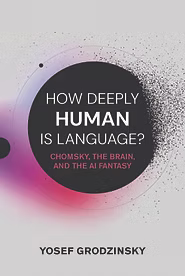
What I’m Reading February 2026

Heartwood by Amity Gaige

A thriller I’m for my book club. It involves an overlapping story and rotating narrative set on the Appalachian Trail. A middle-aged hiker named Valerie goes missing in Maine and Maine state game warden Lieutenant Bev Miller leads a search-and-rescue operation. It’s an adventure story, but also the tale of several family relationships—mostly mothers and daughters. It’s an uplifting and very literary tale at the end. I was happy to be introduced to Gaige’s work.

Death Doesn’t Forget by Ed Lin

I continued Lin’s Taipei Night Market series with this story featuring the murder of a criminal who wins the lottery. Soon after the police captain investigating the murder is killed as well and Jing-nan is questioned by the police. In this book, we get new backstory about Jing-nan’s friends Frankie the Cat, Dwayne, and his girlfriend’s Nancy and her estranged mother. It’s a convoluted plot, set against the background of the Austronesian Cultural Festival, but Lin’s engaging writing and insights about Taiwanese culture carry the day.

The AI Con: How to Fight Big Tech’s Hype and Create the Future We Want by Emily M. Bender and Alex Hanna

The AI Con is a sharp and breezily written critique of the overblown claims being made about generative artificial intelligence. The authors a linguist and a sociologist, give an expert take on the nature of the AI technology connecting it to statistical modelling techniques that have been around for a long time. They debunk the idea that AI is approaching human intelligence (and critique the notion of general intelligent itself) and they take us through some of the AI flubs and ridiculous claims (including some by AI sceptics). They followed the hype to the money and offer a welcome counterpoint to the all-too-common swooning over AI.

Bender and Hanna get into the details of the hype – what’s really being sold, how it’s being sold. They also get into why we as humans see the output of LLMs as a sort of people – because we use language for so much that we can’t help but seeing language as an indication of intelligence as we understand it day to day. It isn’t though. Again, LLMs don’t learn like an infant – they are just picking the next most likely word based on a statistical model.

Algospeak: How Social Media Is Transforming the Future of Language by Adam Aleksic

I was pleasantly surprised by this book by an online content creators who goes by the handle “Etymology Nerd.” The title led me to assume that it would be yet another exposition of online vocabulary. There were plenty of interesting examples, but even more I found a thoughtful exposition of way in which social media algorithms and shadow banning shape lexical and linguistic trends by promoting certain lexical work arounds (such as the suppression of kill and suicide on TIKTOK, which has led to people unaliving others or themselves). Aleksic goes beyond lexicography to discuss the influencer accent – the way in which YouTube and TikTok shape voice with an influencer mode of speech to hold a attention. We also learn about the lexical tricks to get people’s attention in the first place and the roles of different online communities in online language innovation and the role of search engine optimization and segmentation in the attention economy.

Bobby Fischer: The Wandering King by Hans Bohm, Kees Jongkind

One of my chess friends gave this to me (thanks, Jim). Compiled by two Dutch journalists who were developing a Fischer documentary, it includes interview with chess luminaries who were in touch with Fischer after he abdicated the world championships and when he was deep in his paranoia, mental illness, and anti-semitism. It was first published when Fischer was still alive and the author struck a hopeful note that he would resurface. In all, a valuable addition to the Fischer saga.

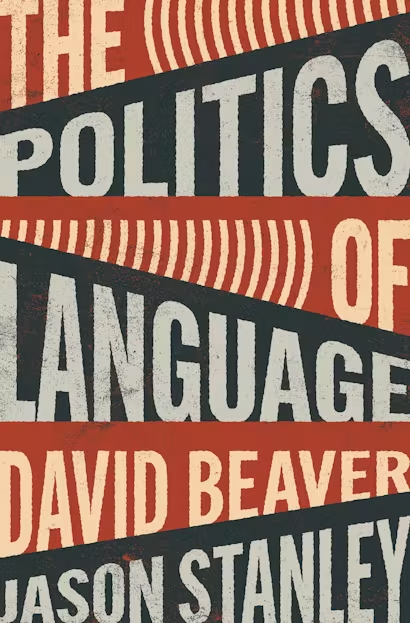
I’m still working on The Politics of Language by Beaver and Stanley.


Posted in Ideas and Opinions, Language, What People Are Reading | Comments Off on What I’m Reading February 2026

Interview with Ryan Stalder

Ryan Stalder grew up in Mt. Shasta, California, and lives in Ashland, Oregon, where he works as the manager of the Barnes & Noble Campus Bookstore. He has a BA in English from Southern Oregon University with a minor in Creative Writing.

Stalder is the author several books, including Deja Vu, a mind bending dystopian novel, and A Dead Man’s Legacy: A Geocaching Thriller. He has a few novels in the works, including The Walk (releasing April 1st, 2026, and Intertwined.

Ed Battistella: Tell us about your most recent book, A Dead Man’s Legacy?

Ryan Stalder: A Dead Man’s Legacy is a novel that I have wanted to write for a long time, and I was actually able to complete it as part of my capstone project at SOU. I have been Geocaching since 2009, but got more into the activity over the past couple of years. I knew that I wanted to combine my love of writing and Geocaching into something unique. I had never read a novel about Geocaching, so I decided to write one. The main question was “what genre would it be?” I settled on mystery/thriller, which was the perfect fit for the story I wanted to tell.

A Dead Man’s Legacy follows a teenager as he rediscovers his love for Geocaching. A new Geocache is published in his town, but this is no ordinary Geocache. He soon discovers the danger of the “Geocache.” It is up to him to find the cache and discover who is behind the mystery, before others get hurt, or worse.

A Dead Man’s Legacy is book one in my Geocaching series. I already have plans for books two and three.

EB: Who is the audience for your books?

RS: I would say that A Dead Man’s Legacy is more geared towards middle school and high school readers. I do believe, however, that anyone will be able to enjoy my books. For instance, my upcoming release The Walk is a young adult dystopian novel, but it would definitely be enjoyable to adults as well.

EB: You’ve been writing and publishing for more than ten years now. How did you get started. And how has your style changed?

RS: I got started in the world of writing and publishing because my grandma wrote and self-published a book. That was the first exposure that I had to the self-publishing world. I have always had an active imagination, and all I needed was an outlet. Writing my own stories allowed me to express myself and get my words out to the public.

I would say that my style has changed by expanding the books/authors that I am reading. The best way to get better at writing is to read more. Stephen King is my favorite author, so I would say that I base some of my writing off of his style.

EB: You have done some self-publishing. What are the advantages and disadvantages of self-publishing for a novelist?

RS: Advantages: You don’t have to answer to anyone. It is up to you to get your work out to the world. You also are the one who decides on the release dates of your novels. With self-publishing you don’t have as much rejection as you get with traditional publishing.

Disadvantages: There may not be as much rejection, but rejection comes in other forms. For a self-published author it is in the form of low book sales.

All the marketing is on your shoulders. If you have a day where you don’t feel like marketing your book, it doesn’t get done. There are also a lot of authors self-publishing these days, so it has become really competitive.

EB: Who are some of your influences?

RS: As far as authors go, Stephen King and Anthony Horowitz are my biggest influences. They are my two favorite authors right now.

My other influences are my family. My mom, dad and brother have always supported me in my writing career. I wouldn’t be where I am today without them. They are always eager to read my new books and support me in any way they can.

EB: What are you working on currently, novel-wise?

RS: I have a couple of novels that are in various stages. “The Walk” is my next book to be released. It is a dystopian cult novel. It follows Henry Nelson, a teenager who is supposed to spend the summer working in his dad’s retail shop. While there, he notices some odd occurrences. There is a group of “walkers” who make the same walking path several times a day. Henry decides to follow one of them, and what he discovers alters his understanding of the town that he grew up in. “The Walk” is set to release on April 1st, 2026.

I am also in the process of writing a family drama called “Intertwined.” I can’t share much about that book, but I hope that it will be released at the end of the year or early next year. I’m really excited about this one and can’t wait for others to read it.

EB: Thanks for talking with us.

RS: Thank you for having me. I’m looking forward to the future with my writing.


Posted in Ideas and Opinions, Interviews | Comments Off on Interview with Ryan Stalder

What I’m Reading January 2026

The Language of Politics by David Beaver and Jason Stanley

Around Christmas, I started reading The Politics of Language, by David Beaver (who has authored and coauthored books on semantic focus, logic and visual information, and dynamic semantics and Jason Stanley (of How Fascism Works fame). It an excellent book, though one that is best read in small bites—five or ten pages at a time, and I am reading it that way. I’m about half-way into the book (at page 250, in a chapter titled “On Parole.”)

Here is a progress report on the first five chapters dealing, with how words connect people and with the role of presupposition and its role in ideology. The key argument will be familiar to linguists: speech has meaning that go is imbued with beyond what is being li said and the connotations of words evoke emotions, images and actions in listeners all of which can be manipulated via communication actions that go along with literal talk (what they call “hustle”). In part the book is a critique of the “content delivery model” of communication in favor a viewing communication in terms of speech practices which relate speech to ideology and emotion (e.g. the way in which works in practice evoke feeling). The first three chapter cover the concepts of resonance, attunement, and harmony. Beaver and Stanley discuss language in terms of the resonances, of words (“freedom,” “vermin,” “inner city,” etc. but also of phrases and images), an individual’s attunement to social practices, and to the ways in which systems of attunement change. Chapters 4 and 5 weave in the linguistics of presupposition, giving it a description of in terms of resonances which can transmit and maintain ideology.  As they explain it: “The power of political communication rests on its ability to draw attention, drive attunement, and differentiate adversaries.”

While the book has serious philosophical chops (Wittgenstein, Austin, Grice, Stalnaker, Kartunnen, Kaplan, Heim, Saul, and more), Beaver and Stanley have also woven in much research from psychology and sociology (Festinger, Loftus, Kahneman and Tversky, Dan Gilbert, Paul Ekman, Lakoff and Johnson) and from history and literature. Examples are taken from news and current events and ring true.

Princeton University Press has done a fine job producing The Politics of Language (footnotes rather than endnotes) and a helpful glossary of the technical terms. I’ll expand things when I finish the next 250ish pages.

What I’m Reading January 2026

Around Christmas, I started reading The Politics of Language, by David Beaver (who has authored and coauthored books on semantic focus, logic and visual information, and dynamic semantics and Jason Stanley (of How Fascism Works fame). It an excellent book, though one that is best read in small bites—five or ten pages at a time, and I am reading it that way. I’m about half-way into the book (at page 250, in a chapter titled “On Parole.”)

Here is a progress report on the first five chapters dealing, with how words connect people and with the role of presupposition and its role in ideology. The key argument will be familiar to linguists: speech has meaning that go is imbued with beyond what is being li said and the connotations of words evoke emotions, images and actions in listeners all of which can be manipulated via communication actions that go along with literal talk (what they call “hustle”) . In part the book is a critique of the “content delivery model” of communication in favor a viewing communication in terms of speech practices which relate speech to ideology and emotion (e.g. the way in which works in practice evoke feeling). The first three chapter cover the concepts of resonance, attunement, and harmony. Beaver and Stanley discuss language in terms of the resonances, of words (“freedom,” “vermin,” “inner city,” etc. but also of phrases and images), an individual’s attunement to social practices, and to the ways in which systems of attunement change. Chapters 4 and 5 weave in the linguistics of presupposition, giving it a description of in terms of resonances which can transmit and maintain ideology.

While the book has serious philosophical chops (Wittgenstein, Grice, Stalnaker, Kartunnen, Kaplan, Heim, Saul, and more), Beaver and Stanley have also woven in much research from psychology and sociology (Festinger, Loftus, Dan Gilbert, Paul Ekman, Lakoff and Johnson) and from history and literature. Examples are taken from news and current events and ring true.

Princeton University Press has done a fine job producing The Politics of Language (footnotes rather than endnotes) and a helpful glossary of the technical terms. I’ll expand things when I finish the next 250ish pages.

Ghost Month by Ed Lin

Last month I mentioned Ed Lin’s 99 Ways to Die, on of his Taipei Night Market mysteries, featuring Jing-nan who left his dream of an American life to take over this family’s food stand. I read Ghost Month, which opens the series with the story of Jing-nan trying to track down the murderer of his old girlfriend Julia. The wildness of the plot is part of the book’s charm as are the cast of quirky supporting characters and the infusion of Taiwanese culture and lifestyle. A special bonus is the glossary of term about Taiwan at the end of the book.

Cold Victory by Karl Marlantes

A historical fiction set in post-WWII Finland, where two soldiers, a Finnish-American and a Russian take on a cross-country skiing race. Their wives, who have bonded over their become enmeshed in love for French language and culture become enmeshed in politics when the naive American Louise tries to leverage the race to raise money for Finnish orphans. I enjoyed learning about post-WWII Finland, though I thought Louise was almost too naïve to be an attaché’s spouse. Perhaps this was intended in part as a coming-of-age novel. There were some surprises and a sweet ending.


Posted in Ideas and Opinions, Language, What People Are Reading | Comments Off on What I’m Reading January 2026

What I’m Reading—December 2025

99 Ways to Die by Ed Lin

My wife suggested this when I put down a slower mystery I wasn’t getting anywhere with.  I really enjoyed the character and plot of this Taiwanese mystery set in the famous Shilin Night Market and featuring Chen Jing-nan the proprietor of Unknown Pleasures and a good ensemble of supporting characters.  Charming and fast-moving, with interesting bits of Taiwanese culture seasoning the fare.


The Indian Bride by Karen Fossum

No. five in the Inspector Sejer series, about sad Norwegian town and its reaction to the murdered bride of one of their townfolks.  Well written and dark, but it struck me as more gray than noir.


Apostle’s Cove by William Kent Krueger

A fast-moving mystery set in the Northwoods of Minnesota and featuring the always interesting Cork O’Connor, who revisits an old case.  Krueger handles the flashback portion and the present-day cold case with equal skills and the sweep of time aspect made this an especially compelling read.

I’m about half-way into The Politics of Language by David Beaver and Jason Stanley, so stay tuned.
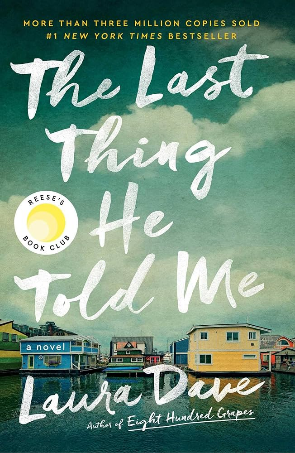
And I’ll aim for longer reviews next year.

Posted in What People Are Reading | Comments Off on What I’m Reading—December 2025