An Interview with Les AuCoin, author of Catch and Release

Les AuCoin was elected to the Oregon House of Representatives for two terms beginning in 1971 and was selected majority leader in 1973 at the age of thirty-one. He represented Oregon in the US House of Representatives for 18 years, from 1975 to 1993. The dean of the Oregon delegation and member of the House Appropriations Committee, he was described by the Oregonian as “the most powerful congressman in Oregon.” He helped create the U.S. Fish & Wildlife Forensics Laboratory in Ashland, the Seafood Consumer Research Center in Astoria, the Oregon Trail Center at Baker City, and the Lewis & Clark Visitors’ Center at Fort Clatsop. In 1992, he gave up his seat to run for the Senate.

AuCoin grew up in Redmond, attended Pacific University and Portland State University and served in the U.S. Army as a public information specialist. Trained as a journalist, he is award-winning magazine editor and public radio commentator, and his articles have appeared in major newspapers throughout the country. Today, he and his wife, Sue live in Portland.

His memoir, Catch and Release, has been published by Oregon State University Press.

Ed Battistella: I really enjoyed Catch and Release. Can you tell us a bit about the title?

Les AuCoin: Many will recognize the fly-fishing term, of course. I became an addicted fly-fisherman once I put Congress and politics behind me. As the years passed, I came to see catching and releasing as an allegory for my life. I “caught” a blissful early childhood until I had to release it when my dad turned out to be an addicted gambler who blew the family savings and abandoned us in the late 1940s, leaving my mom with two boys to raise on a waitress’ wage. In manhood, I “caught” a life someone with my background wasn’t expected to catch when I climbed to one of the top rungs of national politics. Although it ended with one of the most controversial and painful losses in modern Senate history, I like to think I let go of it with dignity and equanimity. If anything, I think the ethos of “catching and releasing” works better in life than in fishing. Besides, all we can ever do is toss out the best cast we can, the one thing we can control. What comes next is entirely up to the fish.

EB: I was impressed with your ability to find a dramatic moment in each of the vignettes you present—your father abandonment, the JFK assassination, your romance with your wife Sue, and much more.

LA: I’m glad you do. I didn’t set out to create drama. I wanted to share important memories from a life that turned out to be eventful. My good luck and bad seemed to heighten my capacity to observe. And not knowing what would happen next as a kid made me inquisitive. Inquisitiveness helped me find a way to stop James Watt from opening up the earthquake-prone western oceanic shelf to oil drilling. In a similar way, studied observation helped me identify the often unspoken but deeper desires of politicians. That, for example, is how I figured out how to get Jessie Helms’ right-wing Senate allies to drop their attempt to destroy the National Endowment for the Arts.

EB: A lot of political issues you dealt with, gay rights, legalization of marijuana, consumer rights issues, the environment are still in the news today. Where do you see progress as having been made since the seventies and eighties?

LA: Some issues that were venomous in my early career have become non-issues today. Guaranteeing LBGTQ citizens access to public accommodations was radioactive in 1973, when I was House Majority Leader in the Oregon Legislature. Today, gay marriage is legal in every state. Marijuana possession was a felony at the outset of my political career. I’m proud to have worked to make it a minor misdemeanor in Oregon in the mid-Seventies; today, ten states and the District of Columbia have legalized it for recreational use and 23 more allow it for medical use. As progress, that’s a sea change.

I wish I could say the same for the environment and consumer rights. Greed and its disciples are magnifying wealth disparity, and Trump and his acolytes are working to undo decades of progress on forest ecology, clean air and water, and protection for endangered and threatened species. That doesn’t even begin to describe Trump’s knuckle-dragging indifference to climate change, an existential threat to the earth and all its living things. The elections of 2020 may be our last best hope to reverse the destruction.

EB: You started your career as a journalist. What do you think of the state of journalism today?

LA: Once upon a time, it wasn’t hard to find news that was impartial, deep-digging, informative and fearlessly run by professional editors and program directors. Today, what’s left of newspapers is mostly run by the business office. Business values are not news values. We’re being entertained or titillated rather than informed. I’ve seen local TV coverage that devoted 10 to 15 minutes to a helicopter’s live coverage of an armed standoff at a warehouse where nothing happens. The station could have used the time to report on what it means if Northwest salmon go extinct. We risk becoming a nation of civic illiterates at a time when democracy faces an existential threat and economic, environmental, and scientific issues demand more sophistication than ever for their solution. Former Supreme Court Justice David Souter channeled Thomas Jefferson when he said, “An ignorant people can never be free.” It shouldn’t have surprised us that someone like Donald Trump could find his way into the presidency. I pray that Americans don’t let that stand.

EB: What convinced you to move on from electoral politics? You mentioned at one point that you felt like a telemarketer.

LA: In 1974, I won my seat in the US House for the first time. Back then, my opponent and I were limited by state law to $75,000 in our primary election and the same amount in our general election—for a total of $150,000. That law was struck down by the Oregon Supreme Court. Subsequent US Supreme Court decisions chipped away at post-Watergate federal laws until in my last reelection race, I had to raise more than $1 million to keep that same seat. Then, in 2010, the high court deemed political donations as “free speech.” Eight years later, my friend and First Congressional District successor, Suzanne Bonamici found it necessary to raise $939,392.52 for a reelection that initially cost me $150,000. House leaders of both parties now expect their members to spend 30 hours a week in “call centers”—buildings near the Capitol configured with small desks and telephones. Thirty hours! There, incumbents telephone total strangers to solicit campaign donations. I was long gone from the Congress at this point, but I distinctly remember having a goal of $3,500 a day in contributions. If I fell short and, say, raised $2,500, my next day’s goal would be $4,500. I’m told that nowadays, if you want to sit on a major committee, like the appropriations committee I served on, party leaders judge your bid in large part on how much in additional money you’ve raised for the party.

In the book, I state that today you have to raise money like hell to go to Congress to raise money like hell. I can’t stand the thought. I will fight for any constitutional proposal that will stop the money chase.

EB: What was the most important lesson you learned as a Congressman—something you might want to pass along to today’s aspiring leaders?

LA: Know what you believe and vote it. Nothing could be worse, Wayne Morse told me, than voting against your values but losing an election anyway.

EB: What did you miss the most after you left Washington?

LA: Well, it certainly wasn’t summer’s humidity, which at times felt like swimming in a bowl of boiling chicken broth. The capital, though, is a gathering spot for some of the most stimulating and knowledgeable people I ever encountered in one place. Hemingway called Paris “a movable feast,” but in DC, the diplomats, authors, statesmen, scientists, actors, scholars, and journalists I knew fed me copious servings of brain food all through my 18 years there. Where else could a fatherless boy from Central Oregon befriend the likes of George Plimpton; Dr. Spock; Mary McGrory; Hans Bethe, a Manhattan Project scientist; Elizabeth Drew; Vitaly Churkin, Russia’s UN ambassador, Christopher Reeve; Neil Sheehan; or Mark Shields?

EB: I was taken by your description of mentoring your son’s basketball team and also by the time he borrowed George H. W. Bush’s sneakers. Is it still the case that the Congressional gym lockers don’t have locks? I’m curious when that might have changed.

LA: (Laughter.) It’s a rare father who watches his son fill the shoes of the vice president of the United States. Members and former members who are current on their dues may keep their gym membership and locker. Yes, it is hard to believe this age of hyper-partisanship, the custom of leaving your locker unlocked endures. So does the understanding that you can borrow something you need so long as you return it. Kelly and I would use the gym on Saturdays to work on his jump shot and free throws when I was in town. One Saturday, Kelly absent-mindedly forgot his tennis shoes. Teenagers! We went from locker to locker to find a pair that fit. Finally, we reached the Veep’s locker. Size 10-and-a-half—perfect! What the hell, I thought, Bush is a former member and he knows the rules. Fortunately, Kelly replaced the shoes a few minutes before three congressmen, Bush, and his Secret Service detail barged through the gym door.

Here’s a side story. That morning, Kelly watched Bush and his friends play paddle ball when a dispute arose over one of the Veep’s shots that landed in front of my son, close to the line. After a lot of shouting, Bush swung around for an independent verdict. He yelled at Kelly, “Hey, kid! In or out?” Without hesitation, Kelly said, “Out.” Bush turned carmine red and, jumping so that he knees virtually hit his chin, he screamed, “Noooooo!!!” That’s when I knew my son had chops.

EB: I understand that your papers are part of the Oregon Historical Society collection. Did you keep a journal as a Congressional Representative? I was impressed with the level of detail in your book—and also with the terrific photos.

LA: I kept journals on and off throughout the years. Never consistently. But I was grateful to find so many of them stored in boxes. Some of them I had not opened in 30 years. We have kept hundreds of family photos. Political photos, too. Politics was a big part of our family’s life.

EB: Thanks for talking with us. Good luck with Catch and Release.

LA: Thanks. It was a three-year effort and I loved working with the talented team at the Oregon State University Press.

Posted in Ideas and Opinions, Interviews | Comments Off on An Interview with Les AuCoin, author of Catch and Release

Summer Reading 2019

Years ago, a friend complained that everyone was so busy writing books that they had no time to read books. She was talking about people with no time to read her books, but you get the idea. I still don’t have time to post to Goodreads or Amazon, but I did commit to a lot of summer reading and to some mini-reviews. Here they are.

Last Days by Brain Everson– A bizarre but compelling tale of a cop kidnapped by a mutilation cult. Rod Serling meets Stephen King.

Freakonomics

Freakonomics by Steven Levitt and Stephen Dunker–I’ve been wanting to read this for a while but kept putting it off (no incentive, I guess). It was excellent—informative and stylistic. It would be fun to do a course using this, Dan Ariely’s Predictably Irrational and Richard Thaler and Cass Sunstein’s Nudge.

https://images-na.ssl-images-amazon.com/images/I/51%2BJj9r7W-L._SX323_BO1,204,203,200_.jpg

The Notebooks of Raymond Chandler –Almost all of Chandler’s notebook were destroyed at his death. This included some of the material from the two black loose-leaf notebooks that escaped including lists of similes (a face like a collapsed lung), Chandlerisms (She threw her arms around my neck and nicked my ear with the gunsight), slang, and drafts of sketches of scenes and characters.

C:\Users\battiste\AppData\Local\Microsoft\Windows\INetCache\Content.MSO\629F0194.tmp

A Gentleman in Moscow by Amor Towles–Towles’s meditation on how to live a meaningful, even exemplary, life in difficult circumstances. Plus a lot of great Soviet-era history and spycraft. Top notch.

C:\Users\battiste\AppData\Local\Microsoft\Windows\INetCache\Content.MSO\48BE1F99.tmp

Exhalation by Ted Chiang –A great collection of speculative fiction – time travel, artificial life, free will, memory and more –by the writer who gave us The Story of Your Life. Chiang’s work is thoughtful and thought-provoking and optimistic. Linguists will especially like The Truth of Fact, The Truth of Feeling and The Great Silence.

How to Love a Country by Richard Blanco

How to Love a Country by Richard Blanco—Richard Blanco visited Ashland this summer for a series of workshops and reading which gave me the opportunity to delve into his latest poetry collection. Evocative, accessible writing about place, justice, belonging, exile, love and family, with a spectacular landscape piece in the epic “American Wandersong.”

Related image

The Dictionary Wars: The American Fight Over the English Language by Peter Martin— I reviewed this for Choice so I won’t repeat that, but suffice it to say it’s a compelling addition to the story of American lexicography with Noah Webster at the center.

An American Language: The History of Spanish in the United States

An American Language: The History of Spanish in the United States by Rosina Lazano—This is a detailed and thought-provoking history of Spanish from the times of westward expansion through World War II covering of legal, political, and social issues as arising in keys states (New Mexico, Arizona, California, and more), and more all of which informs present-day debates. Great insights. The main drawback is that the book still read like a dissertation.

Image result for Southern Oregon Beer: A Pioneering History Phil Busse

Southern Oregon Beer by Phil Busse—The story of the Jacksonville origins of southern Oregon beer, the impact of prohibition and the sustainability of the hops industry and the re-emergence of Southern Oregon as a brewing destination in the late twentieth century. Engagingly written, well documented and illustrated with both historical and contemporary photos.

Image result for festerman prisoner

The Prisoner of Guantanamo by Dan Fesperman—This is the first book I’ve read by Fesperman. It seemed to start slowly, but once I got used to the characters and figured out who was who, I was hooked. There was plenty of unpredictability and enough cynicism to capture the intelligence community milieu. I’m ready for more Fesperman.

https://images-na.ssl-images-amazon.com/images/I/41JZbcSL0yL._SX329_BO1,204,203,200_.jpg

Dr. Seuss and Mr. Geisel: A Biography by Judith Morgan and Neil Morgan— I had been wanting to read this Seuss bio for some time and it didn’t disappoint.
Engaging and packed with both information and insights about Seuss, the publishing industry, and sweep of the twentieth century.

The Crossword Century: 100 Years of Witty Wordplay, Ingenious Puzzles, and Linguistic Mischief by Alan Connor–Some interesting information but it felt like the author ran out of material quickly and had to fill the book crossword trivia. Ho hum.

https://images-na.ssl-images-amazon.com/images/I/51AXyqes1GL._SX327_BO1,204,203,200_.jpg

Real Tigers by Mick Herron–I started reading Mick Herron last year–Slough House around Thanksgiving, Dead Lions at Spring Break, and now Real Tigers. Herron is darkly funny and the intriguing concept involves what happens to intelligence agents who screw up or become unreliable. They are assigned to Jackson Lamb’s Slough House, where they are given busy work in hopes that they will resign or quietly fade away. But the slow horses of Slough House manage to continually stay in the game thwarting the designs of the careerists at Regent’s Park.

Apex Hides The Hurt, by Colson Whitehead.jpg

Apex Hides the Hurt by Colson Whitehead– A hilarious sendup of American culture, following in the footsteps of John Henry Days. A town with an identity crisis based in racial history and, best of all, the protagonist is a nomenclature consultant without a name. But with an inflected toe. What name will he choose?

C:\Users\battiste\AppData\Local\Microsoft\Windows\INetCache\Content.MSO\766857BD.tmp

Down Girl: The Logic of Misogyny Kate Manne–Insightful treatment of the distinction between “misogyny” and “sexism.” As she notes, the argument extendible to racism and other form of prejudice and injustice). It was interesting to read this in conjuction with Zerubavel’s Taken for Granted.

Manne writes well (and has a knack for terminology like “himpathy” and “misogynoir” and gritty real world examples) however, I thought at times the writing was still too dense.

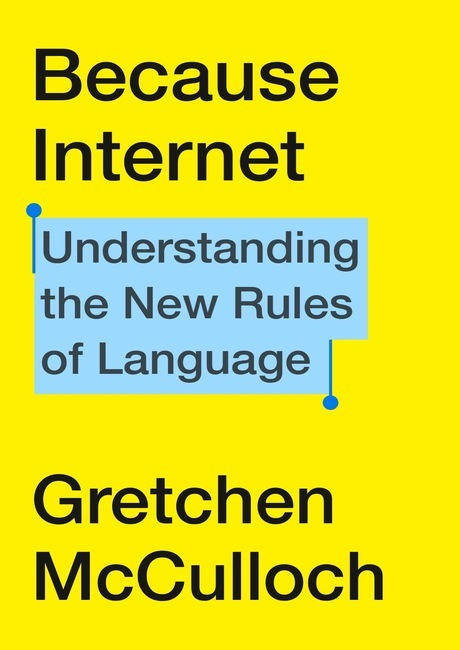
Because Internet: Understanding the New Rules of Language

Because Internet by Gretchen McCulloch—Filled with clever examples and histroical insight, McCullogh’s book shows nicely that internet language is written speech, which its own conventions and, yes rules. BTW, there’re emojis, memes, and more! A good gift for prescriptivists, if you are included to gift them. And I’m thinking about how to incorporate this and Lynne Murphy’s The Prodigal Tongue in the history of English class.

Hardcover Born to Run Book

Born to Run by Bruce Springsteen–I started this last summer, but didn’t have time to finish. This summer I did, to the background of Western Stars and Blinded by the Light. Born to Run has Springsteen’s voice and imagery. And like the stories he tells in concerns, there are moral tales and wacky adventures throughout. Springsteen presents himself as determined and tough but vulnerable and striving, which seems about right for a guy from New Jersey.

Taken for Granted by Evitar Zerubavel–Taken for Granted is about the theory of markedness—asymmetry in language and culture—a topic that I have a long standing interest in. Zerubavel’s book brings together the social and cultural aspects of asymmetry. A solid non-academic style, but the examples are sometimes dated and some terms could have been defined more sharply.

Things Too Big to Name by Molly Tinsley—A literary thriller seamlessly weaving together of three stories covering in different time frames and themes, ultimately centered the realities love, goodness, fidelity, justice, and sacrifice. Oh, and the protagonist is a retired English professor living in the mountains near the fictional town of Pine Springs, Oregon.


Catch and Release by Les AuCoin—A political memoir that sparkles with heart and humanity and tells us all what democracy and leadership are about. AuCoin went into political in the “Ask not what your country can do for you” era and his witty, well-crafted memoir tells us not just about how things were in the past but what is missing today.

Posted in What People Are Reading | Comments Off on Summer Reading 2019

An Interview with Molly Best Tinsley–author of Things Too Big to Name

In a fit of sanity, award-winning writer Molly Best Tinsley resigned from the civilian faculty of the US Naval Academy and moved west to write full-time. She is the author of My Life with Darwin (Houghton Mifflin) and Throwing Knives (Ohio State University Press), she also co-authored Satan’s Chamber (Fuze Publishing) and the textbook, The Creative Process (St. Martin’s). Her more recent books are the memoir Entering the Blue Stone and another Victoria Pierce spy thriller, Broken Angels, the sequel to Satan’s Chamber. She is also the cofounder of Fuze Publishing.

Tinsley’s fiction has earned two fellowships from the National Endowment for the Arts, the Sandstone Prize, and the Oregon Book Award. Her most recent book is the literary thriller Things Too Big to Name.

Ed Battistella: Where did the idea for this novel come from?

Molly Best Tinsley: The short answer is I don’t really know. I do know the incident that got it started: I was driving home at twilight, minding my own business, when a stag with impressive antlers jumped out of the woods and hit my car. The animal disappeared, and my car was totaled, though I managed to drive it the rest of the way home without power steering.

The event left me shaken and whiplashed and feeling terrible that somewhere in the woods on the other side of the road, a large, stately creature was dying a slow death. I turned to writing about what had happened as a way of managing the traumatic effect. I thought it would become a short story, but it just wouldn’t settle into the confines of that genre.

Then during one writing session, the car’s driver, Margaret Torrens, staggered into her kitchen to find the ghost of her deceased husband waiting to engage her in conversation. Neither I nor Margaret believes in ghosts. But for some reason, we both realized we should accept this one. For one thing, he arrived bearing a pretty detailed backstory about the seven years of their young marriage that ended with his early death.

At that point, I began trailing my intuition, often reluctantly, as it suggested what would happen next.

EB: Can you say a bit about the title?

MBT: I’m pretty uninspired when it comes to titles and the file name for this narrative was deerstory for the longest time. By the time I’d completed a zero draft, though, the deer had become a minor player, and I actually had a braid of three different stories covering three different time frames and thematic territories. I went through the manuscript looking for a phrase that might apply to all of the above and landed on a message Margaret receives from her own heart: “Trust in things too big to name.”

I realized that I’d been working with all sorts of “big names” in my text and finding they didn’t come close to encompassing reality. Words like soul and death, love and evil, fidelity, justice, sacrifice–these are crude simplifications of the agonies and ecstasies life puts us through. The more I revised, the more I played on that note, and I’m satisfied now with how the title works.

EB: Your protagonist Margaret Torrens is a retired English professor living in the mountains near Pine Springs, Oregon. And you are a retired English professor living outside of Ashland, Oregon. How much of Molly is there in Margaret?

MBT: Initially, Margaret and I were the same person; I invented her in order to process my own difficult “deerstory” by telling it through her. I fleshed out her past as an academic with my own anecdotes. And I understand her cultural despair and her craving for solitude. But as the story began to grow, Margaret became more and more autonomous.

Our separation became absolute maybe halfway through the zero draft. In the process of reading an article about the interrogation of Edward Snowden, I was taken with the tension of his situation, the cat-and-mouse game, the hovering possibility of an unreliable narrator surrounded by “helpers” he can’t really trust. I wanted to capture all that with Margaret, and so I cut her loose. Faced with a decision-point in the action, I could no longer ask myself, “What would I do?” I had to check with Margaret, who was more innocent than I and also, I think, more brave.

EB: Who was the easiest character to write? And the most difficult?

MBT: The psychologist, a man in his late 30’s, came to life most slowly. His immediate job is to evaluate Margaret’s sanity after an act of violence, but I had no idea when I started who he was beyond a “Qualified Mental Health Professional” working for the criminal justice system. His official title itself invites irony, and it was tempting to consider him Margaret’s antagonist, and set her up to get the better of him. But the world isn’t that simple, even when it’s a fictional one. The psychologist seemed to be taking sides, but his position kept shifting. I had to wait until the end to find out where he would come down.

Jane, Margaret’s former student, was also slow to become herself. Still beautiful in middle age, this former California girl, with her blond hair and blue eyes, had outgrown one stereotype by the time she’d graduated from college, thanks in part to Margaret’s chilly mentoring. But it took constant nudges and shoves to keep her from slipping into some other one.

Meanwhile Victor’s appearance well into the story began a hostile take-over of the antagonist role. He was probably the easiest character to write because he was unpredictable, tactless, and he made things happen.

EB: I was taken with the wonderful writing and some of the turns of phrase you use—like referring to one character’s “stay thither look.” I wonder if, as a writer, you have an inventory of turns of phrase that you’re waiting to deploy.

MBT: I like your choice of the word “deploy” because writing a story is so much a matter of conscious strategy—how best to hook your reader in then keep her turning the pages to find out what happens next. And at those times when propulsion lags, you need to offer different surprises, of diction, imagery, wordplays, to hold attention.

I used to keep a Writer’s Notebook to catch phrases, metaphors, bits of dialogue, character studies that a day would offer. It’s a good idea, and I’m not sure why I stopped, maybe because I realized my process took a different route. Whatever I’m working on, I tend to channel into it the material that arises in real time. I bump into people whom, I decide, certain characters can look like or sound like. I notice things in my own setting to fill out a fictional one. I come across something in the paper that provides a key incident in a story. As for turns of phrase, my greatest pleasure in writing is playing with style, finding original ways to connect words. I can get absorbed for an hour with finding the right phrase when I should be building and making alterations to structure.

EB: I’m also curious about how you decide what to write. You’ve crafted plays, literary fiction, spy thrillers, a memoir, a middle-grade novel, and a creative writing textbook. What motivates you to take up a particular project or form?

MBT: I suppose that if my first novel (My Life with Darwin, Houghton Mifflin), a work of literary fiction, had been a blockbusting success, I might have stuck with that sub-genre and built my career around it. But it didn’t, and my mainstream publisher lost interest in a collection of short stories I’d put together. Thus after I found a home for that volume myself with Ohio State University Press, I turned to playwriting, where I’d had some surprising success. The collaboration involved in staging a play was new, stimulating, expansive. It taught the importance of structure and propulsion, and though I wound up setting aside narrative for many years, when I returned to it, it was with a stronger grasp of storytelling.

In a way, I shifted literary genres in a search for both technical growth and an audience. But it’s also true that certain ideas come with genre attached. The middle-grade novel, Behind the Waterfall, conceived in collaboration with my twin grandsons, could only be a middle-grade novel. Some topics seemed to lend themselves to drama, others to narrative, and the plots that became spy thrillers didn’t leave room for the more leisurely pace of literary fiction. As I mentioned, Things Too Big to Name refused the constraints of a short story and insisted on becoming a novel.

EB: Your narrative technique involved a number of flashbacks. How did you manage to maintain order?

MBT: Though Things is a first-person novel, the narrator, Margaret, is actually braiding three different stories. One took place in the distant past; another in the recent past; and the third in the present. As each strand unspooled, I began to realize I also had three different narrative voices, determined by who the audience for the story was and what Margaret’s purpose was in delivering it. In the immediate present, she keeps a hidden journal for herself to keep track of her sessions with a psychologist she cannot trust. He has requested that she compose an account of the recent past, and carefully, strategically, she does so. More spontaneously, she writes letters to the ghost of her husband and in the process comes to terms with their brief, flawed relationship and his death.

This might sound confusing, but it was the distinctness of each voice that helped me sort out the way they fit together and what information was available to each.

EB: What was the toughest decision you had to make as a writer in crafting this book?

MBT: I fought a lot of inner resistance in following where this story was taking me. It felt like too dark a place, and it required research I didn’t want to be identified with. So it was tough to keep going. I’m content that I did because the book wound up representing the times I fear we’re living in now.

EB: Thanks for talking with us.

MBT: Thank you.

Posted in Interviews, What People Are Reading | Comments Off on An Interview with Molly Best Tinsley–author of Things Too Big to Name

Researching Lesbian Separatism, a guest post by Mary Gently

Mary Gently is an aspiring historian based in the Rogue Valley. She recently graduated from Southern Oregon University with a Bachelor’s degree in History and a minor in Gender, Sexuality, and Women’s Studies. She graduated Summa Cum Laude with Departmental Honors and is the recipient of the Arthur S. Taylor Award for Outstanding Student in History 2018-2019. She intends to begin a Ph.D. program in History in the fall of 2020. Mary enjoys traveling, watching classic movies, and drinking craft beer.

This spring, I had the privilege of conducting an oral history with nine Southern Oregon lesbian separatists and land lesbians. This demographic was brought to my attention by SOU researcher Maureen Battistella as I was nearing the completion of my undergraduate degree in History at Southern Oregon University. Before 2019, I had little awareness of either of these movements, let alone the fact that the area I live in is home, or home away from home, to over a hundred of these women, the majority of whom are now in their 70s or 80s. During my research, I learned that lesbian separatism was a movement that emerged out of radical feminism in the early 1970s and called for women to remove themselves from the world that men have made and pour all of their sexual, economic, and political energies into other women as a means of achieving the goals of feminism. At the same time, land lesbians, many of whom did not resonate with some of the militant and anti-men extremities of separatism, were inspired by the Back-to-the-land Movement and were similarly dedicated to rural, women-only land.

Getting in touch with these women was not easy, as many are understandably quite protective of their privacy. When I was finally able to make contact through email addresses listed in a 2011 Curve Magazine article, I was thrilled. During this exploratory period I also submitted paperwork and received SOU Institutional Review Board approval. Over the next two weeks, I spoke to several land lesbians over the phone as they sought to ascertain if I was someone with whom it was safe to share their stories and beliefs. As a woman married to another woman, I had an immediate relatability that undoubtedly helped to set them at ease. Soon I began to schedule interview appointments, ultimately visiting three women’s lands. Of the nine women interviewed, five were video record, one was audio recorded, and three were sent a dozen or so questions via email.

I went into this project with a variety of possible points of focus concerning these women’s ideologies and legacy, but was surprised when my research was led in an entirely new direction after several women initially brought up concerns around the transgender rights movement, a point of contention of which I was only minimally aware. I found that while this is far from the only issue that these women are passionate about, many are deeply concerned about what they describe as the mounting pressure from the queer community for butch women to transition to male, the violent demands for trans-women’s inclusion in “womyn-born womyn” spaces, and other similar concerns.

To be clear, those who live on or frequent women’s land hold a diversity of opinions regarding the inclusion of trans-women. The spectrum varies from fully embracing trans-women as women and welcoming them onto women’s land to excluding them from these spaces for a mixture of deeply held reasons. Though trans activists are not currently knocking on the doors of Southern Oregon lesbian land communities, each of the nine women I interviewed has thought at length about this issue and each believes that they are justified in maintaining spaces that include only women who were assigned female at birth and have lived their entire life as a woman. My work, “Lesbian Nation: Separatism, Women’s Land, and Trans-inclusion,” traces the history of lesbian separatism and women’s land while documenting the reasons these particular advocates for women-only space do not believe trans-women are a fit for either some or all of their spaces and events.

Undoubtedly, several of the views recorded in my work are controversial and offensive to segments of society. Yet, I believe this historical record is extremely important and valuable, both to those of like mind and those in opposition. However, we unfortunately find ourselves in an increasingly intellectually segregated society in which the norm is to avoid discomfort, suppress what is offensive to us, and practice selective listening and selective study. This means that it is becoming more and more common to only research and read perspectives that align with one’s own. Because of this gradual societal shift, it is often assumed that if you are reading a particular book, taking a particular class, or listening to a particular commentator, you are of that ideological persuasion. I encountered this on two separate occasions when telling a close family member and then later an acquaintance about my research. They both immediately expressed concern that I was holding what they believed to be radical beliefs. They instantly assumed that by undertaking this project and choosing to study this demographic, I must be in ideological alignment with my subjects. In fact, aside from the constant quest to be aware of and transparent about my own implicit and explicit biases, my personal beliefs and to what extent I agree or disagree with the theory and aspirations of “womyn-born womyn” spaces, are largely irrelevant to my research. My job as an aspiring historian is to work toward impartially recording and relating the events and beliefs of the past and present, not only those that align with my personal worldview.

But what of those historical realities that some label the dark side of human thought? I would go so far as to say that there is no viewpoint that is too dangerous to be recorded and accessible. Perhaps that is a somewhat uniquely American value, but I hold it quite dear. Everything that has happened in the past and all the ideas behind the events, have value of a kind because it is all precious knowledge and can do much to illuminate the present. Conversely, when portions of history are excluded from study, certain historical beliefs and realities are minimized, and sometimes nearly erased, leading to dangers of naiveté, shortsightedness, and ignorance. The oft-quoted Edmund Burke’s assertion that “those who do not know history are doomed to repeat it” is in fact devastatingly true.

While undoubtedly all ideological positions past and present do not possess equal merit and certainly all positions do not deserve the same time, platform, and visibility, every feature of the past should be recorded for posterity and accessible for research and understanding. This is the job of the journalist, historian, sociologist, and anthropologist. Additionally, historians do well to avoid moral commentary in their work. I aspire to trust the intelligence of my future students and readers and to allow them to determine for themselves shades of right and wrong, good and bad, without interpolating my own moralizing judgments.

One effective means of giving voice to disparate historical memories is oral history. From the lips of the people themselves, oral history provides a glimpse into the why behind the beliefs and actions of those in question, providing vital insight into human nature for the religious leader, policymaker, philosopher, activist, psychologist, or voter. In a sense, oral history is really just the practice of empathy, listening to diverse views and life experiences in order to understand what has led a person to think and act as they do. Rarely do beliefs arise out of thin air. Rather it is life experiences and context that propels people forward into disparate belief systems and ways of living. Accessing oral history gives the listener or reader the opportunity to put themselves in the shoes of another.

In the specific instance of the debate over trans inclusion, much of the rhetoric on both sides is characterized by caricature and a lack of empathy. My aspiration is that this work, written by someone who has is neither a trans activist, nor a champion of women-only spaces, could provide useful insight into the motivations and convictions of separatists and land lesbians. I believe that an oral history of trans-women seeking inclusion in these communities is also in order.

Truly listening to one’s ideological counterpart is increasingly rare in America today and consequently the “other” is easily dehumanized and villainized. Without hearing opposing positions, positions that may feel offensive, one can never understand those who think differently and no two sides will ever be able to hear each other speak. Listening does not mean that one will or should change their beliefs, but it does enable them to begin to disagree well, to present a compassionate and informed disagreement, devoid of caricatures.

Posted in Ideas and Opinions | Comments Off on Researching Lesbian Separatism, a guest post by Mary Gently