
An Interview with Laura Payne

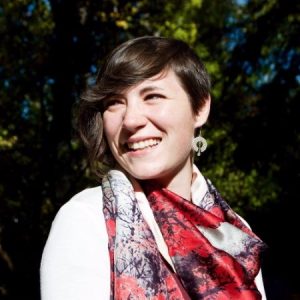
Laura Payne, a 2017 graduate of Southern Oregon University, is an Assistant Language Teacher in the JET Programme in Shimane, Japan.

You can follow her blog at Ms. Payne In Shimane

Ed Battistella: Tell us about the program you teach in? How did you find it? What was the application and training process like?

Laura Payne: I work with the Japan Exchange and Teaching (JET) Program. I first heard about it through a brochure I found at a Japanese cultural event in Portland, and I applied for it during the senior year of my undergraduate studies. The application process took about six months from when I first applied to when I was accepted. It included sending in a paper application, letters of recommendation, and a written essay. In addition, I had to go to an interview at the Japanese Consulate in Portland. My first month or so in Japan was spent settling in and preparing for the job. I spent two days in Tokyo at a general orientation and participated in another two day orientation once I arrived at the prefecture I had been assigned to. I also met with the teachers and principals of the schools I was going to work with.

EB: How did you get interested in teaching abroad?

LP: In my junior year of college, I studied abroad in Japan for six months. During that time, I took on a part-time tutoring job and volunteered with the university’s English Salon. I really enjoyed the experiences of meeting new people and helping them learn a new language. I had already realized by that time that I wanted to be a teacher, but after studying abroad, I could see myself teaching English in Japan. I thought I could learn so much from the experience, and after I went back to the U.S., I immediately wanted to go back to Japan. From there, I remembered the JET Program and decided to apply.

EB: Did you experience any sort of culture shock?

LP: Nothing related to a difference in culture, but definitely something related to a difference of language. One of my favorite things to do in the U.S. is browse around a library and check out whatever book happens to catch my eye. I can’t do that in Japan, though. Most of the books at the library closest to my apartment are, of course, in Japanese. I use Japanese books as language study tools sometimes, but I don’t know enough Japanese yet to just relax into a story like I do when I read a book in English. There are some English books at the library as well, but that section is only made up of one set of shelves. None of the books in this section are current, and those books that belong to a series are often missing a volume. Experiences like this are difficult for me because in the U.S. I read so much, but in Japan, I’m partially illiterate. I’m trying to learn more Japanese to work past this.

EB: You had studied Japanese before. Did that help? What new things have your learned?

LP: Yes, knowing Japanese has helped me a lot. The JET Program doesn’t require you to know Japanese, but having a basic knowledge of it has helped me to be much more present in my everyday life. I can have conversations with staff members other than the English teachers at my schools. If my students don’t understand when I try explain something in English, I can switch to Japanese. Moreover, I can explore the area I live in knowing that I can handle all of the basic interactions I’ll run in to. In short, knowing Japanese has helped me to get more out of the experience of teaching abroad than I ever could have only knowing English.

EB: What was the experience of managing a class like?

Interesting because I’m actually not in charge of managing a class. I team teach classes with Japanese teachers of English, and they’re the main teachers in charge of the classroom. Also, I don’t go to the same classes every day, so most of what I do in the way of managing classes involves matching the style of the class and the teacher I’m currently with. In quieter classes, this might mean just following the lesson plan. In noisier classes, this might mean encouraging students to stay on task. In every situation, I try to get to know the English teacher and the students I’m working with as best as I can so that I can play whatever support role they need me to.

EB: What was been your most rewarding experience?

LP: Just getting to know my students day by day and helping them with their goals has been a great experience. So many of my students are funny, charming, upbeat individuals who can light up a room just by being present. Sometimes, I get the opportunity to help with extracurricular activities like coaching students who want to participate in English speech or recitation contests. I always love opportunities like these, because I’m so proud of the time and effort students put in to practicing, and I’m so happy for them when their hard work pays off. Now that I’ve started my second year teaching in Japan, I’m starting to see some of my students grow as they move on to different grade levels. All of this is incredibly rewarding because I know that every one of my students has their own dreams for the future, and I love seeing them try to figure out how they can get closer to those dreams through school.

EB: How has the experience of teaching abroad influenced your career plans?

LP: Since coming to Japan, I’ve decided that I want to earn a graduate degree in teaching English as a second language as well as a Secondary Education Language Arts degree. I’ve discovered that I really enjoy teaching English as a second language, and I want to keep doing it. I also think that the fact that I have experience learning a second language in a foreign country will help me serve students in ESL classes well. In addition, because of the experiences I’ve had here and the people I’ve met here, I want to keep a connection with Japan for the rest of my life. My ultimate dream is to work in a school with a Japanese sister city so that I can continue helping with international education programs.

EB: Any suggestions for others considering teaching abroad?

LP: If you think teaching abroad is something you would like to do, I can’t recommend it enough! Do some research on different programs and countries and find a way that’s a good fit for you. I’m sure you can find one.

EB: Thanks for talking with us.

Posted in Ideas and Opinions | Comments Off on An Interview with Laura Payne

An Interview with Edward TW Pay

Ed TW Pay teaches at the Aidi International High School in Beijing, China. He is a 2015 graduate of Southern Oregon University.

Ed Battistella: Tell us about the program you teach in? How did you find it? What was the application and training process like?

Ed Pay: I teach year 7 and year 8 ESL-F for a large international school. The application process was very straightforward. I had two interviews, and needed to bring reference letters from my previous school.

EB: How did you get interested in teaching abroad?

EP: I had been working as a bartender, which was interesting but unfulfilling. I missed academic life, and I had taught karate for years. I wanted to teach in some way again. I saw an ad for EF (Education First). They run training schools across the world and they fly in foreigners to teach for years.

EB: Did you experience any sort of culture shock?

EP: I did. It was an enormous shift, from the size of the city, social norms, hygiene, pollution. Everything was jarring.

EB: Did you have much experience communicating with English language learners prior to going abroad?

EP: Next to none.

EB: Is there anything you wish you had known or known more about before you started?

EP: Bring more western cold medicine and money!

EB: How has the experience of teaching abroad influenced your career plans?

EP: I plan on doing this for life now. I’ve applied to some masters programs to get a 2 year degree in TEFL and I’m looking at starting my Delta as well. It’s a great life.

EB: What are your students like?

EP: My students are all from low English proficiency educational backgrounds. Our middle school (part of the pre k-12 school) is streamed into high vs low levels. I teach the low level. Their ages range for year 7 from 11-14, and my student base universally comes from incredibly privileged backgrounds. The school charges tens of thousands of US dollars each school year, so the behavioral, educational, interpersonal skills the students can have are often rooted in this “golden child” mind set. About 70% of our student base are boarding students from other provinces. They can struggle immensely with the pressures to conform and being away from their families, especially if they were sent away for seemingly abhorrent behavior (fears of sexuality were prevalent among parents last year though that seems to be changing now).

EB: Have you been able to learn much Chinese? Had you studied Chinese before?

EP: I have learned some Chinese. I am unfortunately, a bad foreigner who primarily associates with foreigners or Chinese people with strong English levels. My Chinese is best described as “survival level.” I had not studied any Chinese before coming.

EB: Any suggestions for others considering teaching abroad?

EP: Do your research. Find out as much as you can about the companies, and see what people say, or aren’t saying. I was forced to sign at my last job a non-defamation disclaimer, meaning I can’t comment on the more negative parts of that training center.

New arrivals should always bring more cash than they need, and they should think critically about how tight visa regulations can be, and the penalties of switching to a new job.

Above all, practice cultural tolerance and relativism. Be gracious and flexible and remain both upbeat and adaptable.

EB: Thanks for talking with us.

EP: Take care professor.

Posted in Ideas and Opinions | Comments Off on An Interview with Edward TW Pay

An Interview with Wallace Stroby

Wallace Stroby is an award-winning journalist and the author of eight novels, most recently the stand-alone thriller, SOME DIE NAMELESS.

His debut novel THE BARBED-WIRE KISS, was called “a scorching first novel” by The Washington Post and two of his novels GONE ‘TIL NOVEMBER and KINGS OF MIDNIGHT were picked as “best Books of the Year.” by Kirkus.

Stroby is a lifelong resident of the Jersey Shore, a graduate of Rutgers University, and was an editor at the Newark Star-Ledger for 13 years.

Visit his webpage at wallacestroby.com and follow him on Twitter at @wallacestroby.

Ed Battistella: I’ve been a big fan since I read THE BARBED-WIRE KISS in 2003. How did you get started as a novelist?

Wallace Stroby: I spent 23 years working at daily newspapers as a reporter and editor, but writing novels was always a goal, for as long as I can remember. I wrote my first three novels while working full-time at the Newark (N.J.) Star-Ledger. After taking a buyout in 2008 – along with half the newsroom staff – I was able to start writing full-time.

EB: Reading SOME DIE NAMELESS, I couldn’t help but think of Ray Devlin as a Travis McGee-type character — although maybe a bit tougher. Has McDonald been an influence?

WS: I think John D. MacDonald has been an influence on most American crime writers. His novels, especially the McGee series, are seminal works of American crime fiction. I burned through almost all of them from ages 14 to 20. McGee and Ray Devlin from NAMELESS don’t actually have much in common, except for the fact they live most of the time on a boat, which was my direct homage to JDM and the McGee books. I wanted Devlin to be a character who was off the grid, so putting him on a boat seemed the best way to do that, and give a hat-tip to MacDonald’s work at the same time.

EB:
What other writers have influenced you?

WS:
That’s a long and ever-changing list. I was an avid reader from a young age, so I read everything I could get my hands on. As far as crime fiction, early on it was MacDonald, Dashiell Hammett, James M. Cain, etc. Then, in my later teen years, Lawrence Block, Donald Westlake and their contemporaries, all the way up to Charles Willeford, James Crumley, Elmore Leonard and James Lee Burke. I always go back to Leonard, even now. Not only was he a master of pace and dialogue, but you could always feel the sheer joy of storytelling in his work as well.

On a more subtle psychological level, discovering the work of Patricia Highsmith was a revelation to me, especially her Ripley novels. Outside of the genre, there are a lot of writers whose work I love but could never hope to emulate – Tom McGuane, Lorrie Moore, Andre Dubus, Larry Brown, Flannery O’Connor, Yukio Mishima and many others.

EB: Did your journalism background at the Asbury Park Press and Newark Star-Ledger influence your writing or your style? Or your writing habits?

WS:
There’s definitely a skill set you learn at newspapers that comes in handy in writing fiction. The ability to organize material, write fast and tight and take a practical approach to the work are all invaluable. I think it also makes it easier to take editing and criticism. Editors in the publishing world tend to be concerned about your feelings, and try not to be too harsh. In newspapers, not so much. Deadlines are deadlines, and there’s always another one coming. No one cares about your feelings.

EB: You’ve been out of journalism for a time now. Are there things you miss?

WS:
Yes. I miss the people. I miss the buzz of the newsroom, and the mutual working toward a common goal. Writing is by its nature isolating, and that’s been the biggest challenge for me. I worked with a lot of smart and talented people – especially at the Star-Ledger – and I miss that interaction. Social media helps, but it’s not the same.

EB: I’ve enjoyed the Crissa Stone books. I was wondering if it was difficult to write a female protagonist like Stone or Sara Cross in GONE ‘TIL NOVEMBER?

WS: As with any character, you have to find a way inside their hearts and minds, regardless of their race, age or sex. You can always find some common ground. I’m not a female professional thief, but there are traits Crissa and I share – hypervigilance, a desire to re-invent ourselves – that I can use as touchstones when writing about
her.

I think the other key to writing female protagonists is to have a female first reader who can straighten you out when you go awry. Sara Cross from GONE ‘TIL NOVEMBER is a single mom. At the time I wrote that book, my editor, agent and first reader were all single moms, so I had some invaluable input from those sources. On all the Crissa books as well.

In the context of crime novels, I generally find it more interesting – and challenging – to write about female characters. Here’s a bit of behind-the-scenes trivia: I’d originally planned to alternate writing books about Sara Cross and Crissa Stone, which is why I gave them reverse initials – SC and CS. But once I started writing about Crissa, she took over.

EB:
You come up with some great bad characters—notably Morgan, the enforcer, in GONE ‘TIL NOVEMBER. What’s the key to making a believable bad guy?

WS: Again, getting into their head and into their skin. I try to be as empathetic with my villains as with my protagonists. Everybody has their reasons, and everyone’s been formed by unique circumstances. Lukas Dragovic in SOME DIE NAMELESS does some terrible things, but he also has some legitimate gripes. Every villain is the hero of his own story.

EB:
What are you working on next?

WS: Another stand-alone suspense novel, but this one a little more compact. With SOME DIE NAMELESS, I wanted to expand the scope, with different situations, locales, backstory, etc. This one’s much more intimate.

EB: Thanks for talking with us.

Posted in Ideas and Opinions, Interviews | Comments Off on An Interview with Wallace Stroby

An Interview with Kit and Cat Seaton about The Black Bull of Norroway

Kit and Cat Seaton are sibling storytellers collaborating on the graphic novel series The Black Bull of Norroway. Based on a classic fairy tale, The Black Bull of Norroway is the story of Sibylla, whose life is forever changed by a forest witch who tells her that she will become the bride the Black Bull of Norroway. As things unfold, Sibylla comes to terms with a fate she’s not sure that she wants.

Kit Seaton is an artist living in California, where she teaches as California State University-Fullerton. She has an M.F.A. from the University of Hartford and has been illustrating and publishing comics online since 2011, including The , Otto the Odd and the Dragon King, Eve of All Saints, and AFAR. Cat Seaton is a playwright and storyteller currently living in Morocco. She has a B.A. in English & writing from Southern Oregon University. Cat writes the script, and Kit transforms them into sequential art.

Ed Battistella: Congratulations on the Norroway series and on Book 1: The Black Bull of Norroway. It’s a great work, artistically and literarily. How did this project get started?

Kit and Cat Seaton: Really, this project has been in the works since we were kids. We’ve always had a dream of working together, and telling stories together, and so if you want to get back to where it started, that’s it. This particular project came out of a class assignment for Kit. She had asked me to write a script for a children’s book mockup, originally she wanted to do East of the Sun and West of the Moon, but we saw it had been adapted several times already. This was back in the winter of 2013. I had taken a storytelling class the previous spring, and encountered The Black Bull of Norroway. It was a similar tale, but one that had not seen the same level of popularity. At first I suggested that script, but quickly realized it would be far longer than the 40 page book Kit was aiming for. We decided to go the route of the webcomic instead, and launched in October of 2014.

Ed Battistella: Sibylla is adventurous, tough and snarky, but also capable of being surprised. What sort of comic heroes or fantasy heroes influenced the two of you growing up?

Kit and Cat Seaton: A lot of our primary influences came from the media we consumed from the late 90s to the early 2000s. We’re going to give titles instead of particular characters in most instances, because it was the works as a whole that influenced us and left a lasting impression. So, to start with the things we have in common, because usually whatever Kit watched, I had to watch too: Constantine, particularly Tilda Swinton’s Gabriel, The Labyrinth, The Dark Crystal, The Last Unicorn, The Neverending Story, The Lord of the Rings, The Abhorsen Trilogy by Garth Nix (Sabriel was our babe), A Wrinkle in Time, The Thief of Always, Sailor Moon, Inuyasha, Cowboy Bebop, X/1999, Trigun, FLCL, Neil Gaiman’s work (Sandman, Coraline), the list goes on. Kit felt particularly influenced by Jeff Smith’s BONE and by the work of Satoshi Kon (Paprika and Paranoia Agent in particular). For me, Harry Potter of course, and the Gemma Doyle trilogy by Libba Bray. Things that were a little dark, that had a little magic, that had complex and interesting characters who often had flaws they couldn’t overcome.

Ed Battistella: I’m always fascinated by the process of visual story-telling and I know that writer-artist teams work in various ways—some from a synopsis where the artists tell the story and the writer adds words later, some where a writer blocks out the story in detail, some where there are sketches and back and forth. What’s your process like?

Kit and Cat Seaton: We spend a lot of time on the phone. Literally hours on the phone. We talk about our characters and their personalities, their strengths and weaknesses, their wants and needs. We talk about the plot and where it needs to go, and what difficulties we’re facing, or what areas might be problematic. We talk about everything. After that, I write the script—my main jam is playwriting, so they look a lot like play scripts—and send them on to Kit. Kit begins to break down the scenes into pages, usually 5-7 panels per page. First she figures out how much dialogue can fit comfortably, combined with the action, while leaving a good hook at the end of each page. Then she does maybe grids or layouts, planning out several pages in advance, and really looking at her beats. These are tiny thumbnails, just to begin to visualize things. I pretty much give Kit the script, and trust her to do what she’s going to do. I trust her implicitly. We both know where our main talents are, and we both trust the other person to carry their weight in their respective areas. We’re in constant communication the whole time, so it’s really like we’re working side by side, despite how far apart we might actually be.

Ed Battistella: Any major story telling disagreements or are you consistently of one mind?

Kit and Cat Seaton: Because of the process, if there’s a sticking point, we talk it out. Usually I’ll notice something isn’t quite working, and I’ll bring it to Kit in the first place. Because we’ve done so much talking and brainstorming beforehand, we know what direction the story needs to take even before we begin to get it down on paper.

Ed Battistella: A question for Kit: who are some of your artistic influences?

Kit and Cat Seaton: If I’m looking back, of course what was mentioned in our previous answers. Other influences include Arthur Rackham, Harry Clarke, Edward Gorey, Bill Waterson… I think I’ve gotten to the point where my work looks like my own work, but that’s it adopted a lot from a lot of other people’s work.

Ed Battistella: What’s planned for future volumes?

Kit and Cat Seaton: The next two books will complete the fairy tale, as well as take it on a dark and twisty turny road, where we really get to see Sibylla come into her own. Understandably, we can’t talk about that content too much.

Ed Battistella: A question for Cat (and Kit): what did you read fantasy and fairy tale wise that influenced the series? The Scottish tale of the Black Bull of Norroway of course, but what else?

Kit and Cat Seaton: Oh boy. So again, that giant list above. But also, the Time Life books, Andrew Lang’s books, Yeats, just all the fairy tales in general we’ve consumed over time. Grimm’s, of course, the HBO series Jim Hensen did… The Storyteller, it was called. We both loved fairy tales and folk tales as children, so we actively sought them out.

Ed Battistella: Your publisher is Image Comics. How did that relationship come about?

Kit and Cat Seaton: That came about through an established relationship Kit had with them, from her work with Leila del Duca on AFAR.

Ed Battistella: Tell us about the video content and about the marketing campaign.

Kit and Cat Seaton: We don’t know much about the video thing yet, but for marketing we’re working in tandem with Image comics. We’re sort of playing it by ear, but they seem to have a pretty solid plan.

Ed Battistella: How can readers get the Norroway series?

Kit and Cat Seaton: Readers can pre-order from local bookstores and comic shops, they can request their libraries to carry it, they can also pre-order online from Amazon, Barnes & Noble, and other large retailers. We highly recommend supporting local businesses and libraries!

Ed Battistella: Thanks for talking with us.

Kit and Cat Seaton: Thank you!

Posted in Ideas and Opinions, Interviews | Comments Off on An Interview with Kit and Cat Seaton about The Black Bull of Norroway