What I’m Reading—December 2025

99 Ways to Die by Ed Lin

My wife suggested this when I put down a slower mystery I wasn’t getting anywhere with.  I really enjoyed the character and plot of this Taiwanese mystery set in the famous Shilin Night Market and featuring Chen Jing-nan the proprietor of Unknown Pleasures and a good ensemble of supporting characters.  Charming and fast-moving, with interesting bits of Taiwanese culture seasoning the fare.


The Indian Bride by Karen Fossum

No. five in the Inspector Sejer series, about sad Norwegian town and its reaction to the murdered bride of one of their townfolks.  Well written and dark, but it struck me as more gray than noir.


Apostle’s Cove by William Kent Krueger

A fast-moving mystery set in the Northwoods of Minnesota and featuring the always interesting Cork O’Connor, who revisits an old case.  Krueger handles the flashback portion and the present-day cold case with equal skills and the sweep of time aspect made this an especially compelling read.

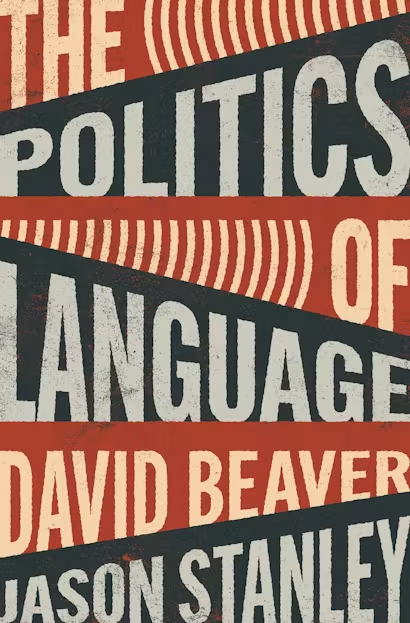
I’m about half-way into The Politics of Language by David Beaver and Jason Stanley, so stay tuned.
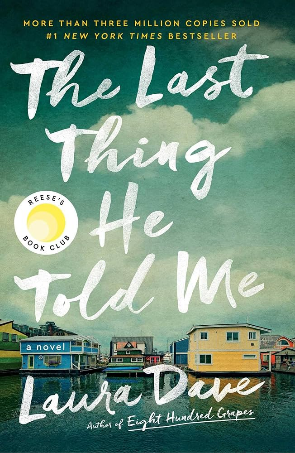
And I’ll aim for longer reviews next year.

Posted in What People Are Reading | Comments Off on What I’m Reading—December 2025

What I’m Reading November 2025

The Index by Dennis Duncan

A cheery and breezy history of the book, as seen from the index. A bit slow to start but lots of great book information.

Clown Town by Mick Herron

The latest in the adventures of Jackson Lamb’s ill-fated charges. This one is even darker than usual and it seems that Diana Taverer finally gets her comeuppance. Is this the end of the series?


A Firing Offense by George Pelecanos

The first of the Nick Stefonos trilogy, set in a DC appliance store of all places. Gritty and violent, with plenty of twists. I’m in for the whole series.


Posted in Ideas and Opinions, What People Are Reading | Comments Off on What I’m Reading November 2025

What I’m Reading: October 2025 edition

Drunk on All Your Strange New Words by Eddie Robson

An engaging sci-fi/murder mystery. The Logis, aliens from an advanced planet, have set up and embassy in New York and use specially-trained translators (from the Londson School of ). However, the alien language makes the translators drunk if they translate for too long, leading to some behavioral and memory issues. Translator Lydia wakes up in the embassy to find that Fitz, the cultural attaché she had been translating for, is murdered and she has no recollection of what happened. However, Lydia still hears Fitz’s voice in her head and she team up with Madison, another Logi, to get to the bottom of things. Great characters, concept, and writing.

Dark Squares: How Chess Saved My Life by Danny Rensch

It is a surprisingly heart-warming story of growing up in an Arizona cult and the attendant psychodrama surrounding that mixed with Rensch’s chess and business careers (and a chief chess officer of Chess.com). Good insights on cults from the inside, on the chess world, and on the backstory of chess.com (and the Carlson-Niemann affair). Competently written with some clunky spots.

The Heathens by Ace Aktins

A fast moving story of Mississippi mayhem featuring Sherrif Quinn Colson. The characters are a bit too exaggerated, but the story held my interest. I’ll read more of the series.


Posted in What People Are Reading | Comments Off on What I’m Reading: October 2025 edition

An Interview with Kylan Mattias de Vries & Carey Jean Sojka

Kylan Mattias de Vries is Professor and Co-chair of Gender, Sexuality, and Women’s Studies at Southern Oregon University. He has a PhD in Sociology from Southern Illinois University—Carbondale. His scholarly interests include inequalities, intersectionality, transgender studies, critical race studies, and social psychology. Dr. de Vries received Southern Oregon University’s Distinguished Teaching Award in 2017 and his work has appeared in the journals Social Science Quarterly, Ethnicities, and Symbolic Interaction and in The Sage Encyclopedia of Trans Studies and the Encyclopedia of Gender and Society.

Carey Jean Sojka is Associate Professor and Co-chair of Gender, Sexuality, and Women’s Studies at Southern Oregon University. She has a PhD in Sociology from the University at Albany (SUNY) and her research and teaching interests include transgender studies, embodiment, gender, sexuality, race, disability, and fat studies. She also conducts community trainings on transgender, lesbian, gay, bisexual, and queer issues in our region. She received Southern Oregon University’s Distinguished Teaching Award in 2020. Dr. Sojka’s work has appeared in the journals Feminist Pedagogy and Women’s Reproductive Health and in the books Trans Bodies, Trans Selves (Oxford University Press), Expanding the Rainbow (Brill), and Introducing the New Sexuality Studies (Routledge).

Their book Transgender Intersections: Race and Gender through Identities, Interactions, and Systems of Power (Polity Press, 2025) documents the ways in which gender transitions can shift not only gender, but also categories of identity such as race, social class, sexuality, and disability.

Carey Jean Sojka & Kylan Mattias de Vries

Ed Battistella: Congratulations on your book, Transgender Intersections, which I enjoyed reading. Can you tell our readers a bit about intersectionality? What is it and why is it important?

Kylan de Vries & Carey Sojka: Thank you so much; we’re glad you enjoyed it! Intersectionality refers to the ways our identities and experiences are interconnected with each other and how systems of power, such as sexism, racism, and so on, are interlocking. The term intersectionality was coined by legal scholar Kimberlé Crenshaw, whose scholarship focuses on the experiences of Black women – people who experience racism and sexism not as separate categories but simultaneously. Her work built from the scholarship and activism of Black, Indigenous, and other women of color, who have been theorizing about intersectionality for decades.

In the case of transgender people, we highlight how trans people’s gendered lives, identities, and experiences are intertwined with other social categories, particularly race, and how these experiences of gender, race, and more, simultaneously interconnect within systems of power.

Ed Battistella: Who is the audience for your book? Scholars, students, trans individuals, families and allies?

Kylan de Vries & Carey Sojka: We want many different audiences to engage with our book. Yes, we hope it will be read by scholars and students, but we also want those in the general public to have this information, too. We hope this will be a resource for many trans people and their loved ones. Also, because it deals with a wide variety of trans experiences, we think it will be valuable to those who provide services to trans people.

Ed Battistella: I appreciated how the book alternated between sociological theory and the voices of your interviewees. In all, how many people did you interview and how did you find them?

Kylan de Vries & Carey Sojka: Thank you. We wanted to make sure that the voices of the research participants were telling their own stories as we also wove their knowledge together with our analysis and other scholarship.

We found participants through a number of methods; we put out calls to various trans networks in different locations, connected through trans conferences and local trans groups, asked people we interviewed to share information about our research (called snowball sampling), and more.

We created this book from three different research projects, and from one of the projects, we also interviewed a group of trans BIPOC people a second time about 15 years after the first set of interviews. I think all in all, we interviewed more than 120 people. While we don’t quote each person in this book, we did use all the interview data and observational data to triangulate our findings. Every experience people shared with us matters to this work.

Ed Battistella: What was the most challenging aspect of the research and the writing of the book?

Kylan de Vries & Carey Sojka: This book was years in the making, so maybe that says something about what is challenging. The challenge was really in deciding where to start. We have such rich information from people who generously shared their experiences with us, and it was tough to decide what to include. I think what made the difference was our collaboration. We brought different lenses to the data and what we found interesting. Our conversations around this really helped shape and organize the final book.

Ed Battistella: What surprised you most about the interview responses? Did you have some hypotheses going in?

Kylan de Vries & Carey Sojka: We are always so appreciative and honored by the openness of our participants in sharing aspects of their lives with us, basically strangers. Many of our participants asked to stay in touch with us and want to know about what we publish from our interviews with them. I think for Kylan, it was reaching out to participants after 15 years and reinterviewing some of them that was such a surprise. What an amazing experience to hear about how their lives had changed over that time!

We used grounded theory for each of the research projects in our book, meaning rather than going in with set hypotheses, we began searching for themes in a more exploratory way. We let the data inform the process, so to speak. For this book, we focused on the what participants had to say around gender and race, honoring their knowledge and expertise about their own lives, and using our skills as researchers to make connections between their different experiences.

Ed Battistella: Overall, what did you discover? Can you share a few key generalizations or observations?

Kylan de Vries & Carey Sojka: Some of the experiences folks shared with us were about how they didn’t realize other trans people had similar experiences, especially because representations of trans lives and experiences can sometimes be limited. For instance, some of the trans BIPOC (Black, Indigenous, and other People of Color) folks we talked with mentioned issues that are not the same for white trans people. Some our BIPOC and white trans participants alike also discussed other intersections that mattered to their lives, like disability or social class.

I think in this current political climate, even globally, trans people’s lives are still too often addressed as if they are more similar than different, that the experiences of trans people are the same. This can happen because the experiences of multiply marginalized trans people are too often ignored or pushed to the side. Our book demonstrates not only that trans experiences are diverse, but that race and other categories are just as essential to understanding trans experience as gender is. We simultaneously highlight how trans lives are influenced by what is happening socially and politically in our world.

Ed Battistella: Thanks for talking with us.

Kylan de Vries & Carey Sojka: Thank you so much!


Posted in Ideas and Opinions, Interviews | Comments Off on An Interview with Kylan Mattias de Vries & Carey Jean Sojka