An Interview with Jason Gurley, author of Eleanor

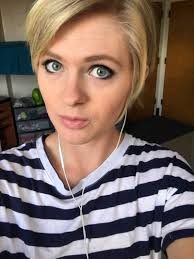
photo by Rodrigo Moyses

Portland author Jason Gurley is the author of the novels Greatfall, The Man Who Ended the World, The Settlers, The Colonists, and the short story collection Deep Breath Hold Tight. His novel Eleanor was acquired by Crown Publishing in the U.S., HarperCollins in the U.K., and will be translated into Turkish, German, and Portuguese.
Gurley’s short fiction has appeared in Lightspeed Magazine and the anthologies, among them Loosed Upon the World and Help Fund My Robot Army!!!

On September 7, he will be reading at Bloomsbury Books in Ashland at 7 pm.

You can learn more about this work at www.jasongurley.com.

EB: Tell us a little about your background?

JG: I come from Alaska, and from Texas; I’ve spent half my life or more divided between those two very different homes. I started writing as a kid, but got serious about it in high school, when a very special writing teacher lit a fire under me. These days I spend just about all of my time in Portland, Oregon, with my family. By day I design software interfaces, and in the evenings or on weekends, I write stories.

EB: How did the idea for Eleanor come about?

JG: In retrospect, it’s far easier to understand what Eleanor was and where it came from, but at the time, it was quite mysterious to me. I was in my early twenties and returning from a holiday road trip to the Oregon coast, and in the wee early hours — when you’re driving in the pre-dawn hours, your mind wanders, you know — a very particular sentence came to me: For all of her life, Eleanor had been falling. That struck me as a nice line, and I knew nothing about this Eleanor character, so as I drove, I toyed with the line, building on it. And by the time I reached home — Reno, at the time — I had the rough shape of the story.
Looking back, however, it’s clear that Eleanor emerged from the things I was most struggling with in my life at that time. And while the novel that you’ve read is nothing like the novel it was then, there’s still a great deal of myself and my own fears and questions in this book.

EB: Is a psychological story but also about alternate realities but also a family story that features a fouteen-year old protagonist. Who is your ideal reader or audience?

JG: Oh, I think it’s me. I try my best not to think too much about a particular reader as I’m writing; I find that, for me, imagining the preferences or desires or tastes of the eventual audience will steer me away from writing something honest. I tend to write the weird little stories that capture my own imagination, and if there are people in the world who are interested in that, too, then it all shakes out just fine. I’m a rather emotional writer, too; if a scene wrecks me, I’m doing something right. And Eleanor wrecked me, many times over.

EB: Was it difficulty to write from the point of view of a fourteen-year-old girl?

JG:
You know, I’ve been asked many times why I chose to write from that particular point of view, but I’m not sure if anyone’s asked me if it was difficult to do so. That’s an interesting wrinkle. I suppose I’d say yes, because I’ve never been a fourteen-year-old girl, and I’m sure I missed quite a bit of the nuance that makes a young girl’s voice unique. But Eleanor’s also deeply curious, very quiet; she listens rather than speaks; she longs for a past that never quite belonged to her. I have many things in common with this character, and I hope those things come through with an honesty that brings her even more to life for a reader.

EB: I liked the way that the fantastical elements combined with the story of Eleanor’s family’s grief. Do you think that fantasy or just stories help us cope with the world?

JG: Absolutely. Perhaps more so in our youth, although the novel certainly throws that hypothesis out the window. Writing stories has always helped me in that regard, though I’m not always aware of it at the time. The women in this novel are at the mercy of consequences, with so little control over the events that set these repercussions in motion. I found it interesting to explore how their interior lives might blur the lines of reality and fantasy, to see if grief was something that might break down the boundaries between what’s real and what isn’t. But the other realities that surface in this book aren’t the same for everyone; some take comfort in it, while others are far more exposed and vulnerable.

EB: You wrote Eleanor over a long period with several breaks from it. Do you find it’s helpful to put a project aside and then come back to it fresh? Did it cause you to rethink the characters or plot?

JG: As I get older I find myself doing this more and more. I’ve been working on a new project since late 2014, and it seems to reveal itself to me in enormous waves. Now and then I have to put it aside and let myself think about it for a while, and inevitably, I’ll discover some little maneuver, some new facet that catches the light in a different way, and it will cause me to reconsider much of the book. That doesn’t mean it isn’t frustrating; it can be. But it does seem to be part of my ill-defined process these days.

With Eleanor the periods away from the novel were both short and long, both intentional and un-. The novel took nearly fifteen years, but of course that wasn’t fifteen uninterrupted years of writing. There were false starts, entire drafts thrown away, diversions and detours. Those were as important as the writing time, in the end; in those gaps, I grew up, had more experiences, met and married my wife, became a father. All of those things informed the novel that Eleanor became, and I think it’s a far better book as a result.

Of course, I’d like to write my next book a little more quickly.

EB: You’ve released some of your previous books yourself and this time are trying Crown Publishing. How would you compare the two experiences?

JG: Both experiences have been so rewarding, in both different and similar ways. I self-published a novel, The Man Who Ended the World, in early 2013, and it was a revelation for me. At that point in my life, I’d been writing novels for about sixteen years — and aside from my family and a few friends, none of them had ever been read. That first step into self-publishing led me to readers, and that was utterly intoxicating and terrifying and wonderful. Some of those readers have stuck with me, which I’m grateful for.

Working with my editors at Crown, and watching a novel born into the world with the assistance of so many other people, has been a wild experience as well. There are things that, as a self-published author, I couldn’t easily achieve on my own — and yet my publisher accomplishes them with ease. I still get a charge when I walk into an unfamiliar bookstore and see my own novel on the shelf, usually a stone’s throw from David Guterson or Lev Grossman.

EB: Given the way, this book evolved, what do you think about the future of the publishing business and the ability of authors to work in different modes of publishing? Are things getting more flexible for authors?

JG: Oh, that certainly seems to be the case. There are more roads for authors to take than ever before, and I think that’s a good thing for authors, and mostly a good thing for readers. The volume of books that appear in the world each day has certainly increased; it’s both harder and easier to find something to read these days. Harder in the sense that there’s much more to sort through; easier in that there are far more people writing in narrow niches now than ever before, so readers with very particular tastes may find that they’re no longer limited to the one or two authors of whom they’d previously been aware. It’s certainly an interesting time for people who love books.

EB: What do you do when you are not writing books?

JG: I spend as much time as I can with my family. Recently, the majority of that time has been spent packing and unpacking, or making little changes to our new home. My happiest times are spent reading with my four-year-old daughter, or having tickle fights. And if I’m not doing that, I can usually be found in one of my few holy places: in a bookstore, at a ballgame, in a movie theater, or at a good diner, reading a book.

EB:
Any future projects you’d like to let folks know about?

JG: At the moment I’m working on a young adult novel, which is an exciting new adventure. I’ve got an idea for a collection of short stories, or perhaps a very weird novel, that I’ll indulge eventually. At any given moment I have one project on my plate, and about fifty attempting to distract me from writing it. If I can focus on one, I’m good.

EB: Thanks for talking with us. I really enjoyed Eleanor.

JG: It’s been my pleasure, Ed — thanks for having me, and for giving my book a chance!

Posted in Interviews | 1 Comment

An Interview with Louis Sahagun, author of Master of the Mysteries

Louis Sahagun is a senior staff writer at the Los Angeles Times writing on issues ranging from religion, culture and the environment to crime, politics and water. He was on the team of Los Angeles Times writers that earned the Pulitzer Prize in public service for a series on Latinos in Southern California and the team that was a finalist in 2015 for the Pulitzer Prize in breaking news. He is a CCNMA: Latino Journalists of California board member and the author of Master of the Mysteries: the Life of Manly Palmer Hall, which was recently issued in an expanded revised edition by Feral House Press.

You can hear Louis Sahagun speak in Ashland at Friday Wine and Words at Weisinger’s Winery, September 23, at 6 pm.

EB: I enjoyed your revised edition of Master of the Mysteries. I had only heard a little about Manly P. Hall before. Can you tell our readers a bit about him?

LS: Manly Palmer Hall – a huge avocado of a man, six feet four inches tall and wide in the center with piercing blue eyes and chiseled features – helped give birth to a vibrant subculture in California comprised of mystically-inclined artists, authors, entertainment industry and civic leaders who continue to have a profound influence on movies, television, music, books and art.

The 20th century’s most prolific writer on ancient philosophies, magic and mysticism, Hall authored hundreds of books and delivered more than 8,000 lectures—many of them from a throne-like chair at his Mayan-style headquarters in the Hollywood Hills. His works introduced people to obscure spiritual texts and symbols of the remote past at a time when Los Angeles was unfolding into a metropolis.

The arc of his life is a story worthy of Raymond Chandler. Hall, who never knew his father, was abandoned by his mother and never finished sixth grade, was 18 when he arrived in Los Angeles in 1919. A decade later, he was dazzling the rich and famous and counseling heads of church and state. Adherents referred to him as “Maestro” and “adept,” and whispered of his supernatural powers and membership in secret societies.

His death under bizarre and suspicious circumstances in 1990 triggered a Los Angeles Police Department homicide investigation. Investigators believe he was murdered by his apprentice and the case remains an open-ended Hollywood murder mystery.

The endurance of Hall’s works sets him apart from the thousands of other mystics and gurus who brought spiritualism to Los Angeles at the turn of the last century. His writings continue to sell steadily around the world.

EB: How did you get interested in his story?

LS: It all started with a phone call I took late on Sept. 2, 1990, while working night reporting duty at the Los Angeles Times. “Manly P. Hall, the greatest philosopher of our time, has died,” a tipster told me. “You better get an obituary ready.” I was immediately skeptical, of course, because the newsroom gets lots of phone calls like that late at night on weekends.

“Can you repeat that name?” I asked. “Manly P. Hall,” he said. “Spell it,” I said.

A few minutes later, I was in the paper’s morgue, sorting through hundreds of news clippings about the man dating back to the 1920s.

I was on a tight deadline and the paper had room for a 10-graph obituary. It began: “Manly Palmer Hall, an eclectic philosopher and founder of the Philosophical Research Society, has died at 89, the society reported Sunday. The peripatetic philosopher, who authored more than 200 books and gave more than 8,000 lectures—many of them from a throne-like chair at the society’s Los Angeles headquarters—died in his sleep Wednesday of natural causes, a spokesman said.”

I decided to write the book a few years later, after learning that suspicious circumstances surrounding Hall’s death had prompted a homicide investigation, and that the chief suspect was Daniel Fritz, the tipster who called The Times on Sept. 2, 1990.

EB: What was his book The Secret Teachings of All Ages?

LS: Hall was only 27 when he published his introduction to ancient symbols and secret traditions, An Encyclopedic Outline of Masonic, Hermetic, Qabbalistic and Rosicrucian Symbolical Philosophy, also known as The Secret Teachings of All Ages and “the Big Book.”

Overnight, this immense book, which is filled with dream-like illustrations and uses Roman numerals instead of standard page numbers, ushered in a new era of appreciation for ancient religions and symbols and rocketed Hall into the national spotlight. Ninety years later, with more than a million copies sold, The Secret Teachings of All Ages, remains one of the most popular introductions to esoteric traditions.

EB: He wrote that in his twenties. How did he come about all the occult knowledge to do that?

LS: The occult knowledge in his so-called Big Book was gleaned from books he owned, borrowed, or had checked out from the Los Angeles Public Library. Beyond that, Hall, a self-taught writer with a photographic memory, was driven by a burning desire to explore lost and hidden traditions.

EB: Hall was a confidante of many Hollywood celebrities. Can you tell us a bit about some of them?

LS: Many actors and entertainment industry leaders were drawn to psychics and metaphysicians. In the late 1920s, for example, designer Natacha Rambova, an expert on metaphysical teachings and a friend of Hall’s, attended séances to communicate with the spirit of her late husband, the silent screen lover Valentino.

In 1938, Hall scripted an occult murder mystery for Warner Brothers titled When Were You Born? It starred his friend, actress and ardent astrologer Anna May Wong.

President Harry Truman had Hall’s books on his shelves. California Lt. Governor Goodwin Knight was a friend and a trustee of Hall’s society, and influential Los Angeles politician Sam Yorty touted him as a valued citizen. Movie stars Bela Lugosi, Boris Karloff, Lew Ayres and Gloria Swanson were close friends.

For horror film star Karloff, Hall developed a screenplay called Witch’s Sabbath, the tale of a robber baron in medieval times who sells his soul to the devil. For friend Lugosi, who was already bankrupt and 50 years old when his masterpiece Dracula was released in 1931, he researched and prepared movie proposals.

In 1940, Hall and Lugosi teamed up for a publicity gimmick to promote Lugosi’s fourth film with Karloff, Black Friday: A promotional film trailer purported to show Hall, with a nurse at his side, hypnotizing Lugosi for his small role in the movie.

On April 21, 1955, Hall accompanied Lugosi, then 72, to Los Angeles General Hospital, to kick his morphine habit. Lugosi told reporters that he had been addicted to the drug since he was wounded in World War I.

Lugosi entered Metropolitan State Hospital in Norwalk, Calif. Three months later, he was released and married his fifth and last bride, Hope Linninger, in the living room of Hall’s home.

A little more than a year later, Lugosi was found dead in the bedroom of his Hollywood home, clinging to a script of what he had hoped would be his next movie, The Final Curtain.

EB: Hall’s death was mysterious also. How so?

LS: On Aug. 23, 1990, Hall, who was 89 at the time and showing signs of senility, signed documents that turned over his assets to his chief assistant Daniel Fritz, wedging out his second wife, Marie, and stepchildren who were to inherit everything, according to the last will and testament he had signed nearly two decades earlier.

At that time, Hall was receiving almost daily enema treatments from Fritz, a self-styled expert in alternative medicine. Fritz claimed he learned that particular enema technique from “ancient Essene documents” he’d discovered in the Vatican archives. He had borrowed tens of thousands of dollars from Hall to market an “Essene” enema gadget he called “Water Angel.”

Six days later, on Aug. 29, 1990, Fritz telephoned a local mortuary to report that his boss had died in bed at his home of natural causes.

The corpse collectors and the Halls’ family physician were horrified by what they saw in Hall’s bedroom. Hall’s body lay on a bed without a single wrinkle; thousands of ants streamed from his ears, nose and mouth. Fritz and his helpers were hauling Hall’s clothes and valuables from the home to his car.

The physician, growing increasingly suspicious, rescinded the death certificate he had signed a few hours earlier.

Today, Hall’s death certificate, which has been amended four times by the Los Angeles County Coroner’s office since 1990, says he died of “suspicious circumstances, suspect foul play.”

In 2001, Fritz was diagnosed with adrenal cancer. He refused standard chemotherapy and tried to cure himself by ingesting enormous quantities of compounds that federal researchers say actually cause cancer.

Fritz died in a motel room bed in Reno, Calif., on Dec. 9, 2001.

EB: What’s the legacy of Manly P. Hall today?

LS: Hall introduced thousands of readers to sages and seers from Francis Bacon to Gandhi. Long before the Gnostic Gospels were translated into 21st-century bestsellers, Hall was promoting Gnostic beliefs as windows on the origins of Christianity. Before mainstream publications were touting doctors who incorporated a warm and friendly manner into their practice, Hall was urging physicians to also pay closer attention to their patients’ mental and spiritual well-being and offer a handclasp and a smile.

Before the advent of blockbuster movies with mythical settings such as Star Wars, Lord of the Rings and Harry Potter, Hall co-scripted the first major picture with an astrological plotline and actively encouraged entertainment industry leaders to grow new markets by producing more movies and radio programs based on the spiritual visions and allegories of early civilizations in which, as he put it, “sorrow, suffering and loneliness are builders of character.”

These were not inconsiderable accomplishments for a high school dropout from a broken home in rural Canada.

EB: Your book is wonderfully illustrated with reproductions of Hall’s book covers, photos, programs for talks and lectures and more. How did you get access to all this material?

LS: This book is the product of 10 years of research. I relied heavily on his essays, books, memoirs and unpublished letters, as well as court records, testimonies and interviews with his widow, step-children, friends and associates around the world, homicide investigators and coroner’s officials.

I was given permission to reprint material from the archives at the Philosophical Research Society, which Hall founded in 1934. The striking portraits of Hall and his first wife, Fay, are from the William Mortensen Archives at the University of Arizona. Many other photos and images were provided by friends, business associates and relatives of Hall’s.

EB: What are you currently working on?

LS: I am a senior staff writer at the Los Angeles Times, specializing in coverage of environmental issues. I teach a course in environmental journalism. I am planning a new book: a modern history of the water wars between Owens Valley and the City of Los Angeles.

EB: Thanks for talking with us.

LS: Thank for your interest. All best.

Posted in Interviews | Comments Off on An Interview with Louis Sahagun, author of Master of the Mysteries

An interview with Molly Best Tinsley, author of BEHIND THE WATERFALL

Award winning aurthor, Molly Best Tinsley taught on the civilian faculty at the United States Naval Academy for twenty years and is that institution’s first professor emerita. She is the author of My Life with Darwin (Houghton Mifflin) and Throwing Knives (Ohio State University Press), Broken Angels, Entering the Blue Stone. She has also co-authored the textbook The Creative Process (St. Martin’s) and the spy thriller Satan’s Chamber. Her work has earned two fellowships from the National Endowment for the Arts, the Sandstone Prize, and the Oregon Book Award.

Molly Best Tinsley lives in Oregon, where she divides her time between Ashland and Portland. We sat down to talk about her most recent book, the young adult novel, Behind the Waterfall.

EB: Tell us a little about Behind the Waterfall.

MT: Behind the waterfall that cascades down one side of Table Rock Mountain lies the threshold to the invisible realm of Thrae. Governed by Wedron (the Lord of Wonder), Thrae is Earth turned inside out. As a young woman, Agnes Eagleman inadvertently visited this realm before the novel begins, and as a consequence, she and her children, the twins Chetan and Nashota and their half-sister Shyla, have been on the move for over a decade. The story opens on the day the family has returned to the area, and as it unfolds, the kids learn what they have been running from. With the discovery comes a mission that drastically changes their lives.

EB: How did you get the idea for Behind the Waterfall?

MT: Behind the Waterfall began with a question/complaint from my eleven-year-old twin grandsons: Why aren’t there more books about twins? “I don’t know,” I told them, “but maybe we should write one.” Despite their reservations–they had lacrosse practice and trombone lessons and tons of homework–we began brainstorming right away and soon we had a rough idea of a story featuring twin brothers. But since we live on opposite sides of the country, progress was slow. There were big bursts of activity before, during, and after a visit, and then the manuscript simmered on a back burner until the next get-together.
Once we had maybe a third of the first draft, I took it along on a visit to their seven-year-old cousin, a girl, and read it to her. She had only one improvement to suggest: “These guys need a younger sister.” So I went back to the beginning and wrote Shyla into the narrative.

EB: Do your consultants want to follow in your footsteps and become writers?

MT: The real-life twins are now older than the fictional twins at the beginning of the story. Their chief preoccupations are things like taking college boards, passing their driver’s tests, and hanging out with friends. The model for their younger sister Shyla, now in middle school–is more into performance–music and acting.

EB: Was it difficult for you to write in a teen voice or for teens?

MT: Actually, my inner adolescent is very much alive, shuttling between hopeful wonder and cynicism. Teens are in the business of questioning the assumptions that grown-ups take for granted, and I think in general the teen voice borrows from the kid who blurted that the Emperor had no clothes. Shyla’s voice in Behind the Waterfall may not be on the cutting edge of the latest slang, but I think it conjures a precocious, astute observer of human nature.

EB: Are there particular matters of style or genre that work better in writing for young adults than for adults?

MT: Departures from realism are widely popular with teen readers. In fact, all the books my real-life collaborators mentioned as favorites had fantasy components, and that seemed to be the path we would follow. The real-life twins started us out with an idea: when the fictional twins turn fifteen, each discovers he has a special power. Soon after, the fictional twins learn of their mission, which will require them to use these powers.

I was soon an enthusiastic participant in the fantasy, conjuring a realm parallel to the earth of the five senses, or perhaps contained within it. Mix-ups between the realms generated comedy, and as is so often the case with fantasy and science fiction, the building of an alternate world becomes an opportunity to comment on the real one.

EB: What sorts of things did you read as a teen?

MT: In 7th grade, I devoured a series of baseball novels, modeled on the Brooklyn Dodgers. Yes, it was that long ago! Then I graduated to mysteries, Agatha Christie, Erle Stanley Gardner. Around the same time, my mother began insisting I read “the classics”–she plucked Wuthering Heights off the library shelf when I was 13. At some point when I was in high school, we acquired a set of the Harvard Classics bound in fake leather. I began plowing through those–diligently reading every word of some of those nineteenth century tomes and probably retaining only a tiny per cent.

EB: Will we see more of the Eaglemans?

MT: The three siblings are ready for their next adventure: I’m waiting for readers to make suggestions as to what form it might take.

EB: Thanks for talking with us.

Posted in Interviews | Comments Off on An interview with Molly Best Tinsley, author of BEHIND THE WATERFALL

The Language of Wine, a guest post by Sage Behan


Sage Behan is a 2016 graduate of SOU with a degree in English and Creative Writing.

Fran Lebowitz, an author and social critic, once said, “great people talk about ideas, average people talk about things, and small people talk about wine.” While I’d rather not address the implications of her quote on this paper, Ms. Leibowitz has perfectly captured the over all sentiment of wine drinkers–specifically novice wine drinkers–towards the culture of wine, especially in America, where people simultaneously ridicule the snobby, elitist class of wine-consumers and also toss around the phrase “wine mom” and make jokes like “they say a glass of wine a day is good for you…the bottle is glass, right?” while picking up a box of Verdange at their local 7/11. For the average person–specifically, the average American–the world of wine is a world of exclusion, made so mostly by the language used by so-called “experts”. In fact, many novices feel that because they “cannot speak about its taste in a professional manner, [they] usually consider themselves as ‘not knowing anything about wine’” (Brochet & Dubourdieu 187). However, “wine language” is not some sacred, special patois that has been used across generations and around the world. Rather, the current way people talk about wine is a fairly recent phenomenon, and it may not be as exclusive as it first appears. Instead, it appears that “wine language” is just a tool for experiencing wine in a different way, and not actually necessary for appreciation of it.

Wine Vocabulary

Currently, the vocabulary of wine is as rich and full as any other jargon or parlance, with different groups of words for describing the over all taste of the wine, as well as various other traits, such as the volume, mouthfeel, weight, length, temperature, the region the wine originated from, the way it was made, the length of time it has aged or oxygenated, and so on. The most critical parts of the wine glossary are taste and smell descriptors, for which there seem to be a never-ending collection of ever-more creative terms including normal, useful words and phrases like “tannic”, “fruity” and “acidic”, as well as bizarre descriptors such as “dumb”, “crunchy”, “forthcoming”, and “foxy”. For the most part, however, the words used to describe the taste of wine can sufficiently describe a taste in a way that is not so bizarre it leaves drinkers wondering how in the world someone knew what foxes taste like. Many descriptors are also reflections of each other, in either a positive or negative way: “‘crisp’ is hedonic positive and is used instead of ‘acidic,’ even though the meanings of these words are very similar” (Brochet & Dubourdieu 193).

Adrienne Lehrer, author of Wine and Conversation asserts, “although we talk about the taste of wine, in fact what we perceive is a fusion of taste, smell, and texture” (Lehrer 6). As a result, many of the words used to describe wine do not fall under “flavor” type words (which tend to be types of foods, rather than tastes such as sweet or sour), but abstract ideas. Wine may be subtle, elegant, silky, or have a bite or a short finish.

While there exist a countless amount of words to describe wine, there are only a handful that tend to get tossed around most often, and of those, the words tend to get re-used between similar wines. Brochet and Dubourdieu explain, “when the taster speaks of a specific wine describing flavors, he or she mainly uses a series of words he or she has used previously for this category of wine and is not describing the specific wine” (Brochet & Dubourdieu 192). On top of that, many wine words fall under the same umbrella categories, according to Adrienne Lehrer, who writes “[wine vocabulary] is not just a list but rather a set of expressions that can be analyzed in terms of several dimensions. Many dimensions are interrelated, such as balance with acidity and sweetness” (Lehrer 18). While this means the descriptions of wines are less unique to the wine, it may, in fact, be a good thing: “if specific wines were described independently there would be many more word groups…” (Brochet & Dubourdieu 192). Instead, the vocabulary of wine is one of organization and specificity, and created to make the experience of wine drinking a little more inclusive.

Language Use

For the most part, the advent of a language specifically for wine is useful between wine experts, but also to bridge the gap between wine producers and the average consumer: “winemakers, professional critics, enologists, and amateurs have built a…vocabulary that they use to describe sensory properties of wine [which they use to] exchange sensory data among themselves and to analyze their information for other uses” (Brochet & Dubourdieu 187). Although there is a common misconception that the way experts talk about wine exists to make wine more inaccessible to the general public–especially in older variations of wine language, which involved referencing previous vintages a la “the 1978 Cheval Blanc is most like the ’72, though it has some characteristics of the ’68” (Gray) which don’t actually describe the wine at all–the fact is that “tasting notes also often accompany advertising documents or price lists… [and] are destined for the general public and should have a sense of the professional meaning of the wine vocabulary which should help individuals to appreciate the quality and the sensory values of a given wine” (Brochet & Dubourdieu 187). And while there may be some level of superiority in groups of wine experts, “experience has been shown to influence the use of wine tasting language which in turn affects the communicative value of the description” (Gawel 269). Because of this, it seems that as long as it’s done well, the language used to describe wines–especially with taste words that the average wine-drinker can identify, such as blackberry and chocolate–is meant to make the world of wine easier to navigate.

International Wine Linguistics

Despite the fact that wine vocabulary is extensive and intricate, the way wine is described–and thus, the taste of wine–is not necessarily an international experience. In old-world wine countries, wine is not described by taste or feeling of the wine, but by region or the experience of drinking the wine. While consuming a glass in France, “…the French drinker is thinking about the regions of Burgundy or Bordeaux” (Gray). One the other hand, French wine shares similarly metaphor-driven descriptions of wine with America, but in places like Italy, many people “may be bewildered by the adjective ‘big,’ which pops up in every American wine publication” (Gray). Italian wine drinkers are also more inclined to use what Americans would consider “negative” words like acidic or sour as a positive, or at least neutral description of a wine. Still in other countries, like China, where wine may not be a part of the traditional cuisine, wine isn’t described by taste, but by the mouth feel and the experience: “…it is important to talk about mouth feel, because Chinese people take that very seriously in food—so much so that they can describe mouth feel in ways that Americans have never even considered… you would want to use very specific words about how [wine] feels in the mouth” (Gray).

This means, writes W. Blake Gray, that “not only are we not speaking the same language; we may not even be having the same experience” (Gray). For those wine drinkers who see authentic and specific description of a wine as a sign of knowledge, this is bad news. However, for the rest of us, it certainly breaks down the barrier of exclusivity in the wine world.

The Wine Metaphor

Part of the reason American wine language is so difficult for novice wine drinkers to use is because of the metaphor included in the description of wines. According to Ernesto Suarez-Toste, author of Metaphor Inside the Wine Cellar: On the Ubiquity of Personification Schemas in Winespeak, “the incredibly wide range of aromas in wine is probably what attracts most neophytes to this beverage, but because the identification and naming of aromas in a wine is mainly a matter of experience and memory, the use of metaphors is particularly important in the description of a wine’s texture” (Suarez-Toste 54). Although there are a great many different individual flavor and texture words to describe the taste of wine–not to mention a whole wheel of adjectives classified in different ways to make the whole process easier– “if there is one inescapable schema in this context, that is surely anthropomorphic metaphor” (Suarez-Toste 54). Wine is often described metaphorically as a living organism, in the way metaphors of time are associated with money: “…we find that the combination… of alcohol, acids and tannin in a red wine is commonly labeled as its body and the tannins… supporting it as its backbone or spine” (Suarez-Toste 58). Further, “it is far from surprising to find different wine components referred to as its nose, palate, or legs…” (Suarez-Toste 58). Not only is there a whole anatomical schema in the language of wine– “big-bodied, robust, fleshy, backbone, sinewy, long-limbed, fat, flabby… lean, or disjointed”–there exists also “‘kinship’ relationships among wines (e.g. clone, pedigree, sister, mate, sibling or peer)” (Suarez-Toste 58). Ironically, before the current iteration of wine language, wine was occasionally described using comparisons to celebrities, such as “a famous one from a magazine called Wine X[:] ‘Tastes like Brad Pitt stepping out of the shower’” (Gray), so the theme of wine as alive doesn’t seem to be a new idea.

Conclusion

The language of wine is a vast, varied array of words and structures and ideas and metaphors. It exists as a tool, but occasionally acts as a hinderance in the average person’s understanding of wine culture. However, being able to speak fluently about the full-bodiedness of a wine, or it’s oak-barrel after-taste is not necessarily going to make one’s experience of drinking wine better than that of a person who proudly proclaims that a wine “tastes like wine”.

Works Cited

Brochet, Frédéric, and Denis Dubourdieu. “Wine descriptive language supports cognitive specificity of chemical senses”. Brain and Language 77.2 (2001): 187-196.

Gawel, Richard. “The use of language by trained and untrained experienced wine Tasters.” Journal of Sensory studies 12.4 (1997): 267-284.

Gray, W. Blake. “Tip of the Tongue: The Words We Use to Describe Wine “Changes” How It Tastes.” California. Cal Alumni Association UC Berkeley, Dec. 2011. Web.

Lehrer, Adrienne. “Talking About Wine.” Language 51.4 (1975): 901-23. JSTOR. Web. 8 May 2016.

Solomon, Gregg Eric Arn. “Psychology of Novice and Expert Wine Talk.” The American Journal of Psychology 103.4 (1990): 495-517. JSTOR. Web. 8 May 2016.

Suárez Toste, Ernesto. “Metaphor inside the wine cellar: On the ubiquity of personification schemas in winespeak.” Metaphorik. de 12.1 (2007): 53-64.

Teague, Lettie. “An Insider’s Guide to Weird Wine Words.” Wall Street Journal. 28 Dec. 2015. Web. 06 June 2016.

Posted in Language | Comments Off on The Language of Wine, a guest post by Sage Behan