 Follow
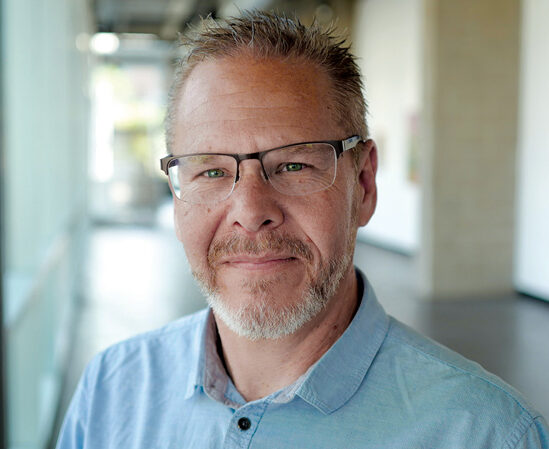 Jay Schroder has taught high school in both traditional and alternative education settings for 24 years. During this time, he developed approaches to teaching that allow him to thrive in the challenging profession.
In 2021, the Oregon Council of Teachers of English (OCTE) awarded Schroder the High School English Teacher of Excellence Award, and in 2022, Jay received the High School Teacher of Excellence Award from the National Council of Teachers of English (NCTE).
Jay Schroder is an affiliate faculty member at Southern Oregon University and has recently begun working with Southern Oregon Regional Educator Network (SOREN) as an Implementation Coach. Jay is also a certified instructor of Social Emotional Learning and Character Development and a sixth-degree black belt in karate.
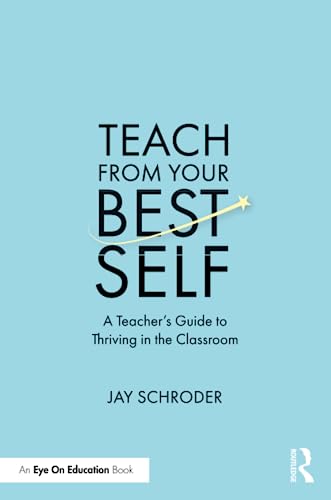
In his Teach From Your Best Self workshops, he shares the approach to teaching that changed his life. He has brought that together in his book Teach From Your Best Self: A Teacher’s Guide to Thriving in the Classroom (Routledge, 2023).
Ed Battistella: I enjoyed Teach From Your Best Self. It caused me to reflect on my own teaching over the years. Thanks for writing this.
Jay Schroder: Thank you, Ed. I wrote the book while teaching full time and leading teacher trainings during the summer and on weekends, so this has definitely been a high-effort labor of love. It means a great deal that you found the book impactful.
EB: What should prospective teachers know going into the field?
JS: First, I think it’s important that new teachers have a sense of how hard this job is. As an incoming teacher, I didn’t fully grasp the depth of difficulty involved in teaching, so once I was plunged into the reality of it, I just thought I must be uniquely bad at it. This led me to get unnecessarily down on myself, which didn’t help. I would have loved it if someone who had done the job for a while had come along and said, “teaching is one of the hardest jobs in the world—that’s why you’re struggling.” This would have kept me from being so hard on myself, so that’s the first thing I would offer.
Second, if you want to teach well, your well-being matters. Whether you show up to your job frazzled and fried or nourished and rejuvenated will have a huge impact on your ability to help your students. It’s really easy in education to let the job consume us. We tell ourselves that we’re making a worthy sacrifice for the students, but from my perspective that’s a mistake. Students thrive when their teacher is thriving. If you want your students to thrive, prioritize your own well-being.
EB: There was an impressive amount of research in your book, along with your own experiences and perspective. What should people who don’t teach know about the work of teachers?
JS: Teachers show up every day, to do a tough job under extremely difficult conditions. How difficult is it? Well, according to the results of a 2023 Gallup Poll, conditions in K-12 education are so tough that K-12 employees are the most burned-out employees in America. And, among this group of K-12 employees, teachers are the most burned out. Incidentally, the second most burned out employees in America are people who work in colleges and universities.
The burnout gap between teachers and people who work in other industries isn’t even close. For example, whereas 31% of people who work in healthcare report always or very often feeling burned out, 55% of K-12 teachers report feeling burned out all, or much of, the time.
So, the first thing I would want people to know is that the job is hard, and the people who do it need to feel supported. A kind word or a small gesture of appreciation goes a long way.
The second thing I want people to know is that teaching and learning are extremely complex processes. One of the criticisms I hear from people is that teachers should just teach academics. What they don’t realize is that before students can begin to learn academics, they need to feel safe at school (physically, emotionally, and psychologically). They need to have the social skills to interact with their classmates in productive ways. They need to have the emotional resilience to persevere with a difficult task. They need, collectively with their classmates and their teacher, to have the social skills to create a classroom environment in which everyone feels safe to share, to express, and to learn. All of these skills are important foundational pieces to learning academics. This is why telling teachers to simply teach academics is unrealistic, and frankly, wouldn’t work.
EB: What did you learn from writing Teach from Your Best Self?
JS: I wrote the first draft of the book in 4 months. Writing the book proposal and revising the book took an additional three years, and I worked on it every single day. So, the revision process actually took nine times as long as it took me to write the first draft. I kept a file that contained all of the big chunks I wrote and then cut from the book, and that file is now larger than the entire finished book. So, I learned something about the kind of labor involved in writing the best book I possibly could.
Another thing I learned had to do with what it means to be an author. Author’s typically get all the credit for writing a book, so I used to imagine that writing a book was a solitary process. In my case, however, writing this involved 15 educator beta readers, Carolyn Bond, my wonderful editor, my mentor Paul Richards who early in the process gave me the feedback I needed to get the book on a solid track, and my fabulous wife Judy (also a teacher) who gave me ongoing feedback and kept the house from falling apart while I worked on the book. So, I learned that writing a book is a team effort. Now when I read a book, I pay much closer attention to the acknowledgment section because I have a much deeper understanding of how important all the supporting people are to a successful book.
EB: I like that way you’ve applied life lessons to teaching and incorporated your karate practice. Can you tell our readers what’s mean by in shin tonkei and zanshin.
 JS: In shin tonkei comes from the ninja of feudal Japan. Ninja were stealthy fighters who emerged during the warring states period of Japanese history as mercenary spies and assassins. They were hired by warlords to do the kind of dirty work that was beneath the dignity of the samurai. The ninja worked behind the scenes conducting night raids, ambushes, and assassinations. There were both male and female ninja, and rather than the brute force and swordsmanship that the Samurai relied on, the ninja would use surprise and cunning. The way of the ninja was in shin tonkei which means maximum impact with minimal effort. This means that the ninja had to be extremely patient and calculating, and in each case, know what mattered most and be able to improvise as circumstances changed.
In Teach from Your Best Self I suggest that teachers apply in shin tonkei to their jobs. Like the ninja, teachers are continually outnumbered and face seemingly insurmountable obstacles. They need to know what matters most, be patient and calculating, so they can strategically focus their efforts where it will have the most impact on student learning. Trying to do everything at the same time is a big part of what has led teachers down the path of becoming the most burned-out employees in America and applying in shin tonkei can help.
Zanshin is another concept that comes from Japan. I’ve been training in karate for the past 24 years, and learning to embody zanshin has been an important part of my training. Essentially, zanshin is a mental state of relaxed alertness—a kind of open, responsive mindset in which a person is ready to respond to whatever happens. With zanshin the mind is completely relaxed and simultaneously aware and alert. It’s a state of both effortlessness and complete involvement. I think the closest term we have for this in the west is the idea of being in the zone, or in the flow state.
For the martial artist, it isn’t enough to be in this state while meditating undisturbed; the real challenge is to maintain this state under the pressure of someone’s attack.
In my own case, learning to maintain this mental state in the dojo bled into my teaching practice. As I grew in my ability to main zanshin, my students gave up trying to get the best of me. They began telling me how much they enjoyed the relaxed vibe of my class. Teaching became more fun.
In Teach from Your Best Self, I offer approaches and understandings people can use to deepen their capacity to attain zanshin and maintain it, even under stressful circumstances.
EB: You mentioned that your black belt test involved about 4 hours of sparring and that you ended up with three cracked ribs, a broken nose, and two black eyes. I’m curious how your students reacted to your appearance.
JS: On that Monday morning, I was met with a ton of questions, “Oh my God, Mr. Schroder, what happened to you?!” They wanted to know if I had gotten into a fight. Indeed, I had—100 rounds with experienced black belts.
EB: You mentioned that negativity and anxiety can be contagious. Can you give an example or two?
JS: In the novel Don Quixote, Cervantes has Don Quixote’s wise and loyal servant Sancho say, “tell me your company and I will tell you what you are.” When someone tried to attribute the quote to Cervantes, Cervantes disclaimed it, saying it was proverbial. Indeed, the Greek philosopher Euripides, in the 4th century BC wrote “every man is like the company he is wont to keep.” And in the Old Testament book of Proverbs (13:20) there are warnings about how the people around us can either make us better or reduce us. So, this idea that the mindsets and emotions of others are contagious has been observed in human beings for a long time.
As parents, we can see the impact that our children’s friends have on them. People who served time in prison will often start their story by saying, “as a teenager, I got in with a bad crowd.”
The truth is, we are all highly influenceable by the people around us. Sometimes this can happen on a cultural scale, for instance, the way people simultaneously started panic buying toilet paper at the onset of the Covid 19 pandemic in 2020.
In 1992, scientists discovered an important part of the explanation when they discovered mirror neurons in brain research involving monkeys. Mirror neurons are neurons in our brain that mimic the firing patterns of people around us. This is a great advantage when learning a complex task. We can watch someone do something and as we do, the mirror neurons in our brain will mimic the firing pattern required to perform the task ourselves. Mirror neurons appear to be integral for babies learning language. They are why when someone smiles at us, we tend to smile back.
However, these same mirror neurons make us susceptible to embodying other people’s negativity and distressing emotional states.
This has huge repercussions in the classroom as when teachers are anxious or frustrated or overwhelmed, the mirror neurons of their students copy the firing patterns of their teacher. This leads to a situation in which the teacher’s brain isn’t firing optimally for teaching, and the students’ brains aren’t firing optimally for learning.
When teachers can maintain their best selves as they teach, the mirror neurons in their students’ brains will fire accordingly, and the students will tend toward responding to the teacher from their best selves. This simultaneously maximizes student learning while making the teacher’s job easier.
EB: You talk about “hurtspots.” What are those and how can you identify them?
JS: What I am calling hurtspots are pockets of pain left behind in our minds and bodies from unprocessed trauma. Typically, we don’t have the time, space, or support to process trauma in the immediate aftermath of a traumatic event, so we tuck the pain away to be processed later. Then, we try to forget about it and get on with our lives.
But those pockets of pain aren’t gone, so at some point we’ll face an event or circumstance that contain elements similar to the original traumatic experience. When this happens, the hurtspot awakens, flooding our systems with the unprocessed pain from the original trauma.
Because all of this is happening below our conscious awareness, we will look to the real time situation and blame it for our emotional and physiological distress. This is why we’ve all observed people having an intense emotional meltdown, or blowing up over something that looks, to an outside observer, to be pretty minor. Hurtspots lead people to react in proportion to how they feel, not in proportion to what actually happens.
Reacting out of proportion to the situation is actually one way we can learn to recognize hurtspots in ourselves. For instance, I once punched a hole through a wall because my girlfriend at the time was out later than I thought she would be.
Another tell-tale sign that I’ve been caught in the undertow of a hurtspot is if I’m obsessing or ruminating on the triggering event for hours, days, and sometimes maybe weeks after it’s happened. Usually, my rumination will be about how horrible someone else is, how right I am to feel the way I do, or what I should have done or said.
In time, the hurtspot will die down and we’ll try to put the episode behind us. But because we’ve not actually processed the underlying trauma, the hurtspot will go into hibernation, certain to ambush us the next time we face a similar experience. People can spend their whole lives cycling in and out of hurtspots, blaming the people and circumstances that trigger them into pain.
Activated hurtspots negatively affect our ability to meet circumstances in our own best way. Whether we are teaching a class, parenting a child, interacting with a friend, or dealing with an undesirable event, learning to respond from the best version of ourselves, rather than reacting from a hurtspot, will determine how things turn out—both for us, and for the people around us.
In the book, I offer Expressive Writing as a research backed approach for bringing healing and resolution to our hurtspots so they don’t continue to dog us in our lives.
EB: What’s next for you and Teach From Your Best Self?
JS: After 24 years as a classroom teacher, I’ve recently taken a job working for Southern Oregon Regional Educator Network (SOREN) where I will be available to support, coach, and mentor educators. Meanwhile, I will be continuing to grow the Teach from Your Best Self community through leading TFYBS trainings and taking advantage of opportunities to talk about Teach From Your Best Self. Ultimately, I want to be a voice in education reform, helping to steer education policy towards creating a sustainable education system in which staff and students alike are supported and inspired to bring their best every day.
EB: Thanks for talking with us. Best of luck with your work.
JS: This has been an absolute pleasure. Anyone who wants to learn more about Teach from Your Best Self and the work we are doing can go to teachfromyourbestself.org. I always love to hear from readers, so when you do read the book, feel free to reach out to me at jayschroder@teachfromyourbestself.org.

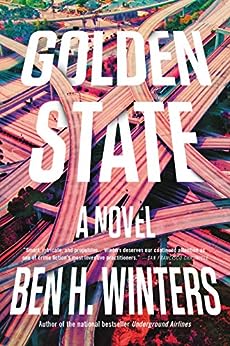 big fan of Ben H. Winters’ world-building books (the Last Policeman Trilogy, Underground Airlines, etc.). In this one, he drops us into the future in the a “The Golden State” a dystopia where lies are illegal. Greetings are replaced by the recitation of facts “Two plus two is four”) and everyone tracks events in a collection of daybooks which one another by spouting facts. An elaborate system of tracking and archiving the minute details of everyone’s lives has been set up. The line between lies and other bits of speculation, imagination, and non-literalness is thin do a whole bureaucracy and enforcement arm are required to monitor and verify information. The enforcers of the truth are part of the Speculative Services, elite agents who can detect lies and are also licensed to speculate, hypothesize or lie themselves, in pursuit of the truth.
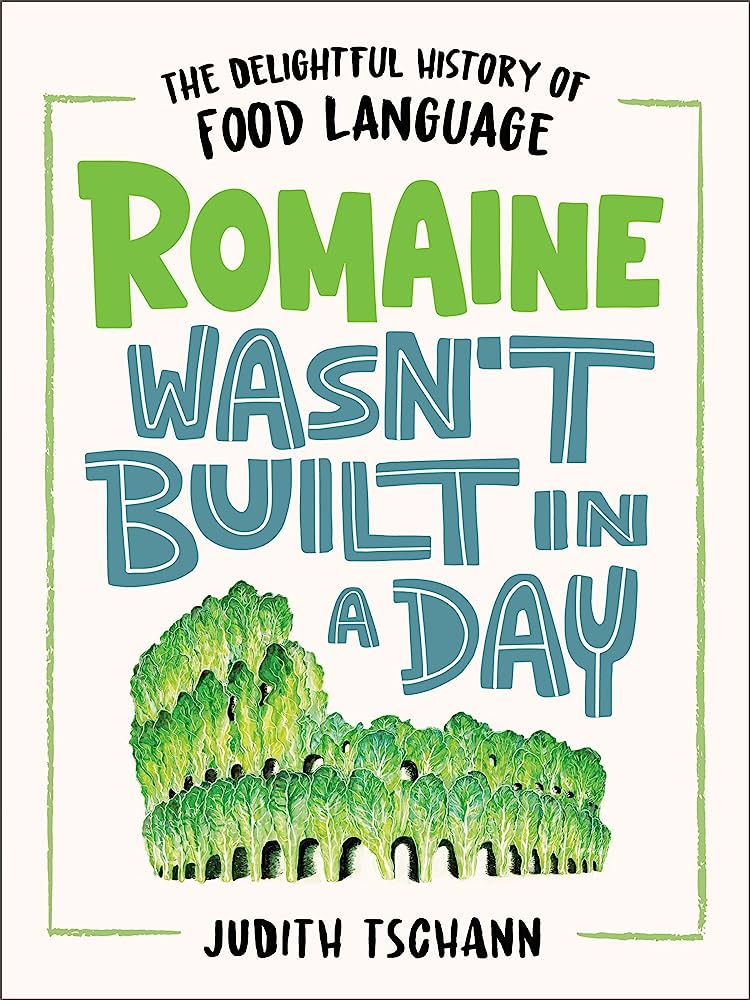
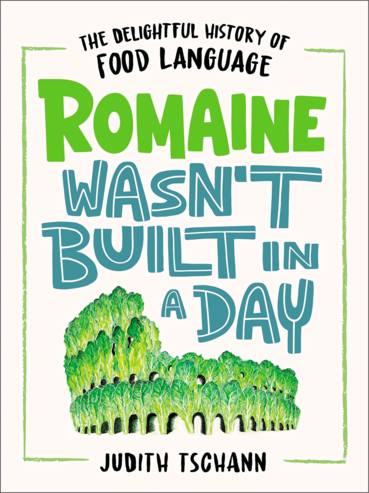 JT: Souffle, pumpernickel, partridge, and nuns’ farts come to mind, because they illustrate different aspects of lexical evolution or semantic change, as well as the difficulty of fully accounting for a word’s history and meaning. The Latin word flāre, “to blow,” gave us a many words, including flavor, flatulence, conflate, deflate, inflate, and (via French) souffle. Even if some members of this group of related words seem almost contradictory, it’s still possible to see how they could all come from a word meaning “to blow.” But with food terms like pumpernickel, partridge, and nuns’ farts, it’s not a matter of how words with very different meanings can derive from the same ancestor word, but rather a question of how some foods ever acquire a seemingly unappealing name, one that suggests yucky rather than yummy. The why and how of the name are often a matter of speculation.
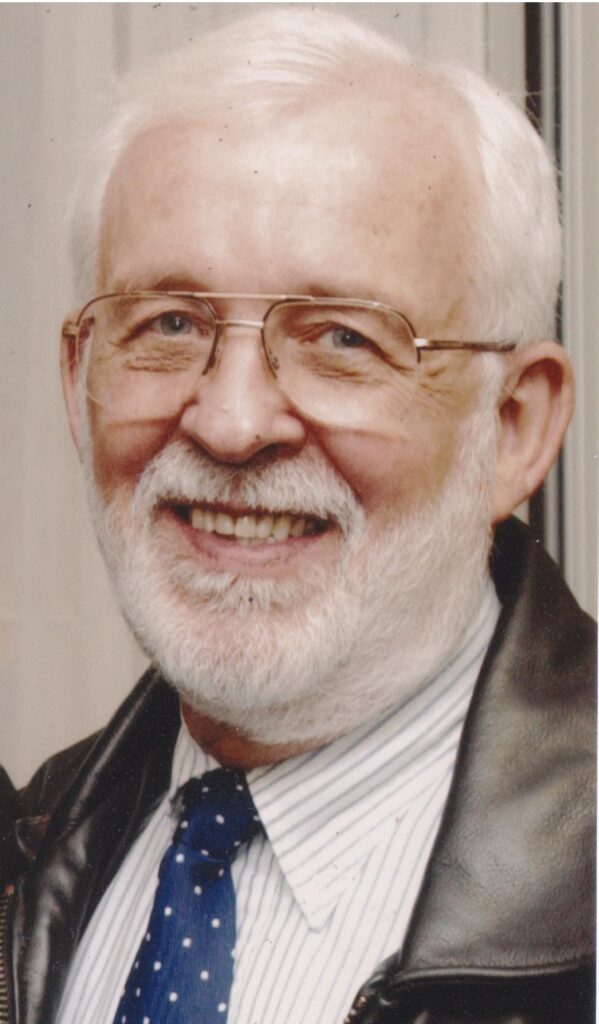 Bill Meulemans is an emeritus professor of political science at Southern Oregon University, where he taught from 1964-1992. A former Danforth Fellow, Fulbright scholar, and Army veteran, he has a PhD from the University of Idaho and also taught at Queen’s University in Belfast, and at Portland State University.
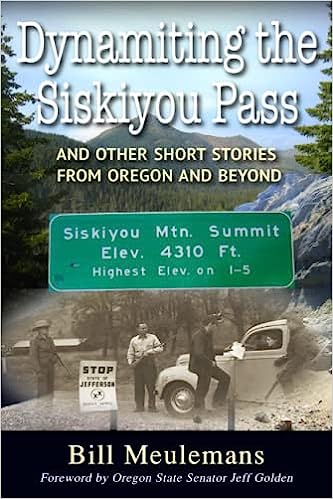 Bill Meulemans: The killing by the Ohio National Guard of four unarmed students in 1970 at Kent State University sent political shock waves to college campuses across the country. In response, students a Southern Oregon College in Ashland decided that the US Flag should fly on campus at half-mast the next day in commemoration of the those killed at Kent State. When word of this leaked out to the right-wing non-student population a determination was made by them to be ready to use any means available to raise the Flag to full-mast. Early the next morning a small fleet of pickup trucks with gunracks in the back windows showed up to raise the Flag despite the unarmed students who, by this time, were afraid for their lives. At this point it looked like another “Kent State” was in the offing. But when the Flag was attached to the rope, it was discovered that the pulley had been smashed, perhaps by a hammer. The students were relieved, the fleet of pickup trucks left, and everyone breathed a little easier. Several days later everyone on the campus found out that two unnamed college maintenance men had smashed the pully to “save us from ourselves.” These state workers became local heroes, demonstrating that maybe a bit of common sense had saved some lives that morning on a small college campus in Oregon.