
Review of How Deeply Human is Language: Chomsky, The Brain, and the AI Fantasy  by Yosef Grodzinsky
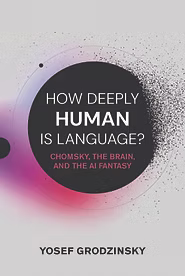
Review of How Deeply Human is Language: Chomsky, The Brain, and the AI Fantasy  by Yosef Grodzinsky

In this short and lucid work, Grodzinsky (Director of the Neurolinguistics Lab at the Edmond and Lily Safra Center for the Brain Sciences) provides a two-fold approach to the question of the nature of human language and whether A.I. models can model that nature. He begins with an overview of Chomskyan linguistics in Chapters 1 and 2. In Chapter 1 Grodzinsky gives a short sketch of theoretical grammar and the early version of Chomsky’s Transformational Generative Grammar. With this background, Chapter 2 moves to later, more abstract theories focused on a minimal set of highly constrained rules, notable the operations MERGE and MOVE. These two chapters are an excellent review and clarification for those familiar with linguistic theory, but may be challenging for the uninitiated.

Chapters 3 and 4 turn to the history of A.I. from early machine learning attempts to later deep learning to Large-Language Models (LLMs). Chapter 3 focuses on the development and early evolution of neural networks from work on simple perception to the techniques of back propagation and deep learning through weighted connections between neurons. Chapter 4 covers the development of statistical models of language generation, notably ones involving Recurrent Neural Networks (RNNs) and Long Short Term Memory (LSTM). Again, these may be challenging to those unfamiliar with the history of such models but are worth the effort.

Chapters 5 and 6 take a critical look at some of successes and failures of LLMs. Grodzinsky offers more than a catalog of Chat-GPT flubs or a screed against A.I. in general. Rather, he demonstrates—convincingly to me— that present-day LLMs cannot model the linguistic knowledge of English speakers (or presumably those of other languages) as well as linguistic models do. In Chapter 5, he tackles the claim that LLMs refute the innateness hypothesis, a claim central to much Chomskyan linguistics, and he argues for the importance of constraints on theories and model (with the clever example of the periodic table of elements). Key to Grodzinsky’s position is that predictive success does not equal a valid scientific theory or description of a phenomenon. In Chapter 6, he describes the Winograd’s Challenge Schema (involving anaphora resolution) and other benchmarks for LLM performance, including especially ambiguity detection.

Chapters 7 and 8 lean into Grodzinsky’s academic specialty, neurolinguistic modelling. Chapter 7 deals with the neuroscience of brain localization (from Broca and Wernicke to present day fMRI studies) and some of the ways that linguistic theories are congruent with anatomical studies. Chapter 8 focuses on studies of LLM performance as they relate to brain anatomy and human linguistic performance. Here Grodzinsky critiques existing studies of LLMs and suggests that much more refined types of studies are needed.

The Epilogue, subtitled “Shall We work together?”, suggests collaborative efforts between linguists and LLM engineers, and points to the success of work on semantic priming. For Grodzinsky, the tension between engineering and theoretical modeling can result in a productive exchange, but we are not there yet.

Overall, How Deeply Human is Language does a superb job of outlining major areas of contrast and confluence between Chomskyan linguistics and A.I. engineering, such as the role of innate components, the types of learning methods involved, the role of constraints on theories, and the transparency of mechanism.


Posted in Ideas and Opinions, Language, What People Are Reading | Comments Off on Review of How Deeply Human is Language: Chomsky, The Brain, and the AI Fantasy  by Yosef Grodzinsky

Review The Politics of Language by David Beaver and Jason Stanley

The Politics of Language by David Beaver and Jason Stanley
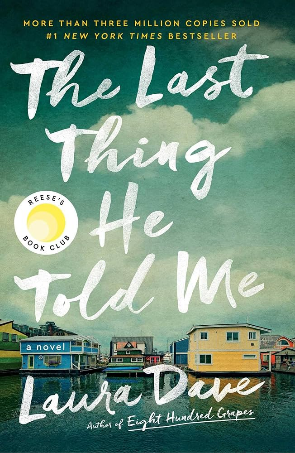

Published in 2025, The Politics of Language, by David Beaver and Jason Stanley convincingly makes the case that most speech has ideological meaning and that the connotations of words evoke emotions, images, and actions in listeners all of which can be manipulated by what they call “hustle” (communicative actions that are not transparent). The book offers a detailed critique of the so-called “content delivery model” of communication in favor a view of communication in terms of speech practices of communities. In a culture or subcultures, certain language practices presuppose the ideology and may further effect a harmony with social identity. They argue that linguistic neutrality is illusory and dispute the idea that there is such a thing as language that avoids ideology shading. If you are wedded to the idea that literal meaning, neutral language, and straight talk are the way to save civil society, this book will challenge those beliefs.

The work is a collaboration between David Beaver, a University of Texas scholar who has authored and coauthored books on semantic focus, logic and visual information, and dynamic semantics, and Jason Stanley, the University of Toronto scholar and author of How Fascism Works, How Propaganda Works and other books. This was a productive collaboration, resulting in a wide ranging 500-page book that draws on many fields beyond philosophy and linguistics. It is also a challenging book, best read in small bites, and Beaver and Stanley have done us the favor of organizing its eleven chapters into short sections of about five or so pages.

The key argument will be familiar to linguists, and Beaver and Stanley construct it in a unique fashion. Parts I and II of the book set out a novel theory of meaning. The first three chapters cover the concepts of resonance, attunement, and harmony. Beaver and Stanley discuss language in terms of the resonances (predictable actions) of words such as “freedom,” “vermin,” “inner city,” etc. but also note the resonances of phrases and images). Attunement refers to an individual’s predictable response to social practices, and harmony refer to the ways in which to the ways in which systems of attunement change (consonance or dissonance). They demonstrate how these features can come together into broader narratives which prime emotions such as hate and can generate contagions of hate.

Chapters 4 and 5 weave in the linguistics of presupposition, giving that concept a description in terms of resonances which can transmit and maintain ideology. As they explain it: “The power of political communication rests on its ability to draw attention, drive attunement, and differentiate adversaries.” They go into the concept fully, in all it linguistics glory, and extend it to show how accommodation makes presuppositions informative.

Chapter 6 “On Parole” gets to the concept of meaningfulness, defined this way

Something is inwardly (/outwardly) meaningful for some individual or group to the extent that it resonates for them (/for others) in a way that activates attunements that are distinctive to their identity. (p 269)

So for example, denigrating slurs or sexist comments will resonate with some listeners, spreading or reinforcing the discriminatory ideology such comments presuppose and layering them with other similar ideological presuppositions. They draw on the Communication Accommodation theory of Howard Giles and the idea of echo amplification to show how groups harmonize to the linguistic and symbolic practices of the ideologies of those whose opinions they value.

Part III of the book (IDEALIZATION) takes up notions of neutrality and straight talk as idealizations of democratic societies. In Chapter Seven they review the relevant literature, arguing that, at best, neutrality is a limited notion (and at worst an instrument of oppression). Chapter Eight similarly dissects the notion of straight talk as transparent language pointing out that many language practices (such as insinuation) involve hustle rather than transparency Together the two chapter challenge to notion of discourse that is free of perspectives, and thus free of ideology. Chapter Nine concludes with a critique of the idealization of ordinary language philosophy, arguing that the centrality of neutrality to academic philosophy and semantics has led to those disciplines ignoring the pervasive role of non-neutrality.

Part IV is titled OPPRESION AND FREEDOM, and here the authors show in some detail how different types of oppressive language work, beginning with slurs and genocidal language and moving on to bureaucratic language (with key examples from the Third Reich and from Michigan’s Emergency Management Law). The key idea continues to be the way in which the presumed neutrality masks the harm that is carried by such language. They end with an analysis of the arguments for free speech and some of the idealization that are involved in debates about its the scope and value. They suggest an equality-based foundation for free speech rather than a liberty-based one as a means of preserving a democratic discourse space in which necessary contests of meaning are possible.

While the book has serious philosophical chops (Wittgenstein, Austin, Grice, Stalnaker, Kartunnen, Kaplan, Heim, Saul, Camp, MacKinnon, Rawls, Tirrell and more), Beaver and Stanley have also woven in much research from psychology and sociology (Leon Festinger, Elizabeth Loftus, Daniel Kahneman and Amos Tversky, Dan Gilbert, Paul Ekman, Gregory Bateson, Stanley Fish, Victor Klemperer, George Lakoff and Mark Johnson, Judith Butler all have cameos) and from history and literature. Examples are taken from news and current events and ring true. Princeton University Press has done a fine job of producing The Politics of Language (footnotes rather than endnotes) and has included a helpful glossary of the technical terms. The Politics of Language is a book with several academic audiences in mind, and those less versed in the philosophical literature will need to reread certain parts to get the full effect. That’s a good thing, as this is a book that should be read and reread.


Posted in Ideas and Opinions, Language, What People Are Reading | Comments Off on Review The Politics of Language by David Beaver and Jason Stanley
What I’m reading March and April 2026

Muscle Man by Jordan Castro

A colleague who I run into the gym recommended this. It’s the quirky story of Harold, an unhappy literature professor who finds solace from a mundane career in weight lifting. The key scenes are his ruminations during a faculty meeting, during which he hides a purloined knapsack while listening to colleagues he disdains, and his thoughts at the gym, while lifting and sweating (with some homoerotic overtones) in the sauna. In the background is a mysterious colleague who is his lifting mentor and his obsession with Dostoevsky’s Notes from the Underground.

Counterplay: An Anthropologist at the Chessboard by Robert Desjarlais

At a recent chess tournament, I was in a game where not much was going on and started to watch the other players—the fidgeters, the poker-faced, the ones holding their heads in their hands, the compulsive piece adjustors, and the ones whose hands hovered over several pieces before moving one. I remember thinking, someone should write an ethnography of chess tournaments. Desjarlais’s Counterplay is not quite that, but it’s the next best thing. Desjarlais draws on his own experiences (at the Manhattan and Marshall Chess Clubs and at events like the World Open) to explore the unique grip of from a variety of perspectives. Only occasionally academic, the book gives anecdotes and insightful character sketches in what goes on in the minds of experienced players during competition. A good read for players and the people than live with them.

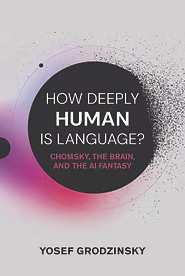
The Last Thing He Told Me by Laura Dave

A husband disappears and his wife and daughter track him down, discovering his secret life. I moved briskly, Harlan Coben-like till the end, where things got rather convoluted.

The Paris Apartment by Lucy Foley – A woman arrived in Paris to meet her brother, who it turns out is nowhere to be found. Instead, she encounters an Addams-familyesque apartment building filled with secrets. This book struck me as the opposite of The Last Thing He Told Me, a bit slow at the start with its revolving narrative, but gripping at the end.

Reflections of English Word-Formation by Laurie Bauer

I reviewed this for CHOICE, so I won’t repeat it here. But it offered 30 short commentaries on all areas of morphology and plenty of great examples.

Why We Talk Funny by Valerie Fridland

An excellent book and my long review is here.

The Politics of Language by David Beaver and Jason Stanley

I gave a progress report on this and will post a fuller review soon.

How Deeply Human Is Language? Chomsky, the Brain, and the AI Fantasy by Yosef Grodzinsky

Grodzinsky makes the case that for distinguishing knowledge of language from what large language models do and he does an especially nice job of presenting the history of generative grammar and the history of AI models. More on this book to come.


Next up: Revenge Prey by John Sanford. Time for some summer reading.


Posted in Ideas and Opinions, What People Are Reading | Comments Off on What I’m reading March and April 2026

Review of Valerie Fridland, Why We Talk Funny

Review of Valerie Fridland, Why We Talk Funny

Contrary to popular belief, we’ve all got an accent. In Why We Talk Funny, linguist Valerie Fridland digs deep into the notion of accent, offering an engaging tale of how they arise, how they work, and how they affect our lives. With relatable examples and current research results, she brings together linguistics, psychology, and history of English in a fresh, and sometimes sassy way.

Fridland is a University of Nevada-Reno sociolinguist who also pens a column for Psychology Today, so she is used to writing for real people. In the book’s seven chapters, she takes us from a baby’s first sounds to the prehistory of language and the history of English in Britain and the United States. treats Chapter One (“Baby Steps”) shows us how babies deal with sounds and the importance of the social and interpersonal cues they get about sounds. Chapter Two (Our Origin Story”) goes way back to eighteenth and nineteenth century theories about the origins of language and to the later work of people like Sir William Jones and Jacob Grimm (of fairy tale fame). Chapter Three (“Linguistic (R)-Evolutionary”) is about the formation of an American language and the way in which the r-sound divides British and American speech (among other things, you’ll learn why Brits say arse and Americans say ass). Chapter Four (“Divided Tongues and a Divided Nation”) is about how American accents developed, spread, and continue to change, including the surprisingly late development of Southern drawl and some weird West Coast vowels. Chapter Five (“Classing It Up”) introduces the ways in which social values are attached to accents and how pronunciations might be seen as sloppy, bougie, or more or less employable. In Chapter Six (“ What Color is Your Accent”), we learn about African American language, African American speech, and how we sound black and hear black as well. Finally Chapter Seven (“ Strangers at the Linguistic Gates”) looks at the sounds of other languages—their rhythms, stresses, sound inventories, and how it is that our perspective affects how we evaluate foreign accents.

Fridland also offers periodic SOUND BITES , as she dubs them, These are mini-lessons on topics that will capture the imagination of any reader: why many people find the word moist so execrable, what may have happened in the lost colony of Roanoke and how it relates to the Lumbee Indian language, and why we find certain accents pleasing or grating. As she did in her book Like Literally Dude, Fridland introduces the relevant scholarship without letting it get in the way and she has a knack for capturing the reader’s attention with anecdotes and humor.

Why We Talk Funny also has a consistent serious message: language differences are always with us and always evolving and our accents bring people together in an appreciation of who we are and what we share. Even when we talk different. Why We Talk Funny is a book about language for every language lover.


Posted in Language, What People Are Reading | Comments Off on Review of Valerie Fridland, Why We Talk Funny