Diane L. Goeres-Gardner on Inside Oregon State Hospital: A History of Tragedy and Triumph

Earlier this year, Literary Ashland interviewed Diane L. Goeres-Gardner. Her book
Inside Oregon State Hospital: A History of Tragedy and Triumph has recently been published by The History Press.

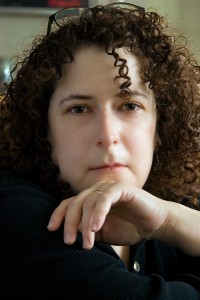
Diane Goeres-Gardner is a fifth-generation Oregonian, with roots in Tillamook County as early as 1852. She has a master’s degree from the University of Oregon where she studied with poet Ralph Salisbury. Her book Necktie Parties: A History of Legal Executions in Oregon, 1851-1905, was released by Caxton Press in 2005 and her Murder, Morality and Madness: Women Criminals in Early Oregon appeared in 2009, also by Caxton. Her book Images of America: Roseburg was published by Arcadia Press in 2010, part of its Images of America series, and for a history of the state hospital in images, see Goeres-Gardner’s Images of America: Oregon Asylum.

EB: How did you get interested in the Oregon State Hospital?

DG: While writing my second book, Murder, Morality and Madness: Women Criminals in Early Oregon I did some research into Oregon State Hospital (OSH) because before 1900 women prisoners were often sent to OSH in lieu of leaving them in isolation for so many years. The diagnosis female patients were assigned all seemed to revolve around the fact they were female, such as menopause, giving birth, and taking care of children, etc. I thought that was strange. My research also revealed that no one had ever written a history about the hospital. After that I was hooked.

EB: What was the research process like?

DG: The research was very sporadic and extremely difficult. The hospital itself had almost no archived information. Even the photos they had were mostly duplicates of photos held in other archives. I did find a file about the Calbreath family at the Oregon Historical Society, but they had almost nothing on the hospital either. That meant my main sources of information were the State Archives, the State Library, and the microfilm files at the University of Oregon, which stores copies of Oregon’s newspapers. When you look at the endnotes in the book, almost all are from those three sources.

EB: I want to ask about eugenics and sterilization. About 2,600 people were sterilized in Oregon between 1917 and 1983. Was Oregon typical in this? You mention some eugenics proponents like Bethenia Owens-Adair. What was her impact?

DG: Oregon’s enthusiastic adoption of Eugenics doctrine was not typical of other states. California sterilized over 20,000 victims and Oregon had the seventh highest number of victims (behind North Carolina, Virginia, Michigan, Georgia and Kansas). Many states didn’t sterilize anyone. Only Oregon targeted the gay community so harshly. Oregon’s use of sterilization was a “perfect storm” created by the kind of people elected to office during those years, a backlash against the gay community after a particularly well publicized expose in Portland, and the bias of the state’s institutional superintendents. Dr. Bethenia Owens-Adair was a persistent and influential proponent. She wrote the original bills Oregon’s legislatures finally approved. She just wouldn’t let it go. She was also well acquainted with the Applegate family and their mental illness problems. I believe that knowledge biased her toward the Eugenics philosophy.

EB: It was interesting that several members of the Applegate family were patients? How did so many Applegates end up in the asylum?

DG: I wanted the book to be more than just a collection of facts and figures. I wanted readers to feel the context of how patients experienced the hospital. To accomplish that, I needed to find patients in the hospital that I could research. The Applegate family was easy to research and had an extraordinary number of family members admitted to the asylum over a rather short period of time. I discovered and reported on eight members of the family committed to the hospital. There were actually two more that I didn’t mention in the book. Today we know that some kinds of mental illness do run through families. In the late 1800s people also knew from experience that some families had more incidents of mental illness than others. However they had extremely limited ways of dealing with it. Sending the patient to the Oregon State Asylum was just about their only option. There may have been other families with just as many patients in the hospital, however their names were less identifiable and harder to research.

EB: Funding seems to have always been an issue, as well as county-state disputes over funding. What did you conclude about the impact of funding on care.

DG: It is very costly to care for thousands, or even hundreds, of sick people who have no insurance and no way to pay for their care. Over the years funding issues have tormented not only the hospital, but all state institutions. Oregon is in a particularly vulnerable situation because the state’s only income is through property taxes and those have been capped. Also other states make the patient’s home county pay a portion of the expenses. Oregon doesn’t.

EB: You mention a celebrated 1914 dispute where a wife claimed that her husband was having her committed to gain control of her assets. Was this common?

DG: It may not have been common in Oregon, but it was always suspected. For many years Oregon laws protected women by prohibiting their husbands from divorcing them while they were in the hospital. The law made it very easy to have a person declared insane and a husband had greater power in front of a judge than a wife.

EB: The hospital changed its name from the Oregon Insane Asylum to the Oregon State Hospital? Did that reflect a change in its mission?

DG: Superintendent L. L. Rowland proposed changing the name as early as 1895 but it wasn’t acted upon until 1913 when a number of things changed. That year Oregon opened the Eastern Oregon State Hospital and the state discarded the old trustee system of supervision and changed to the Board of Control system. A new psychiatric and medical building was opened on campus in 1912 creating a more modern attitude toward mental illness. The mission was changed from warehousing people to trying to actively treat and cure mental illness. Certainly the term hospital had a more hopeful connotation than asylum.

EB: One long-time superintendent, Dean Brooks, allowed the film One Flew over the Cuckoo’s Nest to be filmed at the hospital, and even had a role in the film. Was the filming controversial?

DG: Dr. Brooks supported the project and wanted patients to be involved in all aspect of the movie’s filming. He believed it was beneficial for patients to be engaged in activities outside the hospital environment and that the movie would bring increased attention to the hospital’s needs. He did not think the movie attacked mental facilities as much as the authoritarian structure that so often surrounded them.

EB: I was fascinated by the various treatments: moral therapy, hydrotherapy, insulin and electroshock therapy, lobotomies. How did treatment evolve?

DG: OSH adopted various treatments as they developed across the United States. Treatments for mental illness went from basic incarceration to active remedies rather quickly. Soldiers returning from WWI and WWII with psychological problems created a need for better treatment modalities and OSH, like other hospitals, was eager to try them out. The need created the interest, and the interest created the cures.

EB: Funding, maintenance and staffing have always been issues, it seems. With the recent renovation, is the OSH turning a corner?

DG: Today the overcrowding is gone and instead of sharing a room with several other people, patients now live in private rooms. Their safety is no longer compromised by inadequate and outdated facilities. Staff can now focus on treating the patients instead of keeping buckets filling with rainwater from overflowing all over the floors. Superintendent Greg Roberts has reduced required staff overtime making the employees happier and healthier. All these improvements make it easier to focus on the important thing – helping patients get well and returning them to their communities.

EB: Thanks for talking with us.

Posted in Interviews | Comments Off on Diane L. Goeres-Gardner on Inside Oregon State Hospital: A History of Tragedy and Triumph

MY YEAR OF NEW WORDS, Part 10: PHONEMES

If you’ve ever played Scrabble or Boggle or Worded with Friends, you know there are some letters that you just can’t do much with because they don’t fit together well. This has to do with the sound shape of English and the traffic rules of English syllables. English words are not just a matter of putting letters or sounds in any old order. Syllables have onsets of two or three consonants(codas and nuclei too but we’ll stick with onsets for this example). English has sp, st, sk, sm, sn, sl, fl, fr, shr, thr, pr, tr, kr, br, dr, gr, pl, kl, bl, tl, spl, skl, spr, str, skr. But there’s no dl or tl (well, Tlingit—but that’s a borrowed name) or thn or fn or sb, sd, sg—it’s partly the phonetics of vocal cord vibration and the preference for a certain amount of dissimilarity in words. Our phonetic patterns have odd gaps too: there’s small, snail, sled but no srimp—before an r we have to use sh (and we prefer the shr combination so much that some of us use a sh in words like strength and strong).

So while there are all manner of possible misspellings and new words and phonetic combinations, new words can’t be so unEnglish that people just scratch their heads. That’s why there’s no lfat, chnutter, or thmelt in the non-words. Non-words have to wend that line between novel and unpronounceable. So we get non-words like fnast (the sound of nasal passages being cleared inward) which is based on an Old English word for sneeze). We don’t use the fn onset any more but it was once English (like, kn, gn, and hw). The word snlob, someone who is snobbish about being a slob, violates the traffic rules of English onsets a bit too much. It words as a visual joke but snl is too hard to say.
Sometimes, though, the sounds fit together perfectly. I was happy with glind (to simultaneously grind and glide), which brings those concepts together in a sexy way and also draws on the partial sound symbolism of the onset gl: glisten, glamor, gloss, gleam, glimmer, glint, glare, glitter, glaze, glitz, glory, glee and glow.

Sound structure also facilitates puns (simple wordplay creating a double meaning) and double entendre (the allusion to a disguised or absent second word and meaning). So the non-word cudgole, (to persuade someone to move along by displaying a nightstick but not actually using it) alludes to both cajole and cudgel and widle (to move with one’s widest part first) alludes to sidle but is much less slinky. Twalkers (people who walk and text at the same time and nearly run into others) plays with the funny onset tw (tweet, twit, twaddle, Twinkie) as well as the cblending of texter plus walker. And dystopia (any locale is which ritual insult is the preferred and usual means of interaction) blend dis- with –topia while alluding to dystopia.

Posted in Ideas and Opinions | Comments Off on MY YEAR OF NEW WORDS, Part 10: PHONEMES

My Year of New words, Part 9: TYPOS

One of the types of word formation that doesn’t turn up much in textbooks—but which has been enormously helpful to be—is the typo. Typing quickly I notice odd combinations of letters that sometimes suggest new words. Typing malapropism, for example, I produced mammalproism, which could be the misidentification of species. Portland writer Bill Cameron tweeted about a typing growd for crown several times, which suggested growd: an angry gathering and one growing in size.

Typos are not the only type of word error, or even the most fun: spoonerisms rearrange parts of word shapes—creating dickle and nimed from nickel and dimed or (if only sound features are switched) skubetti from spaghetti. Spoonerisms are transpositions of sounds, a verbal slip named in honor of the Rev. William Spooner. Spooner was a professor and later the head of Oxford University’s New College (a position charmingly called warden rather than president), and he was known to say such things as Is it kisstomary to cuss the bride? (customary to kiss) and The Lord is a shoving leopard (a loving shepherd).
Malapropisms are the semantic equivalent of action slips—when you put the ice cream in the cabinet rather than the freezer. When you malaprop you select (or activate) the wrong word, substituting strawberry for library, or vacuum for hair drier. Malapropisms are in fact named for the character Mrs. Malaprop in Richard Sheridan’s 1775 play The Rivals (among other things, she refers to another character as the very pine-apple of politeness).

As a literary technique, malapropisms are used to portray characters whose verbal ambitions exceed their vocabulary. We find them in Much Ado about Nothing (where Constable Dogberry notes that Comparisons are odorous (Act 3, Scene V), in Norman Lear’s All in the Family (where Archie Bunker complains about people making suppository remarks about the government), and in the Sopranos (where Tony’s father complains in a flashback that his wife is an albacore around my neck). You can malaprop just part of a word of course: as in choirpractor or Smithstonian.

And if the malapropped word seems to fit the context, others may refer to it as a Freudian slip. So when someone says Tell me what I can do to make things difficult (instead of different) or Thank you for your hostility (instead of hospitality), those are Freudian Slips.

When the malapropisms makes sense in a folk etymological way, they are often called eggcorns. Thus we find the eggcorns: escape goat for scapegoat, physical year for fiscal year, soaping wet for soaking wet (and of course eggcorns for acorns). There is even a term for the mishearing of musical lyrics and poetic lines, as when we hear Lead on, oh King eternal! as Lead On, O Kinky Turtle. These are called mondegreens.

Writer Sylvia Wright coined the term after observing a child mishear lines from the The Bonny Earl of Murray. Hearing They hae slay the Earl of Murray/and laid him on the green, the child understood it as a double murder: They hae slay the Earl of Murray/And Lady Mondegreen. Young children and beginning writers are frequent sources of mondegreens and especially eggcorns, producing tales of an athlete who vouches never to lose again, wires sauntered together, tight-nit groups and coinsiding events.

Closed-caption fails are the errors made by the speech recognition software used on news programs. Exercising in front of a bank of televisions at the Ashland YMCA, I read that health care reform is holding on by a threat, and in a different story that there is no constellation for angry travelers stuck in Europe. I learn about tough times for folks who make yocks, the latest activities of the airline pirate’s union, and get a political update from the city of Your fault, Virginia. I can laugh at these guiltlessly. Closed-caption errors may not yet match the classic eloquence of Reverend Spooner and Mrs. Malaprop, but they are making progress and making me smile.

What all of the semantic errors have in common is our impetus to assign motivated meaning to forms. It’s also what we do in folk etymology, when the historically accurate etymology becomes opaque (or we simply override it). On a warm summer day, I included xeratask (to sit in the dry, warm, end-of-summer sunshine, doing nothing) partly to celebrate the day and partly to allude to the reinvention of xeriscape (landscaping in ways that reduce the need for water) as xeroscape. Xeri- is opaque and gets re-invented as zero, with the sense of waterless. You can expect xeroscape or even zeroscape to eventually win out. If you are an etymologue (one who confuses etymological faithfulness with precise usage), that will make you sad. But that’s life.

Posted in Ideas and Opinions | Comments Off on My Year of New words, Part 9: TYPOS

AN INTERVIEW WITH DAVID CHURCHMAN

David Churchman has been an infantry lieutenant, social worker, high school teacher, research associate at University of Southern California, and program officer at the National Science Foundation. He was a professor at California State University for 27 years where he held a dual appointment as Professor in the Humanities and as Chairman of Behavioral Science. In the latter capacity, he and two colleagues initiated one of the first graduate degrees in the country in Conflict Management in 1987. He received his bachelor’s and master’s degrees from the University of Michigan and his doctorate from UCLA.

David taught in Morocco, has been a Fulbright Scholar in Cyprus and Ukraine and a Malone Scholar in Saudi Arabia, and has conducted research on zoo visitors in Australia and Singapore. He is the author or co-author of over 150 publications, including Negotiation: Process, Tactics, Theory and Developing Graduate Theses and Projects in the Humanities.

He is also a moderately experienced wild animal trainer who worked primarily with big cats, and is the co-founder of Wildlife on Wheels or WOW, a live animal environmental education program that was reaching some 100,000 Los Angeles basin children each year. David Churchman lives in Ashland.

The second edition of his book Why We Fight: The Origins, Nature, and Management of Human Conflict has just been released by University Press of America.

EB: How did you get interested in conflict as a topic?

DC: A mildly complicated story. My main appointment at Cal State was in graduate behavioral sciences. Whenever people asked what that was, we answered “whatever we want.” I came back from a year at National Science Foundation in Fall 1979 with the idea for a single course in negotiation. It proved so popular across so many majors that my very astute colleague David Nasatir suggested that if we had more than one course we had the core for an MA. Discussion that a colleague, Marilyn Garber from History but also a lawyer, soon joined led to proposing an MA degree in Conflict Management in 1982 in which students chose family, environmental, organizational, and international conflict as a specialty. A three year approval process followed, with implementation delayed one more year by my sabbatical. When we did get going, my assignments were the negotiation course and a new one in “conflict theory” without much idea of what it meant.

EB: You describe conflict at some half-dozen “levels” from interpersonal to inter-state and draw on a very wide range of academic disciplines. What motivated that choice of exposition?

DC: When I decided to write a book on conflict theory, I considered three possible organizing schemes. The first, by type of theory, seemed to be too abstract and pedantic–and besides James Schellenberg had already done it successfully. The second possibility was by traditional academic disciplines, but each one had so much to contribute to so many different types of conflict that a book so arranged would become something of a scavenger hunt for the student primarily interested in some specific type of conflict. A substantial number of conflict theory courses seem to rest almost entirely on the major discipline of the professor, with occasional brief forays into one or two other disciplines. This is much too narrow an approach for a field like conflict study. The third possibility recognized that most people are interested in a few specific types of conflict depending on their career goals—future marriage and family therapists in gender differences in communication rather than, say, geostrategic concerns that that might interest aspiring diplomats, while both might be interested in how culture affects conflict. From these ruminations, here more coherent than the actual process, arranging the book by “level” of conflict but explaining each in multidisciplinary fashion seemed to me the most useful approach. Not that I think the proposed levels or the academic disciplines that I draw on are definitive or complete.

EB: There seems to be quite a lot about critical thinking. What was your goal in the book?

DC: Educators hear a lot about the importance of teaching students to “think” rather than simply to learn facts. But, this often comes down to telling students that all opinions are equally valid. Balderdash! To take an extreme case, Hitler’s opinion on race was not as good as that of Martin Luther King. Critical thinking requires evaluating evidence, distinguishing fact from opinion, determining where cause and effect are established. We need to give everyone a comprehensive, systematic, and objective approach to judging whether theories increase understanding, help us make better decisions or develop better methods for managing conflicts, and help us identify attempts to impose social or political agendas under the guise of science. I discuss six possible criteria in the book for judging anything we are going to call a scientific theory: it should be empirical, falsifiable, generalizable, logical, parsimonious, and useful. There is nothing new here—parsimony for example goes back at least to the fourteenth century. Furthermore, the six are useful for judging all ideas, not just conflict theories.

EB: I notice that you talk about conflict management, not conflict resolution. Can you elaborate on the difference?

DC: “Resolution” implies we can completely solve all of our conflicts all of the time, and I do not believe that we can. “Management” implies a more modest and I think realistic goal without denying that resolution sometimes is possible. I prefer the more modest term and more realistic goal.

EB: This is the second edition of Why We Fight and you’ve clearly been thinking about this for a long time. How has your thinking evolved?

DC: As best I can remember, when I agreed to teach a course in “conflict theory,” I thought primarily as a historian influenced by the combination of army service and a doctorate in applied statistics and research design. The program that I chaired included the department of Marriage and Family Therapy, an obvious expansion. There had to be something in between conflict between nations and conflict within families, which led quickly to identifying all sorts of other “levels” of conflict. Serving as the campus lobbyist for our faculty union led to thinking about labor-management conflict. A short stint at Department of State helping develop the US position on the Law of the Sea while I was at NSF and the negotiations to get the Conflict Management degree itself designed and approved got me thinking of managing disputes between different parts of an organization. Starting a wildlife education program with a former graduate student led to thinking about environmental disputes rich in political and economic issues. At some point, I realized that ideas were a source of conflict and turned to the few courses I had in European intellectual history as a starting point. That and the arguments about Vietnam and the Gulf War led to recognition of the need to consider moral aspects of conflict. And so it went. In other words, the evolution has been unplanned and serendipitous. If anything, I am much less sure of anything than when I began this journey about thirty years ago.

EB: You describe peace as the absence of war. Is there something that is the absence of conflict?

DC: I doubt it, at least in the real world and probably not even in literature, which would make for a pretty dull plot. As I say in the chapter on the search for peace, the lack of war may be a necessary condition for peace, but it is not sufficient. Following up on your point about critical thinking, it is a negative definition. It says what a thing is not rather than what it is, so is inadequate. My saying that you do not speak Mongolian does not tell anyone what languages you do speak. Rather, building on the remarks of Ralph Bunche in accepting the Nobel Prize, positive peace requires well-being, cooperation, freedom, justice, respect for human rights, and non-violent means of managing disputes. That is the goal. Sometimes our methods succeed, perhaps temporarily. Sometimes they fail.

EB: Of all the approaches you consider do you have a favorite, or one that seems to work best?

DC: I am not sure “favorite” is the right word but there are three theories that I think have the greatest potential for coalescing into a single coherent one. The first focuses on how important satisfactory resolution and how important the relationship with the opponent is to each party on each issue. Together, they predict which of five strategies each party will follow: collaborate, compete, compromise, surrender, or withdraw. The second analyzes a conflict in terms of what may be lost or gained at what level of risk to identify the most rational course of action for a particular party. The third requires preferentially ranking every possible course of action from the perspective of each party to the conflict, and analyzes these “preference vectors” to identify the one that is most likely to remain stable once agreed to. They are much too elaborate to explain here. Readers will have to buy the book.

EB: Who should read your book? Do you have a particular audience in mind?

DC: The main audiences that I have in mind are professors and students in the proliferating degree programs in conflict management and peace studies. I hope to provoke debate among them as to which theories and methods are good and even whether conflict theory is tenable at all given human ability to adapt and manipulate. I hope that parts of the book at least will be of some use to individuals involved in the particular types of conflicts—as evidenced by the endorsement of it by one US Congressman and one senior businessman.

Posted in Interviews | Comments Off on AN INTERVIEW WITH DAVID CHURCHMAN