An Interview with Rudy Greene

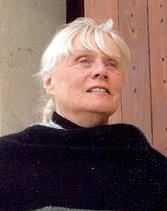
Rudy R. Greene, MD, FACR, is a board certified rheumatologist, who has been in practicing for nearly thirty years. He earned a BA in English literature and an MD from the University of Toronto. He went on to complete his internal medicine training at St. Mary’s Medical Center in Long Beach, California, and a rheumatology fellowship at the University of Southern California at Los Angeles. Dr. Greene served as associate professor of medicine at both USC and the Oregon Health Sciences University.

Dr. Greene is also a novelist and poet, and a marathon runner and triathlete. He recently synthesized his reflections on disorders affecting the joints, muscles and bones and their treatment in a guide for practitioners and patients. we sat down to talk about Rudy’s Ruminations On Rheumatology: A Guide for The Practitioner, The Patient and The Student

EB: What motivated to write this book?

RG: To make rheumatology and its practice understandable and accessible to everyone. Ultimately, I want to educate and leave a legacy. Finally, I want it to pay for my retirement.

EB: How did you first get interested in medicine and rheumatology?

RG: I was an aimless English major in college afraid that no one would buy my novels and decided I wanted an intellectually challenging profession in which I could help people, be a perpetual student and be financially secure. When I did my first rotation in rheumatology as an internal medicine resident it was love at first sight. It was the perfect fit–very social, intellectual and ever changing. Also, patients had chronic diseases and you followed them over years so they became family.

EB: How has the field changed since you began practicing?

RG:The practice has caught up to the science. We now have medications that actually put patients into remission and stop diseases cold!

EB: Your book is for patients, practitioners, and students. Did you find it challenging to write for all three audiences at once?

RG: It was a little difficult striking a balance between accessible and too complex. I always tried to put on paper words and terms that anyone could understand but never talk down to any of my audience.

EB: You mention in the book that you sometimes prescribe yoga and Pilates to patients. What is the role of lifestyle in managing illness?

RG: Healthy diet, exercise and psychological climate impact every disease and sometimes can fix mechanical problems such as a bad back or knee. They are usually complementary for systemic problems.

EB: You are also a poet and fiction writer. Have you always enjoyed writing?

RG: I wrote creative birthday cards at an early age and began writing poetry by age 14.

EB: As a poet, what do you think is the role of the humanities—writing, literature, and philosophy– in medicine?

RG: They are extremely important. Patients put their physical and psychological health in doctor’s hands. Doctors deal with mortality, ethical and moral issues daily. Any person who does not these issues seriously, does not like people or does not communicate well should not be a physician who deals with patients.

EB: One of the things I appreciated about your book was that it addressed patients. We hear a lot about medical education for practitioners, but what should patients be learning about medicine in their general education?

RG: There is science behind allopathic medicine that can be validated and duplicated. Good long term placebo controlled double blinded studies are important. Testimonials do not legitimize therapies. Learn about diseases from well accredited and respected sources such as the NIH, CDC, subspecialty colleges or major universities. Beware of outliers who claim that delegitimize the mainstream. Learn how to analyze studies and how to be a critical thinker.

EB: Thanks for talking with us.

RG: Great questions. A pleasure!

Posted in Interviews, What People Are Reading | Comments Off on An Interview with Rudy Greene

An Interview with Christine Dupres

Christine Dupres has a Ph.D. in Folklore and Folklife from the University of Pennsylvania. She is a descendent of the Lower Cowlitz and the Cree of Manitoba, Canada, and currently lives in Portland.

She has worked for the National Policy Consensus and NAYA Family Centers in the areas of development and community engagement, served on the board of Oregon Humanities, and is on the faculty at the American Leadership Forum and the owner of Radiant Life Counseling.
We talked about her recent book, Being Cowlitz, published by the University of Washington Press in 2014.

EB: In Being Cowlitz, you talk about the importance of stories in understanding a people. Can you tell us a bit about the kinds of stories you studied?

CD: First, let me define the word “stories” as used in my book, because while I do take a look at myth, lore, and legend, the real stories at hand are narrative strategies, used by Cowlitz Tribal leaders to reinforce their members’ identity. I think of stories as metaphor for transformation, as the way we use narrative strategically, as a means of relating experience and history that moves us across minds. Because I think of stories and storytelling in this way, stories run deep and are also quite cagey. Vi Hilbert, an Upper Skagit elder, activist and linguist, said that “Storytelling allows you to hear the soul and spirit of words” and I agree. Stories build relationship and understanding.

Perhaps most importantly, minorities in this culture are so often isolated deliberately and systemically from their tribe, their history, and each other. Stories shared unburden each of us from isolation, allowing us to share and tell our truth … in this way they are both incredibly powerful and disruptive, as well as reparative.

The stories I write about in Being Cowlitz are exactly this kind of story, the kind that knit together what might otherwise be torn asunder.

Kenneth Burke said stories are “equipment for living’ and that’s how I think of them – they lay the architecture for our behavior, and they also help clarify and articulate what we really think what we really feel.

EB: What did you learn from the stories?

CD: I began my book as a person unsure whether to inhabit the Native American self to which I felt so pulled, and fully unsure of what that inhabitance even meant – for example, I didn’t know the name of our Cowlitz languages; I couldn’t repeat a tribal story; I knew my family, but not many other members of the tribe; I pulled Smelt, but not in ceremony … the list goes on. I ended the process of writing feeling much more entitled to be what I was always told I was. Instead of feeling apologetic about who I was, I felt articulate and entitled.

EB: Did the stories evolve over time, as the tribes situation changed?

CD: Yes, Being Cowlitz is a book about how stories adapt and change, according to who is telling them and why.

EB: There is also an aspect of personal history in the book as well. Did the stories change you?

CD: In the end, In place of what I didn’t know, was a story, were many stories… and in place of what I didn’t understand was a compassion for myself, and other Native American and multi racial people who probably struggle with questions of racial identity, inequity, and erasure in their own way. I was also left with a sense of my place in a history … that’s proven invaluable. In exchange for a book, I got a new voice.

EB: How did you go about researching the history of the Cowlitz tribe? What were some of the challenges?

CD: The biggest challenge was a lack of readily available, substantive literature on the Cowlitz. The reliable documented accounts were few, and outdated. I found I couldn’t lean on primary source material to create the argument I wanted, and – furthermore – I valued the opinions and lived experience of Cowlitz people whom I interviewed. I did gather church and cemetery records, clippings from local southwestern Washington newspapers, and government depositions and documents, but they would prove insufficient. Even now, it’s tough to find organized, in depth information that is reliable on the tribe.

EB: In addition to being a writer, you were trained as an ethnographer and folklorist. What aspects of your academic background were most useful in your work? Or were they?

CD: For the most part, my training and academic background proved useful. Because the discipline of Folklore shines most brightly in its analysis of culture and the place of narrative in culture, and because I love the way stories work among people, I could use the best thinking in Folklore to support my own belief that lived experience is the most compelling evidence.

At times, because the University of Pennsylvania demanded academic rigor and yet first-hand narratives were seen as somehow less rigorous (I think) than other forms of academic research, I struggled to combine my primary and secondary sources.
Also, the academic voice of authority becomes problematic when you are a Native woman who belongs to the very tribe she’s researching. There was a complex intersectionality and tension to the process of research that existed and still exists: I am a woman, a scholar, a Cowlitz, a Cree, educated, urban dwelling … the composite of what makes me and the inherent power differentials made research among my people tricky at times.

EB: You talk about “genres of attachment” in historical discourse. Could you explain that a bit?

CD: Certainly. Rather than giving you a theoretical explanation of what I mean by “genres of attachment,” I’ll give you an example. The Cowlitz Chairman, John Barnett, once spoke very powerfully about Mt. St. Helens and its eruptive power. Now, while St Helens looms large in many peoples’ imagination because it blew its top so spectacularly in 1980, it lives differently in the imagination of the Tribal Chair, and other Cowlitz people, who – for 10,000 years – occupied a prairie that lay at the mountain’s feet. Because there is such a deep visual, experiential, and sensual attachment of the Cowlitz people to the mountain, when a leaders summons the memory of the mountain, it will most like resonate for a tribal person much differently than it might for an Italian tourist, say, or an American climber. The metaphor of the mountain summons a lifetime of personal memory, and millennia of collective memory. That’s a metaphor, or genre, of attachment.

EB: It seems that your study would be useful looking forward as well, for cultural and linguistic preservation efforts. Are you involved in those?

CD: I was, Ed. The Cowlitz Tribal Chair asked me to pursue language preservation for the Cowlitz Tribe, and so I wrote a federal grant to do some preliminary research into what of the Cowlitz Salishan and Saphaptin languages still existed. Concurrently, language was being taught by Marla Dupuis (Chehalis) and linguist Dale Kincade at the Chehalis Tribal offices. I took those classes, because the Lower Cowlitz (Salish) language and Chehalis languages are so closely related.

I left tribal employ before a second language grant could be written, but I know there are Sahaptin speakers in the Yakama Tribe, and suspect some more speakers still live at Warm Springs.

The upshot is that efforts to renew and restore the Cowlitz language live on. Michael Hubbs, a Cowlitz elder, has personally taken on the role of teaching the language to our Cowlitz children, and transcribing tapes recorded by linguist Dale Kincade in the 1970s. Kincade, a few weeks before his death, also completed a Lower Cowlitz language dictionary, and the tribe was able to purchase the dictionary for its members with the funding from the federal grant.

Though applied linguistics was less in fashion in the early 2000s, I believe there is renewed interest in language preservation and revitalization. Tribes value keeping language alive, as do linguists, as do tribal linguists like Vi Hilbert, a Skagit elder and visionary for her tribe.

EB: What was the most rewarding aspect of writing Being Cowlitz?

CD: It’s hard to choose, because the process of writing was so growthful. In this moment, I’d say the most rewarding aspect of writing Being Cowlitz was being able to understand and admire the tenacity and intelligence of the Cowlitz leaders and people, and how their Native story is by no means unique among other tribal peoples – in the United States and worldwide. The struggle for justice and meaning continues, despite the odds. Being Cowlitz is really a story about the human spirit, and our individual ability to create change and make things better. Even make things right.

EB: Thanks for talking with us.

CD: Thanks so much, Ed, for the opportunity! I am truly grateful.

Posted in Interviews, Language | Comments Off on An Interview with Christine Dupres

An Interview with Precious Yamaguchi

Southern Oregon University professor Precious Yamaguchi teaches courses in critical studies, international communication and intercultural communication, and digital media. She has a PhD in Communication Studies from Bowling Green State University with research and researches issues of culture, identity, generation, social media, technology, and international textile markets.

Among her awards are the National Communication Association Top Paper Award for in 2008, the Winifred O. Stone Graduate Fund Award for Outstanding Graduate Student in 2009, and the Top Dissertation Fellowship Research Award at Bowling Green State University for the 2009 – 2010 academic year.

We talked about her recently published book, The Journeys and Strength of Japanese American Women: Stories and Life Experiences During and After World War II (Rowman and Littlefield/Lexington Books, 2015), about the lives, narratives, and experiences of Japanese American women who were interred during World War II.

EB: How did you come to write this book?

PY: As I was growing up as a young child, I would hear my grandparents speak about “camp” every once in a while. I was only familiar with the word “camp” as it relates to summer camp or day camp and they would briefly explain to me that the camp they were in when they were teenagers was very different, that they were imprisoned and their whole family was taken away from their homes, they lost everything they had, and had to leave their pets behind. As a child, it was heartbreaking to hear that my grandparents were once prisoners and as I grew older as a young adult, I saw that a lot of the ways my grandparents communicated and lived were influenced by their internment camp experiences, and how the internment camp mentality didn’t become erased the moment they left the internment camps, it has stayed with them throughout the rest of their lives. Everyday life situations such as my grandparents really encouraging my cousins, brother, and I to get an education because they did not have the opportunity to attend college because once they were released from the internment camp, they had to work right away because their families lost everything, and also how my grandparents are very embarrassed to speak Japanese and did not teach my parents the Japanese language because there was so much prejudice and suspicion against Japanese people during that time, they felt the safest thing to do was raise their children to be as American as possible. My grandparents’ generation felt a lot of shame and fear, but they were also very brave and did everything they could to rebuild their lives and I wanted to share their stories and other Japanese Americans’ stories through this book. The most interesting part of the Japanese American internment camp experience is not only the internment camps, it is what Japanese Americans did once they were released from the barbed wire camps. They had no homes to return to, many schools were still very prejudice against Japanese Americans and would not let them in their schools, landlords did not want to rent to Japanese Americans out of racism and fear they were bring property prices down, and a lot of companies, institutions, and stores did not want to hire Japanese Americans even after World War II. It took me around eight years to find and interview Japanese American women who were in their 80s and 90s in various parts of our country such as California, Michigan, Ohio, and Nevada to tell their stories. Some of them had never told their stories to anyone and felt an urgency to share their narratives because they started to see many of their peers pass away and wanted to share their stories before they passed away too. Three of the women I interviewed for my book, unfortunately, passed away before it was published.

EB: Who did you have in mind as your audience?

PY: People who are interested in Asian American history, American history, communication, Ethnic Studies, and anyone who is interested in reading an inspiring story about overcoming challenges and hardships. It does not matter if the reader is Japanese American or not, there will be many themes readers can relate to such a intergenerational communication, overcoming struggles, and I hope it encourages the reader to reflect on their own families’ stories and ask their relatives , grandparents, and parents questions about their families’ histories.

EB: In the book you examine the experiences Japanese-American of women of different generations as well. What did you conclude?

PY: One of the most significant conclusions I found that relates to not only Japanese American women, but the majority of people in their 80s and 90s, is that a lot of elderly people need people to visit, converse, and engage ideas with them. It was so interesting to see how many of the individuals I spoke with were so happy to have me visit them, listen to them, and be interested in their story. I was really surprised when some of Japanese American women told me they had never told their story before and that their children or grandchildren never asked about their stories.

More specifically, I found out Japanese American women, worked from a young age because the majority of them had to find work the moment they were released from the internment camps, so at 15 or 16 years old, they were working as domestic servants, factory workers, and nannies. My grandmother worked at the Nabisco factory when she was released from the internment camps and her mother had cancer at that time so she had to care for her mother, carrying her in and out of the bath tub, taking her to appointments, and financially supporting her, even though she was just a young teenager. No matter what socio-economic status these women were, they all worked very hard at a young age and lived very independent lives because even though they were only 15 or 16 years old, they would have to take a train by themselves to work as a domestic servant or factory worker in a city, town, or state, where they didn’t know anyone or have any resources, because their families lost everything they had. These experiences and memories of losing everything they had and having to grow up very quickly in a country that was prejudice against them, stayed with the women throughout their lives. Even though they may not speak about it often or at all to their love ones, their memories are painful, and there was so much rebuilding they had to do after World War II.

EB: There is also an aspect of memoir here. Was it difficult to combine memoir with ethnography?

PY: It was definitely difficult in this instance to combine memoir and ethnography for this book because I wanted to produce ethnographic research on Japanese American women, but during the time I was interviewing people and writing this book both my father and grandmother, who I was very close to, passed away unexpectedly. So it became even more crucial for me to write down the stories of people, because I was having loved ones pass away and was realizing how when people pass away they take their stories and unanswered questions with them. At the same time it was painful to have to reflect on their lives because I missed them so much. Also, my family has been very active in the Japanese American community in Los Angeles so a lot of the people I interviewed knew about the passing of my father and grandmother and would inquire about it. I felt including an aspect of memoir and autoethnography was important to show the first-hand experience I had with intergenerational communication between Japanese American grandparents who experienced World War II and how their perspectives influenced the way they communicated with their children and grandchildren. Intergenerational communication with grandparents, not just Japanese American grandparents, can be difficult because each generation has lived through different politics, events, and moments in history, which influence their values, beliefs, and the expectations they have for their children and grandchildren.

EB: What was the research process like for studying the Japanese-American internment?

PY: I really felt that the research for this book had to be ethnographic because both myself and the readers should be engaged in the various sources, experiences, observations, and narratives in Japanese American culture. Books such as Only What We Could Carry: The Japanese American Internment Experience by Lawson Fusao Inada and Nisei Daughter by Monica Sone, gave great perspectives on writing about Japanese Americans. I also felt that it was important to start with my family’s experiences, using interviews, observations, and writing as part of them research, and then continue to interview, interact, visit, and observe more Japanese American women who I found through personal connections and with the help of the Japanese American Citizen’s League in Los Angeles, Cleveland, Detroit, and the Japanese American National Museum was also a wonderful resource for me because they have a lot of artifacts and installations devoted to the peoples’ stories. Because I was interviewing elderly women, sometimes I would have to meet or speak to them multiple times because they would get tired or they would forget specific details and have to look up the details in their past letters, journals, or photos. A lot of Japanese American women were so helpful because even after we completed our interview, they would send me photos, artifacts, or letters through they mail, that they were able to retrieve or find after out interview.

EB: How did the internment experience affect these women? Did you find differences in men’s and women’s experiences? And in the way the experience has been historicized by gender?

PY: I focused on Japanese American women because a lot of the ones who grew up during the time of World War II, were brought up to be very modest and were taught it is rude to talk about yourself too much, boast, or have people feel sorry for you. Typically you’re not supposed to talk about positive things about yourself because it can be seen as bragging and you’re not supposed to talk about negative things too much because it may come off as seeking sympathy. There is a bit of a double-standard when it comes to gender communication in the Japanese American culture, especially in regards to the older generations. There are certain Japanese words such as enryo or gaman that emphasize the qualities of modesty, holding back, and enduring, that have no word equivalents in the English language. A lot of Japanese American women had stories of racism, working, traveling, and overcoming so many challenges and hardships, but culturally, they were not brought up to talk about themselves so many of their stories have gone untold. It was great to interview them because most of them have never had a person ask them about their lives, stories, or just give them opportunities to talk about themselves.

EB: What was the most rewarding aspect of writing the book? And what was the biggest challenge?

PY: The most rewarding aspect of writing this book has been giving the completed publications to the women and seeing their faces of disbelief and surprise that their story is part of history, culture, and literature! I enjoyed the interviews I had with all of them and the experience of writing my first book. I share the beliefs with Morris Young and Kent Ono, who are also Asian American scholars, that the act writing becomes part of the research and its great to represent Asian Americans’ experiences through writing.

The most challenging part was the death of my father and grandmother while writing this book. There were some moments I felt like I couldn’t write the book any longer and just wanted to bury the project, especially when I had to listen to the recordings and write of the interviews I had with my grandmother who passed away, but it actually became a very powerful way to reflect, hear, and listen even more closely to my grandmother’s story.

EB: Thanks for talking with us.

PY: Thank you for your interest!

Posted in Interviews | Comments Off on An Interview with Precious Yamaguchi

You’re never bored when you are a linguist


Why do we call computer cookies “cookies”? What’s up with pronunciations like “warsh,” “bolth” and “aig”? How come we have the noun “stick-to-itiveness” but no adjective “stick-to-itive”?

You’re never bored when you are a linguist. And that’s never more true than at the Linguistic Society of America. I just got back from the 2015 annual meeting—the 89th—held in Portland, where made some new friends and I caught up with former students, old friends and colleagues, and even a former professor of mine.

My brain is full and my to-do list is overflowing with new ideas and insights from the talks and workshops. Among other things I attended a slew of terrific papers on the Pacific Northwest Dialect, new approaches to teaching linguistics and talking about language with the general public: Arika Okrent explained the values of her Mental Floss listicles, Neal Whitman recounted his experiences as a guest writer for Grammar Girl, and Michael Erard talked about the hot new magazine SchwaFire. I learned about outreach efforts like the Ohio Language Pod–a research lab at the Columbus Center of Science (hey, Science Works!, we need to do this).

I made some short term plans (I need to talk about the “inner circle free pass” in class soon and revamp my discussion of Pacific Northwest dialects asap) and some long term plans as well (Dennis Preston and I have an idea…). And I need to buy Roger Shuy’s new book on The Language of Murder Cases and Rochelle Lieber and Pavol Štekauer’s The Oxford Handbook of Compounding (which won the Leonard Bloomfield Award from the Linguistic Society).

At the presentations I’m amazed at how funny and incisive my colleagues are, and how they manage to do both at once. And I come away from the book exhibit with some free pends and a long bibliography of new textbooks to check out. I’m planning to advantage of the special offer for the online Dictionary of Regional American English.

And that’s not all. The Linguistic Society meets with the American Dialect Society, which has its annual Word of the Year (WOTY) open vote, hosted this year by Ben Zimmer. The room was too crowded and raucous for me a make my pitch for “normcore” as a valuable new word, but at least it escaped the ignominy of being “least likely to succeed.”

Posted in Language | Comments Off on You’re never bored when you are a linguist