An Interview with Ellen Jovin, author of Rebel with a Clause

Ellen JovinEllen Jovin has a B.A. from Harvard College and an M.A. from UCLA and has studied twenty-five languages for fun. Jovin is a cofounder of Syntaxis, a communication consultancy, and the author of four books on English and writing,

She is the creator—and staff—of a traveling pop-up grammar advice stand called the Grammar Table, and her adventures as a traveling grammarian are recounted in her book Rebel with a Clause: Tales and Tips from a Roving Grammarian (HarperCollins, July 2022).

Ellen Jovin and her Grammar Table have traveled nearly 30,000 miles around the U.S. to address the most pressing—and amusing—grammar questions of our time. When not on the road and at the table, she lives with her husband, Brandt Johnson, on the Upper West Side of Manhattan.

Ed Battistella: I really enjoyed Rebel with a Clause. How did you get the idea to become a roving street grammarian?

Ellen Jovin: At first I was a street grammarian without much roving. My first stops involved roving from my apartment building to less than one block from my apartment building and plopping down a table with a sign. I’m not entirely sure why the Grammar Table occurred to me; one day it just did. I do know I was sick of spending so much time online in language chat groups, and I wanted more real-world contact. The computer lifestyle makes me cranky—I am a people person—so it seemed like a natural step to move backwards technologically off the internet to a no-tech, face-to-face medium. And by the way, I load the table up with actual physical reference books, with pages people can touch. I try to keep this grammar life very physical when I’m out there.

EB: You travelled far and wide. Did you have a grammarmobile?

EJ: I haven’t had a grammarmobile, but I’ve definitely had grammarmobile fantasies. My husband and I don’t even own a car here in Manhattan, so we had to rent a car for each Grammar Table road trip. For fun I’ve spent a little recreational time looking at trailers as well as cars with big trunks that could fit a Grammar Table plus luggage, and I’ve actually pondered what could go on the outside of the vehicle, but then I wondered—would a grammarmobile be a special target for anti-grammar graffiti? It might be! Therefore, if I ever did have a grammarmobile, it would probably need to be a special unmarked grammarmobile.

EB: So what are the best spots to talk grammar?

EJ: I follow the feet. I am dependent on foot traffic for my grammar customers. Without people, there are no questions. It’s easier to get visitors in dense urban areas with lots of foot traffic. After New York City, I found Detroit to be one of the pedestrian-friendlier stops we made. But smaller, more remote places are a lot of fun. Red Cloud, Nebraska, has only about 1,000 people in it, but I had tons of conversation with local residents there. In Austin, Texas, I set up along a dirt park path with tree parts hanging down into my hair. Traffic was sparser there in the trees and dirt, but where there is a path, there are people, and where there are people, there are grammar questions.

EB: I was really impressed with how much the people you talked with—from all walks of life—seemed to know about grammar and relieved to find that people are not as judgmental as I feared. Do you think grammar is divisive or does it have the potential to bring us together?

EJ: The field of linguistics has had an effect on popular attitudes toward grammar. More people understand that a language is neither monolithic nor immutable. You have less of the “This is how it has to be” attitude,” and often people I encounter have heard of prescriptivism and descriptivism. Those weren’t terms I knew when I was in school. Also, the underlying philosophy of the Grammar Table matters. If I approached the subject as a grammar snob, people would feel intimidated, or angered, or put off. And if your discussion of, say, colons is as much fun as a colonoscopy, it will not get a great response either. To me, participles are like a party, and language variety, while maybe not the spice of life, is a spice of life. We play with language at the Grammar Table. It’s a grammar party! And parties are unifying.

EB: What was the hardest grammar question you got along the way?

EJ: The hardest questions are always the ones that aren’t about grammar. For example: Where is the nearest public bathroom? Usually I have no idea. Or this: What is the centuries-long history of a particular word? A word-history question can be a whole research project.

In the realm of grammar, though, one of the hardest topics to explain, in my experience, is the difference between restrictive and nonrestrictive appositives. Hearing that terminology already puts people off, so never mind—let me just give you an example:

1. The witness Sarah Still was convincing.

2. The witness, Sarah Still, was convincing.

In one sentence there are multiple witnesses, and Sarah Still is one of them. In the other sentence, there is just one witness, and her name is Sarah Still. Which is which? Can we put the answer at the end of this interview and give people a chance to think about it while we continue with other things?

EB: Sure!  How did the experience change you? What did you discover or learn along the way?

EJ: I already knew people were full of surprises, but they are even fuller of surprises than I expected. The Grammar Table has reminded me to assume nothing. That unsmiling couple in biker gear standing far away from me may actually be concocting a question about gerunds. The homeless person carrying a sleeping bag may want to discuss dictionaries. The unkempt person with holes in his sweatpants may be a scholar of English literature. I got excellent questions and comments from all walks of life—from lawyers and editors to people who didn’t finish high school, people who work with their hands, high school students all dressed up for a homecoming dance, and so on. Handled with tact and openness, grammar chat isn’t sad and it isn’t inflammatory—it is happy and fun—and when you open a door to people, they will often walk in.

EB: You’ve studied a lot of languages—twenty-five, I read. Do you have a favorite, grammar-wise?

EJ: I hate to be predictable, because I feel this is going to sound trite, but I absolutely loved studying Italian. I love all the different ways you can say the word “the,” I love that lower-case “i” is an actual word, I love Italian past participles, I love the rolling r’s, I love the plural formation patterns for nouns, and so on. There is nothing quite like learning a new writing system, though, and acquiring skills in reading and writing words in Arabic—which lack vowel data and are written right to left and have sounds we don’t have in English—was, and still is, a magical language trip beyond what I could ever have expected. Language-learning keeps you young, by the way. Maybe it’s not scientifically proven, but I think it’s excellent brain lubrication.

EB: Can you tell us about your husband/videographer Brandt Johnson and the Rebel with a Clause documentary?

EJ: I met Brandt in 1994 at a party I didn’t want to go to, thrown by a mutual friend who had tried to set us up six months earlier but who had failed, because neither of us wanted to go on a blind date. We have been together ever since that party and have a communication skills training firm together called Syntaxis. Brandt is a hunky language nerd. He played professional basketball in Europe but then will bring up some totally random language point at three in the morning, which is hot. During our travels, he accumulated 366 hours of Grammar Table footage, including lots of B-roll. He stuck GoPros to our windshield wherever we went! He’s at about ninety minutes now of a movie draft—I don’t know that you are allowed to say “draft” for movies, but I like it—and is hard at work editing the material.

EB: What’s next? I love the idea of a Grammar Table musical. Just sayin’.

EJ: I’m so happy to hear that! Definitely the movie comes first, but I do really love the idea of a grammar musical. One of my favorite musicals ever was The 25th Annual Putnam County Spelling Bee. I was in heaven for every minute of that show. If I could have a Grammar Table musical and a grammarmobile, I would be out of my mind with joy. In the meantime, I do respond to grammergencies at my Twitter account at @grammartable, so people can tag me or message me there.

EB: Thanks for talking with us. I’m recommending Rebel with a Clause to all my friends!

EJ: Well, I am recommending this interview to all my friends! I loved your questions. And thank you for reading my book.

Answer to the grammar question above:

1. The witness Sarah Still was convincing.

This sentence indicates that there are multiple witnesses; Sarah is just one of them. No commas.

2. The witness, Sarah Still, was convincing.

In this sentence, there is only one witness: Sarah Still. More on this topic in Rebel with a Clause!


Posted in Ideas and Opinions, Interviews, Language | Comments Off on An Interview with Ellen Jovin, author of Rebel with a Clause

Coffee Houses and History, a guest post by Gray Blair

Coffee Houses and History: How Their Reputation has Evolved

Coffee houses are known today as places for first dates and novel writing, but their history is much more politically radical. Originally popularized in the Middle East during the ottoman empire, coffeehouses quickly gained a reputation as spaces for political debate and social interaction between classes. Coffee houses were similarly adopted by intellectuals and political revolutionaries in Europe and the United States. Though originally controversial, the increased commerciality of coffee houses and the growing popularity of online spaces for debate has led to a more subdued atmosphere in modern coffee shops. The association with academics and informal social conventions has remained, however. Where historic coffee houses were known for their lively debates and political nature, modern coffee shops have become a haven for uninterrupted study and comfortable conversation.

Originally favored as a way to boycott British imported tea, coffee soon became the prefered drink of American revolutionaries. In the chapter “Coffee Controversies and Threats to Social Order”, from her book Coffee Culture Local Experiences, Global Connections, Catherine Tucker describes how “American coffee houses offered opportunities for patriots to gather surreptitiously” (56). In France, coffee houses similarly played an integral role in the formation of the French Revolution. Many French political figures and revolutionaries, including Napoleon and Camille Desmoulins, frequented Parisian coffee houses as places for lively discussions and political debates (57). Coffee shops were a space for debating social issues and political unrest, and the overthrow of the French government was planned in some of Paris’ many coffee houses. How, then, did these radical political spaces evolve into the docile coffee shops of today?

Coffee houses were associated with social unrest from their very invention. As Gaudio writes in his article “Coffeetalk: Starbucks™ and the Commercialization of Casual Conversation”, “Almost from the moment of their inception, the earliest coffeehouses of western Europe, founded in Oxford and London in the mid-seventeenth century, were characterized as places where commoners and aristocrats alike could meet and socialize without regard to rank” (670). Even before they spread to London, coffee houses were integral to the development of the social sphere. The introduction of coffee houses in the Ottoman Empire started a shift in international social decorum. Coffee shops were some of the first non-religious spaces for people to gather and speak freely. Because alcohol consumption was not allowed under the Islamic faith, and restaurants were not widely used, there were few spaces for people to socialize outside of the home. Like the aforementioned coffee houses of London, these older shops provided a social meeting place for Muslims and non-Muslims alike. Unlike the coffee shops of today, these coffee houses were accused of encouraging “raucous noise late at night […] animated conversation, political debate, playing games […] and perhaps conducting certain prohibited activities” (Tucker, “Coffee Controversies and Threats to Social Order” 54). There were several attempts to ban coffee shops because of this, though none were successful (55). Instead, coffee shops developed into some of the most popular places for social interaction and discussion, with coffee becoming an iconic drink within the Ottoman empire.

Rather than encouraging “raucous noise” or “prohibited activities” as critics claimed, the caffeine kept people stimulated and without the drunkenness that comes with alcohol. The association between coffee shops and social unrest seems less based on the drink itself, and more on the atmosphere the shops provide. According to Tucker, “The introduction of coffee drinking […] subtly changed the social environment because it entailed a new context for social interactions. Caffeine drinkers tend to become more active and engaged intellectually, in sharp contrast to those who rely on alcoholic beverages for refreshment” (57). Later incarnations of Ottoman coffee houses were indeed much calmer and gained a reputation for their civil, intellectual conversations. Later these coffee houses were spread to England, where despite being loud and rowdy, coffee shops became popular with academics. Gaudio describes how “the classic English coffeehouse was thus characterized not just by its lively conversation […] but by the sophistication of its clientele, who were increasingly literate and eager to read and discuss contemporary works of literature that had become widely available thanks to recent advances in printing technology” (671). This combination of alert and increasingly educated customers led to the English phenomena of ‘penny universities’, where even the working class could access discussions of literature and culture for the price of a coffee. It was these calmer coffee houses from England and the late ottoman empire that gave way to the cafes we know today.

While modern cafes no longer incite revolutions, at least not on weeknights, the unique social atmosphere remains. Internet cafes have helped coffee houses retain their reputation for intellectual study while allowing for a new social niche to develop. After the invention of the printing press led to increased literacy, many coffee houses in London started printing newsletters and essays for their customers. As Gaudio writes, “the literary debates that took place in coffeehouses constituted a site of democratic political participation – a ‘sphere of public opinion’” (671). As the public sphere shifted online, cafes adapted as well. Modern coffee shops offer their patrons internet access, which has become increasingly important for pursuing an education and staying informed. According to Tucker in the chapter “Culture, Caffeine, and Coffee” from her book Coffee Culture Local Experiences, Global Connections, “The Internet allows coffeehouses to extend their reach as places of social interaction and centers to exchange news and information. The interactions may be virtual, but coffeehouses provide a physical bridge for communicating through cyberspace” (9). Coffee shops appeal to the desire for an in-person community and social interaction, while still offering a relatively peaceful atmosphere for individual study or online interaction. Where the freedom from social taboo in historic coffee houses encouraged lively debate and revolutionary thought, modern cafes offer a space for people to relax as individuals free from social pressures.

As modern cafes have become more individualistic, social expectations for cafe meetings have become fairly unique. In a 2015 study by Benjamin Garner researching the interpersonal rituals of coffee shops, participants described how “the environment [of cafes] represented casualness, relaxation, inspiration, and even self-disclosure […] the atmosphere was conducive for conversation and was quiet enough to enable listening and conversing” (8). Garner further describes how cafes offer a social ‘script’ conducive to informal but structured meetings, perfect for a first date or reconnecting with an old friend. The relaxed atmosphere still offers the social freedoms of old coffee houses, blended with the courtesy of meeting in a public space and a respect for personal privacy. This paradoxical blend of public and private life is best summarized by Tucker, who describes modern cafes as “the ideal place for people who want to be alone but need company for it” (“Culture, Caffeine, and Coffee Shops” 8). Tucker further posits that the peaceful atmosphere of coffee shops is what makes them so popular as communal spaces. She describes how “through coffeehouses, people can sense or imagine the ‘small world’ nature of society[…] such as learning that someone we just met has a friend who grew up in our neighborhood” (8). The small world theory refers to the idea that everyone is connected by only a few degrees of separation. Since their invention coffee shops have attracted a wide range of customers, and today they retain their reputation as a common ground for people from different social classes and backgrounds. Where this social mixing used to lead to lively debates, today it has created a calmer, more welcoming environment.

While coffee houses have their roots in political and social unrest, modern cafes are known as quiet spaces for study and relaxed conversation. The shift from controversial to casual nature for coffee shops was gradual, stretching across centuries and continents before settling into their current place in society. Nevertheless, the freedom from social boundaries and reputation as a neutral space for interpersonal connection has remained. Cafes have always been a place where people from different backgrounds can interact with each other freely and exist without expectation. As the idea of social demographics interacting became more commonplace, coffee culture lost the political edge it used to have. Coffee houses have not radically changed, they have merely adapted to modern society.

Gray Blair is a Junior at Southern Oregon University with an interest in writing.

Works Cited

Garner, Benjamin. “Interpersonal Coffee Drinking Communication Rituals.” International Journal of Marketing and Business Communication, vol. 4, no. 4, 2015. Crossref, https://doi.org/10.21863/ijmbc/2015.4.4.019.

Gaudio, Rudolf P. “Coffeetalk: StarbucksTM and the Commercialization of Casual Conversation.” Language in Society, vol. 32, no. 5, 2003, pp. 659–91. Crossref, https://doi.org/10.1017/s0047404503325035.

Tucker, Catherine M. “Coffee Controversies and Threats to Social Order.” Coffee Culture Local Experiences, Global Connections, 2nd Edition, New York, Routledge, 2017, pp. 53–58.. “Culture, Caffeine, and Coffee Shops.” Coffee Culture Local Experiences, Global Connections, 2nd Edition, New York, Routledge, 2017, pp. 3–10.

— “Coffee Controversies and Threats to Social Order.” Coffee Culture Local Experiences, Global Connections, 2nd Edition, New York, Routledge, 2017, pp. 53–58.


Posted in Ideas and Opinions | Comments Off on Coffee Houses and History, a guest post by Gray Blair

An Interview with John R. Rickford

photo credit: Linda Cicero

John R. Rickford is the J.E. Wallace Sterling Professor of Linguistics and the Humanities (emeritus) at Stanford University, where he has been since 1980. He won a Dean’s Award for distinguished teaching in 1984 and a Bing Fellowship for excellence in teaching in 1992. He has a BA from the University of California, Santa Cruz, and a Ph.D. from the University of Pennsylvania.

John R. Rickford is a Past President of the Linguistic Society of America. In 2017 he was elected to membership in the American Academy of Arts and Sciences, and in 2021, he was inducted into the National Academy of Sciences.

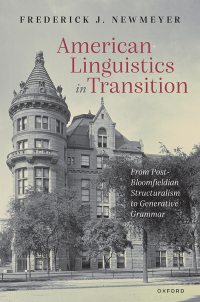
He is the author or editor of many books, including Spoken Soul: The Story of Black English (co-authored, with Russell John Rickford and winner of an American Book Award). In 2022, Routledge published his memoir titled Speaking My Soul: Race, Life and Language,  available from Routledge and from Amazon.

Ed Battistella: Congratulations on writing Speaking My Soul: Race, Life and Language. It’s a terrific memoir of your life and career from British Guyana to the United States of the 1960s. When did you decide that it was time to document your journey in a memoir?

John R. Rickford: As I note in the Prologue, “the Gift of Stroke,” I decided to write my memoir ten days after retiring on August 31, 1999, when I suffered a stroke, which made me painfully aware of my mortality. While still in the San Jose Rehabilitation Center, I began going to Rachael Herron’s Stanford Continuing Studies course on memoir writing. At first my goal was just to write something for my family and friends, but then the project grew bigger, especially after Routledge expressed interest. Frankly, I never thought I would live to see the memoir published! But luckily, and thanks to some of the best medical care in the world, I did!

EB: You were the first person ever to get an undergraduate degree in Sociolinguistics, in 1971, and you mention falling in love with black talk and linguistics as an undergraduate. How did that love affair come about?

JRR: Well I started my undergrad studies as a Literature major, but largely as a result of the influence of my UCSC Anthropology professor and mentor, Roger Keesing, I decided to switch to an individually designed major in Sociolinguistics. UC Santa Cruz was a very innovative campus, and Sociolinguistics was a brand new field at the time (late 1960s), with apparently unlimited scope for new theoretical and applied research. An article by British linguist R. B. LePage also influenced me, as did courses by professors Charles Ferguson, Joshua Fishman and Richard Tucker among others, at Stanford in the summer of 1970.

My love of black talk also began as an undergraduate, especially through the influence of my other major UCSC mentor, African American Sociology professor J. Herman Blake. It was through his Extra-Mural program that I spent a quarter living and working among the Gullah speakers on Daufuskie Island. The similarities between their Gullah variety of Black Talk and my native Guyanese Creole were amazing. I discuss the powerful Gullah praying of Deacon Plummy Simmons in chap. 11 of my memoir “How I fell in love with Linguistics and Black Talk” and note how it was bolstered by working with Bill Labov at the University of Pennsylvania, when I went there as a graduate student.

EB: Your memoir provides insights into race in Guyana and the United States and the ways that your perceptions changed when you came to US in 1968. Could you share some of that experience with our readers?

JRR: The switch from Literature to Linguistics was, as I note, one of two major transformations that accompanied my coming to the US. The other was identifying as Black in keeping with the “one drop” tradition of the US (see Yada Blay’s revealing 2021 One Drop book), rather than the more variegated system of racial classification in Guyana according to which I was mixed-race, colored, or mulatto. While my DNA revealed that my ancestry was 48% to 50% European (similar to that of Harvard professor Henry Louis Gates, of “Finding Your Roots” fame), it also revealed that my ancestry is 34% African, 13% East Indian, and 3% Amerindian. From the time I arrived at Santa Cruz, Black students began calling me “brother” and I have embraced my Black identity and my status as a “person of color” ever since.

EB: You mention several historic moments in African American history and your involvement and reactions, like leading the UC-Santa Cruz Black Students Association, hosting Rosa Parks at Stanford and South African poet Dennis Brutus at Stanford, and the work that you and Sharese King did on behalf of Rachel Jeantel. Do you think that academics have a special role and responsibility to promote justice and equality?

JRR: Yes, particularly when the issues involve language, as they so often do when it comes to increasing educational opportunity or overcoming criminal injustice, especially for Black people in the US. In the words of Cornel West, which I cite in the Epilogue, “Justice is what love looks like in public, just like tenderness is what love looks like in private.” As I note in chapter 11, “black people face discrimination in almost every area of life—when encountering police and courts, applying for jobs and apartments, seeking health care or education and more. In almost every case, the discrimination is worse when those black people speak Black Talk.” It’s not enough to love Black Talk—we need to use our special knowledge of Black Talk to make a positive difference in the world.

EB: I enjoyed all the photos your shared and especially your poetry. I had not known you were a poet. Have you written poetry all your life? Do you have a favorite poem?

JRR: Yes, at least since high school, when John Agard (who wrote the Foreword to my book, incidentally), Brian Chan, myself and several others published our poems in Expression magazine. My favorite poem is “Epitaph” by Jamaican Dennis Scott, a class-mate of my wife Angela when she a student at the University of the West Indies, Mona, from 1968 to 1971. This relatively unknown and uncelebrated poem is extremely complex and powerful, much of its power deriving from the double meaning and unusual use of its words (clement, hanged vs hung, black apostrophe, and so on):

“Epitaph” by Dennis Scott 

They hanged him on a clement morning, swung
between the falling sunlight and the women’s
breathing, like a black apostrophe to pain.
All morning while the children hushed
their hopscotch joy and the cane kept growing
he hung there sweet and low.

At least that’s how
they tell it. It was long ago
and what can we recall of a dead slave or two
except that when we punctuate our island tale
they swing like sighs across the brutal
sentences, and anger pauses
till they pass away.

EB: I was impressed with the honesty and detail of your memoir. What was the writing process like for you? Writing your life must be different than writing an academic work.

JRR: It WAS very different from writing an academic work, but also more personal and revealing. I was learning about myself and my passions and fears as I wrote, and in many ways the process, once started, is continuing.

EB: Thanks for talking with us. I hope every linguist reads your memoir.

JRR: Thank you, Ed. I hope many do!


Posted in Ideas and Opinions, Interviews | Comments Off on An Interview with John R. Rickford

An Interview with Diana Coogle

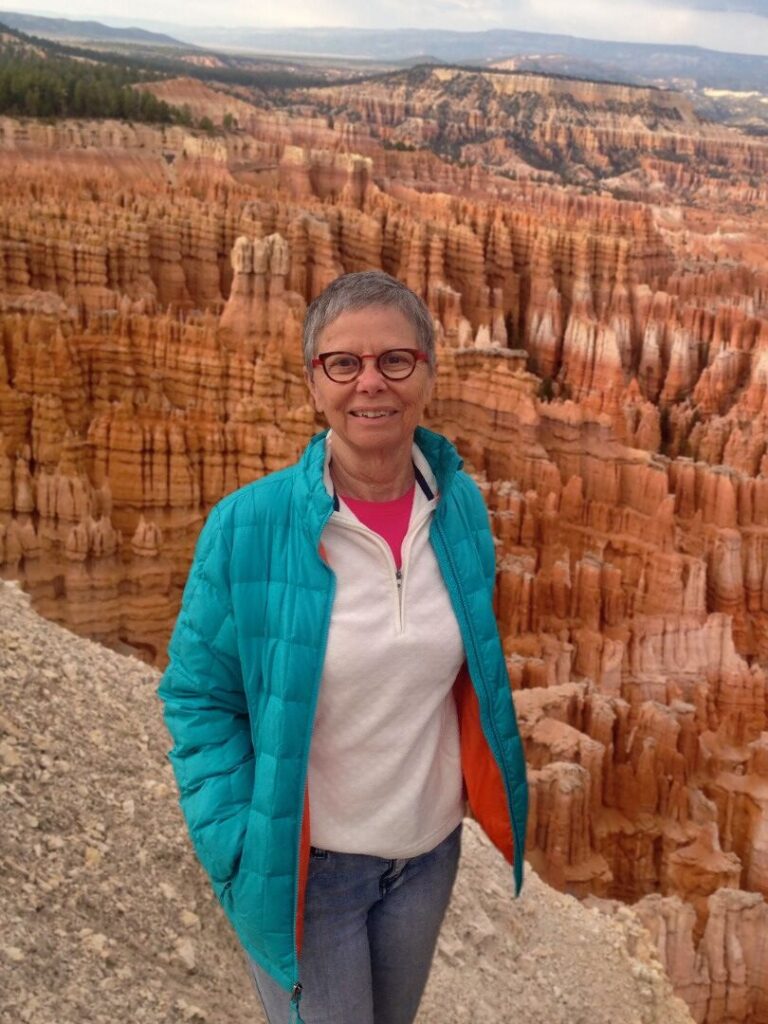
Diana Coogle grew up in Georgia and attended Vanderbilt University (graduating Phi Beta Kappa and fifth in her class) later earning an MA in English at Cambridge University and a Ph.D. in English from the University of Oregon. A former Marshall Scholar and Woodrow Wilson Teaching Fellow, she has taught at Gothenburg University in Sweden, the University of Oregon, and Rogue Community College.

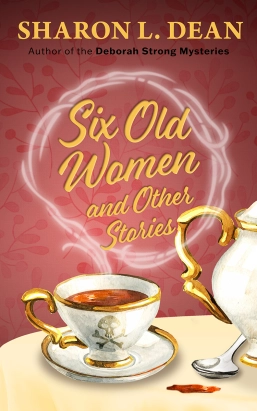
Her books include Wisdom of the Heart, with artist Barbara Kostal, Fire from the Dragon’s Tongue (an Oregon Book Award finalist), Living with All My Senses: 25 Years of Life on the Mountain, An Explosion of Stars; and Favorite Hikes of the Applegate: A Trail Guide with Stories and Histories, with Janeen Sathre. Her most recent book is From Friend to Wife to Widow—Six Brief Years published in 2020.

Diana Coogle has made her home in the mountains above the Applegate for almost 50 years.

Maureen Flanagan Battistella: You are one of the most prolific writers I know, Diana Coogle. You’ve published books of poetry, you blog regularly, you write for Jefferson Public Radio and more. You live a life of thought, and experience so many senses. Can you describe what writing does for you, why the action of writing is important to you?

Diana Coogle: Some writers get excited by the blank page with all its promises, the emptiness that they will fill in whatever way their creative imaginations want. I am not one of those. I dread the blank page, its emptiness a gaping hole that it is my responsibility to fill with beauty or wit or, worse, with good, deep thinking. But I can’t get to my favorite part of writing, the part that flies and soars and does loop-de-loops with the verbal imagination, until I struggle some thoughts onto the page. So writing does two things for me: It forces me to think about things, and then it allows me to play with language as I work to express those thoughts. Writing is sculptor’s work: sculpting and chipping away with a chisel to make a work of art. I undergo an experience—a particularly beautiful ski through the woods, a bear cub on a trail, a once-only slant of the sun making rubies in the mud—and I begin to explore how best—most beautifully, most truthfully—I can express that experience. And when it’s done, what does the writing do for me? It makes my heart sing.

MFB: Nature is one of your most regular themes. Why is that?

DC: Because nature is deeply meaningful to me. Because we are a species of nature; we are not separate from nature; all the beings of nature are our kin or our environment. Because we need to care for and about nature, or else we are doomed. Because I am a proselytizer and desperately want to make the world pay attention to nature. Because I prefer to write about that which I love and I don’t like writing about people I know because I don’t like to describe character (that’s why I’m not a novelist). Because I love descriptive writing and nature creates opportunity after opportunity to describe beauty. Because I live so deeply in nature and what is most immediate to me is what I like most to write about.

MFB: Your latest work is a book of poetry, From Friend to Wife to Widow: Six Years Brief Years. It is a very personal work, and the cover photo speaks to your writing. Can you tell me how these poems came to you, and how they might help others?

DC: Ah, these poems. These heartfelt poems. One answer to the question of how these poems came to me is to say that many of them, the early ones, before Mike became sick, were written during my 75th year, when I was doing 75 things of 75 repetitions each, and one of those things was to write 75 poems of 75 words each. Many of the others were written during April, 2020, when I was writing a poem a day in recognition of National Poetry Month. But that’s only the structural answer. These poems came to me because, as with poems about nature, I was writing about what was closest to me. It was so unfair to lose Mike after such a short time together. Frustration, love, grief, anger—to turn it into poetry was to pry its claws out of my guts. In putting the poems into a book I was hoping to find common ground with others who suffered similar grief and such loss, especially during the pandemic. Maybe my turning frustration, love, grief, and anger into the beauty of language could be paralleled by the reader who could transfer that beauty of language to his or her own experience.

MFB: Do you ever feel that you’ve written enough? When do you know when to stop working on a specific project?

DC: Sometimes, yes, I feel like I have said all that I have to say. How many times, in how many different ways, can I say, “The birdsong is so beautiful this spring” and “There is nothing more beautiful than a fresh snowfall”? But it won’t stop. There’s always another snowfall that demands expression, another symbol to make out of birdsong. Another pattern of sound to explore, another thought that wants out. As for the individual poem or essay, because the revision process is my favorite part of writing, when I can get out my chisel and mold the sculpture into being, I will work on it and work on it and work on it, changing a word here, a word there, deleting a phrase, replacing it elsewhere, ruthlessly honing the piece till I can say, “Okay. This is it: what I want to say and how I want to say it.” I have, occasionally, in the past, worked a piece to death, though—taken all the air out of it as I try to condense the writing, spoiled the spontaneity, eliminated the fun bits. That doesn’t happen much anymore, though. I have learned to discipline my pen.

MFB: Your authentic, true voice resonates in your writing. Have you ever written from a point of view that is not your own? For example, dialogue that assumes the persona and point of view of another person.

DC: Well, yes, I have, though it’s true that I don’t do that very often. Once it was because that was the directive of the prompt: to write in another person’s point of view, so I wrote a sympathetic poem in the voice of my mother, expressing her unhappiness with and struggle to understand my hippy lifestyle (back then). My blog post for April Fool’s Day, 2021, was a poem about foolish money, in which I listed some ways to lose money foolishly, including a fictional account of a girl whose boyfriend left her in Paris. A friend’s sympathetic comment was that he didn’t know that had happened to me. Well, of course, it didn’t, but everything else in the poem did, so I can’t blame him for thinking it did. I think I speak best in my own voice. The danger, of course, is solipsism.

MFB: Do you have a favorite medium or channel for your writing? Have you experimented with other media?

DC: Radio, because it includes the voice, is actually my favorite medium, but I don’t have access to it anymore. I would like to do a podcast, but when I tried, I got stuck in the technological tangle. I like performance and spent about a decade of my career writing plays, mostly for children, but a good handful for adults, too. All were produced; theater is a wonderful magic. I did some acting during that time, too. I even enjoyed academic writing while I was getting my Ph.D. (2006-2012); I liked taking the creative aspect of writing to scholarship. The personal essay was my medium for decades; I have only recently turned to poetry. When I started, I suddenly felt like I didn’t even know what a poem was. I have enjoyed the explorative aspect to writing poetry and now write poems and essays at about equal frequency. And beyond writing? I played classical guitar for a number of years but gave it up when I went to graduate school. I do a lot of crafts (card-making, sewing, knitting), but performance is really the medium I enjoy most, second to writing. Presently, I have been memorizing poetry and presenting public recitations. Fun!

MFB: What’s next?

DC: Next? Is there no rest for the weary?

I have toyed around with the idea of a book of nature poems. And I wait for the next assignment for the Marshall Scholars’ Newsletter, my next column for the Jefferson Almanac, the next prompt for a poem,…. What’s next, at this moment, is what’s most immediately in front of me. That’ll do for the present.

Posted in Ideas and Opinions, Interviews, Language | Comments Off on An Interview with Diana Coogle