Unbound

I just found out about a UK website called Unbound.  It’s an interesting new way to get books published.  Right now, you still have to have an agent in order to be an author on the site, but the site’s FAQ suggests this may change in the future.  Basically, an author outlines their book idea on the site, and you can bid money to support it.  There are different levels of support, and depending on how much you pay, you can get perks, including attending launch parties, etc.  If the author reaches a certain number of supporters and funding, he/she starts writing the book.  Ultimately, when the book is finished, you can choose between getting an e-book or book book.  Once you bid, you’re basically involved in the author’s creative steps.  You can make suggestions, keep updated on what the author is doing, etc.  I think this is a pretty cool idea.  There’s another site, called Kickstarter, that more or less follows the same idea, but with general creative projects and not specifically books.  Hopefully Unbound follows in Kickstarter’s ways, allowing the general person off of the street an opportunity to have their book funded and published.

Oh, and another thing!  I know the term is generally over, but I was wondering if we could keep this blog going as a class, unless there’s a fall term History of Pub. class that’s going to take it over instead.  I would like to keep occasionally posting stuff throughout the summer and into fall.  Would this be a possibility?

Posted in Ideas and Opinions | 1 Comment

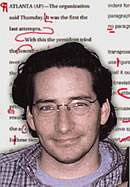
An Interview with Katharine Beutner

Katharine Beutner grew up in Pennsylvania. She earned a BA in classical studies from Smith College, a masters in creative writing and a PhD in eighteenth-century British literature in from the University of Texas, and will be teaching at the College of Wooster in Ohio. Her novel Alcestis, a retelling of the Greek myth, was published by Soho Press in 2010, and is now available as a trade paperback and Iambik audiobook. Alcestis won the Edmund White Debut Fiction Award and was a finalist for both Lesbian Debut Fiction Award from the Lambda Literary Association and the Compton Crook Award from the Baltimore Science Fiction Society.

EB: When did you decide you wanted to become a writer?

KB: I don’t know if I really started thinking of myself as “a writer” until the last year or so, after Alcestis was published. I always wanted to write, though. I remember writing stories on legal pads to entertain myself at my family’s store as a kid, and in grade school I wrote a lot of bad poetry (and, as a teenager, some slightly better poetry). In terms of professional identity, though, I still feel like I’m getting away with something when I’m asked for my occupation and I can say “writer.”

EB: How did you come to write Alcestis?

KB: I started writing it in Ashland while I was in my last month of working part-time at SOU. I read Euripides’ play during my lunch breaks, and my frustration with its elision of Alcestis herself inspired me to think about writing a version of the story that followed her into the underworld. I wrote about five chapters of the book before entering the master’s program in creative writing at UT, and then I finished and revised the book as my thesis project there.

EB: Your version of the myth is very different from Euripides’. It’s a feminist reimagining of a character who is very silent in Greek myth. What would you like readers to understand from your version as opposed to Euripides’?

KB: I suppose I want readers to think about what it might really have been like to be a woman (or a man!) in Alcestis’s society, which is profoundly hierarchical and deeply divided by gender. Alcestis’s husband and father may love her, in their different ways, but they don’t have an understanding of her as a human being because she’s a woman. For them, the realm of the human is the realm of men.

EB: Alcestis is also a study of psychology. How did you settle on first person point of view?

KB: The book was originally written in third person, as the prologue and epilogue are, but when I workshopped the first three chapters at UT, my classmates told me that they felt too distant from Alcestis and her emotions. So I changed those chapters to first person, which required very little rewriting — they were already in tight third — and that improved the emotional immediacy for readers. It seemed clear to me after that that the book was meant to be entirely narrated by Alcestis in first person.

EB: Your publisher is the wonderful SOHO Press, which is best known for crime fiction. How did you happen to connect with SOHO?

KB: My agent Diana Fox submitted Alcestis to a number of publishers, and Soho was the first to make an offer! They’ve been wonderful, and I hope to continue working with them, especially since my next book is more crime-oriented.

EB: What did you learn during the writing and publishing process?

KB: That in the last weeks before the final revised version of a book is due to your publisher, you will suddenly begin to see how, if you had another two or three years to work on it, you could transform the book into something shining and perfect — in other words, into a completely different book. But given the circumstances, you have to do your best with the book you wrote. Before Alcestis, I don’t think I fully understood what writers meant when they said that a book could always be improved — I’m very proud of it, but it’s hard not to keep working toward that impossible perfection. In order to be a working writer, though, you have to let go and move on to the next project.

EB: You recently finished your doctoral dissertation. Can you tell us a bit about that?

KB: It’s a study of four early eighteenth-century women writers who satirized other women in print. Critics haven’t paid a great deal of attention to these rivalries, or have ascribed them to competition over men rather than clashing literary ambitions. My dissertation analyzes these women’s literary careers and their attacks on one another. I didn’t read their works looking for antagonism — when I started thinking about my dissertation project, I just knew I wanted to write about these women — but I think their rivalries tell us a great deal about how difficult it was to be a professional female author in the early 1700s, when writing for pay often carried a tremendous social stigma.

EB: Has having a PhD in literature been a help as a writer? Or has being a writer helped you as a researcher?

KB: For me, the two processes — critical analysis and creative writing — are fairly separate. My academic nerdiness absolutely influences my tastes as a writer and reader, and I’m academically interested in the process of writing and the lives of writers, but I’m not sure my creative writing process has been directly affected by my time in grad school. My time as an intern at the Harry Ransom Center, UT’s rare books and manuscripts collection, taught me a lot about archival research, though, and led to my discovery of the news story that inspired Killingly.

EB: You’ve got a lot going on—writing fiction and nonfiction, recently completing your PhD, starting a new teaching position at the College of Wooster. How do you balance everything?

KB: Not to be too glib, but: running and yoga really help. And having some kind of organizational system for your time — I would forget many, many things if I didn’t write everything down in my paper planner. One of these days I’ll probably switch to digital, but I like having the paper record of my time.

EB: You have a wonderful blog and seem to really connect with readers. I know that a lot of writers find being an author even more work than writing books. What have you found?

KB: Thank you! Actually, I’m a little desultory about blogging — I enjoy it, but I’m not willing to put in the kind of time and effort necessary to maintain a really compelling narrative blog. Occasionally I’m motivated to write a more in-depth essay post, but in general I use my blog to chatter about books and academia and writing and just hope that the people who read it will want to chatter back at me sometimes. A popular blog takes on a life of its own and can take over your life as a writer. You’re absolutely right that “being an author” is a lot of work, so I’m happy to answer email and do interviews and talk to book clubs and talk on Twitter and ramble on my blog, but I’ve chosen not to try to be a “blogger” in any serious way. I really admire writers who are able to do that and do it well.

EB: You are working on a book called Killingly, based on an 1890s missing person case. Can you say a bit more about that?

KB: It’s about a Mt. Holyoke College junior who disappeared in 1897 and was never found. Even years later, there were still news stories speculating about her absence. I’m not attempting to solve the case — I’m introducing some fictional characters and doing plenty of speculating myself — but I’m hoping to tell a really good, twisty, gothic story about this girl and her world.

EB: Who do you read for fun? Or do you?

KB: For a year or so while I was working on my dissertation and teaching I didn’t have much chance to read, but I’ve made more time for it in the last year. I spend about half my reading time on older books I’ve somehow missed — often Victorian novels, lately — and the other half on newer releases. I loved Sarah Waters’s The Little Stranger and Emma Donoghue’s Room and Justin Cronin’s The Passage. I also read nonfiction for book research, which counts as fun.

Recently I’ve read a bunch of post-apocalyptic and/or dystopian young adult novels — initially for fun, then after I was hired at Wooster I decided to make a more systematic study of the genre. I’m now planning a course on teenagers in dystopian fiction for the fall semester.

EB: Alcestis has been characterized as the Greek “good wife,” which made me think of the television show. If your book were a film, who would you want to play Alcestis and Persephone?

KB: That’s surprisingly difficult to answer! Persephone looks like a very young, blonde Charlotte Rampling, maybe. I’m not sure I’ve ever seen an actress who reminded me of Alcestis. The closest I can come is teenage Charlotte Gainsbourg, but she’d have to have wilder, curlier hair.

EB: Any final thoughts? Or advice for Ashland’s writers?

KB: My basic advice for all writers is to read all the time — and if you’re lucky enough to be in a place like Ashland that’s frequently visited by authors giving readings and talks, go to those too. You never know how someone else’s work might inspire you.

Posted in Ideas and Opinions, Interviews | 2 Comments

Wrap-Up

I have largely enjoyed this course.  While it was not exactly what I expected it to be–I thought the course would cover advances or changes in the history of publishing–I liked the seminar style of the class and learned much valuable information from the guest speakers.

I particularly enjoyed the Ingram folks’ discussion of their business and their on demand printing, which I had never before heard of.  I may look into the titles they have available and perhaps order some rare books I have not been able to find anywhere, such as a book called From Hitler to Uncle Sam, which discusses how the American government benefited from the grotesque and inumane medical and scientific experiments the Nazis perpetrated on concentration camp inmates. 

I also enjoyed learning about local publishers, of whom I was unaware until I took this course.  I appreciated the talks from the people at Ashland Creek Press and White Cloud Press.

Posted in Ideas and Opinions | Comments Off on Wrap-Up

Interview with Steve Scholl of White Cloud Press

Steve Scholl is the founder of White Cloud Press in Ashland, OR.

H: When White Cloud was founded in 1993 did you know you wanted to publish in the genre of spiritual inspiration?

S: Originally I wanted to publish books on world religions that were somewhat academic-but not too academic. We started White Cloud in Santa Cruz, but the cost of living was so high we decided to relocate to Ashland.

H: During your presentation in Edwin Battistella’s History of Publishing class you mentioned that Paul Grilley, the author of Yin Yoga, was especially involved with the marketing of the book. Do you work with many authors who understand the importance of entrepreneurship?

S: Yes, authors with a mission and a concept of entrepreneurship are what we look for. There are lots of talented and capable marketing-saavy authors out there with a good message to give the world. We have been lucky enough to work with strong writers who are very active.

H: What is the typical production run of a publication at White Cloud?

S: Usually a minimum of 2,000 and a maximum of 5,000. We hope to sell around 3,000 copies for a book to be successful. It isn’t wise to overprint, plus it’s easy to reprint if the demand is there.

H: What are the most successful books White Cloud has published?

S: Approaching the Quaran and Yin Yoga.

H: How many employees are there at White Cloud?

S: Around four or five full-time employees.

H: Does White Cloud publish ebooks?

S: Yes. We publish for the iPad, Kindle, Nook, etc…

H: Have you done much writing or have you always wanted to be on the publishing end of the business?

S: I’ve done a fair amount of writing, but not too much. I’ve published academic papers for magazines such as “The Encyclopedia of Religion” and the Flagship Paper for the United Church of Christ. I’ve also written book reviews for the Oregonian.

H: Has the rise of self-publishing impacted small presses like White Cloud?

S: Yes, somewhat. However, people who don’t use the services of a publisher and editor tend to appear amateur. I think experienced writers can pull off self-publishing because they have a background in the business. Everyone needs an editor though, even editors need editors. I feel fairly secure in our business. We strive to produce books that look like they are out of New York and to help our authors. You can’t get that from self-publishing.

H: Were you in the publishing field before White Cloud?

S: I bailed out of academics because I saw there weren’t many jobs and I went on to work for a small publisher and gained some experience before starting White Cloud.

H: Do you turn away a lot more book proposals than you take on?

S: Yes, definitely. We get around 20 proposals a month and generally publish six books a year. We would like to publish around nine or ten. I would estimate that 60%-70% of the books we publish are by authors who approached us. The rest are by authors we sought out.

H: What is your favorite and least favorite aspect of the business?

S: My favorite part is finding great new material and helping authors share their work. My least favorite part of the business is the business part, the economics, etc…

H: What is you dream book to publish?

S: There isn’t a specific author and I know we can’t take an a-list author away from Random House, but I would love to find an author with a great idea and put him or her on the New York best seller list.

H: Do you have any advice for people who want to enter the publishing business?

S: Go for it. There are jobs out there, you just need to find out which aspect of publishing you’re interested in. Also, take classes in marketing and copy editing. Skills with InDesign and other programs will be very helpful too. Become fluent in social networking! This is key these days.

Posted in Interviews | Comments Off on Interview with Steve Scholl of White Cloud Press