 Follow
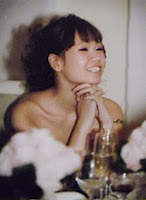 Abbi Nguyen came to the US eight years ago from Vietnam, and after some time in San Diego, she decided to move to Ashland in order to major in creative writing. Apparently this was a good choice because since then she has succeeded at finding homes for two of her short stories, “Banana Tree” and “The Foreign Dream.” With the best years of her writing career still ahead of her, I decided to ask her how she got where she is and where she plans to go next.
JM: Tell me a little about yourself.
AN: My name is Abbi and I have no idea who I am unless I’m writing.
JM: What made you decide to come to SOU/settle in Ashland?
AN: I came to Ashland looking for a place to start over academically. I had enrolled at San Diego State University the year before and majored in International Business but I was unhappy and consequentially didn’t do too well in school. At SOU, I had another chance to remake myself.
JM: How long have you been writing?
AN: I have always written—since I was a child—but I started writing seriously since enrolling at SOU two years ago.
JM: On the same note, what made you start and/or continue and how has the Creative Writing Program helped develop your skills as a writer, whether it be writing techniques you picked up or professor support?
AN: I write because it is the only way I can express myself, to make sense of the world. If you know me, I am a pretty inadequate speaker, stumbling over my words and getting way too nervous. I am mute when I’m not writing and it is also my one passion in life. My motto is if you discover what it is you care about, give it your everything. There is not enough time in life to accomplish what we want if we change our minds too many times.
The Creative Writing program at SOU has helped me tremendously. Craig Wright is a gem of a professor. One thing I learned from him that I will keep for the rest of my life is to always make your first sentence interesting. It propels the wheels from then on and pretty much determines whether or not the reader will keep reading. People have short attention spans, and as writers, we need to earn every minute they spend reading.
JM: How do you think your background influences your stories?
AN: Coming from Vietnam yet doing most of my growing up in the U.S, I believe, makes me more aware of the differences that make people interesting. Inherently, we love and hurt the same way, but cultures may influence how people express themselves. Living faraway from Vietnam also is an advantage. I notice that when I go there to visit during the summer, I become too submerged and unable to write. Distance provides me with a certain sense of safety to create raw and honest characters. Not all my stories are about Vietnam or Vietnamese people, of course, but right now they are my best ones, what I’m most proud of. Perhaps I need to leave America to write about life here successfully.
JM: Where else does your inspiration come from?
AN: Usually from an idea that sparks inside my head. I’m a very internal person—even though observing the outside world helps my writing, the better ideas that become anything fruitful are usually from inside me.
JM: What helps you write?
AN: I like waking up early in the morning to write. It’s when I think the most clearly.
JM: Now, tell me a little about your first publication experience with Blaze Vox.
AN: I received an e-mail from Geoffrey Gatza, the editor of BlazeVox Magazine, last winter. My story “The Foreign Dream” was to be published in the Winter 2012 issue. I was excited and very happy since it was my first publication. The story is about Linh, a Vietnamese girl who sells helmets on the sidewalk. She has a fascination with foreigners and eventually encounters one that would change her life, for better or worse.
JM: Tell me a little about your writing process, both in general and anything that might have been different when writing “Banana Tree” [Abbi’s most recently published story]. AN: I think my writing process is the lack of one. I begin writing with one sentence after another until it is finished. No plan, no plot or specific direction. Some writers already know the story and their characters before putting them down on paper, but I have to write first in order to find them. The story comes later as the characters interact, make mistakes, live out their life on the page. I wrote “Banana Tree” in the same way, except that there were a lot more edits working with Professor Craig Wright. He helped me polish every single sentence [during Advanced Fiction Writing]. From spacing to word choice, he doesn’t miss a thing. I don’t think I would have gone through that many drafts working on my own. “The Foreign Dream” only got one run through and now I wish I had Craig’s help with it too.
JM: Having heard drafts of “Banana Tree,” I’m curious as to what made you to write this story in particular.
AN: It’s difficult to pinpoint what influences the story because everything does and doesn’t. Before “The Foreign Dream” and “Banana Tree,” I had never written anything about the lives of people in Vietnam. Then I realized that is what I really wanted to do. I believe a lot of our emotional connections relate to geography, landscape, places where we grew up. I have been away from my homeland for eight years now, but my experiences there as a child are deeply ingrained.
JM: You can really see that idea in the story. How many magazines did you submit “Banana Tree” to?
AN: About 15 or 20. Most of them still haven’t responded. I actually sent one to Alaska, put everything in an envelope and handed the cashier my credit card. Turned out it cost 30 something dollars. I still did it anyway. I don’t think I would have if I actually was thinking clearly though…but the excitement of sending out your stories can overwhelm reason, I think.
JM: Following that, what made you think the two magazines publishing “Banana Tree” would be good fits?
AN: “Banana Tree” is getting published in two magazines over summer and fall. The Missing Slate is electronic. The Bad Version is in print. Normally when writers submit materials, they are recommended to read the magazine first but sometimes there are just too many. I took a chance and submitted to random places. Of course, I got rejections too saying the story wasn’t the right fit for them. One editor was nice enough to recommend another magazine to me. With BlazeVox, I was even more surprised they accepted me because my writing style is a lot different from their aesthetic, which I believe is fairly experimental. So you never know!
JM: What advice would you give to other writers who are trying to get published?
AN: I don’t have much advice other than encouraging writers to keep trying. Before I got published, I thought of it as this second world, far and unattainable. If I can do it, you can too. Another thing is to read a lot and write a lot. This is something I constantly remind myself to do. Read everything, trash and classic, because you can learn from it all. Eventually, you absorb from other writers how characters are formed, then how stories are formed. Natural talent helps but writing is also a craft that requires studies and practice.
JM: Is there any advice you received about writing that stuck with you, whether from a professor or someone else?
AN: The advice from Craig: “Always have a strong first sentence.”
JM: Where do you hope to take your writing next (career-wise or in terms of future projects)?
AN: My next goal is to write a novel and compile a short story collection. There are many stories out there about identity crisis and being a perpetual foreigner wherever one goes. I hope to contribute to that, but also to show the lives of Vietnamese people in Vietnam without connections to the war, which is what most non-Vietnamese people associate it with. There is a lot more about this country than it having been at war with America. Third-world country, jungle, primitivism, etcetera are all part of a stereotype that is now outdated. I intend to show modern Vietnam, not in terms of technology, but just people struggling with life as they do anywhere else in the world. Underneath it all, we are the same.
JM: How will the two publications of “Banana Tree,” your Capstone project, help you move forward with your writing career?
AN: I can only hope that my stories continue to be good enough. Having a few publications might help with my graduate application, which is my next step.
JM: What are your plans for after graduation?
AN: I have my eye on a few graduate writing programs and my fingers crossed. I also would like to teach Creative Writing someday and hope to inspire more people to write.